How Podcasting Can Change the Classroom Dynamic: Live from Higher Ed PodCon 2026
Rudy Salo: When I get to know a professor,
I get to know their history, 'cause I
approach everything from a historical
background, that I have a connection.
And I learn more and I do harder
work when I don't wanna let somebody
down that I have a connection with.
And that has actually been told
to me by some of my own students.
I think the connection there, the human
connection helps students work harder,
Jennifer-Lee: Welcome to the
Continuing Studies podcast.
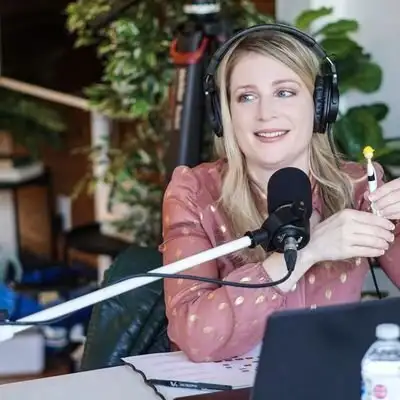
I'm Jennifer-Lee, founder
of JPod Creations.
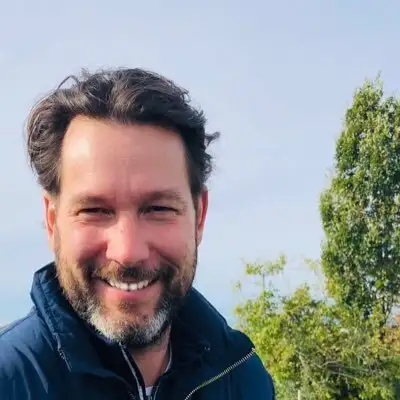
Neil McPhedran: And I'm Neil
McPhedran, founder of Podium
Podcast Company and Higher Ed Pods.
We are here, live on video-
Jennifer-Lee: Yeah
Neil McPhedran: at Higher Ed PodCon.
This is super exciting.
Jennifer-Lee: It's exciting.
We're in this beautiful, venue.
Neil McPhedran: Yeah, this
podcast studio is amazing.
So they've built this thing here
on the campus of Cuyahoga College,
which is hosting us- for Higher
Ed PodCon, and we just have to
take advantage of this amazing
studio and to finally get on video.
So you've been listening
to us for three years.
This is what we look like.
Jennifer-Lee: This is yeah, you guys,
maybe people not know what we look like.
big shout-out to Josh because
he runs the room for us.
Neil McPhedran: Yeah.
Thanks,
Jennifer-Lee: Josh.
Neil McPhedran: Yeah.
We sat through an awesome session
this morning called Podcasting as
Pedagogy, and I just thought we gotta
get, one of these, hosts who put
on this presentation on the show.
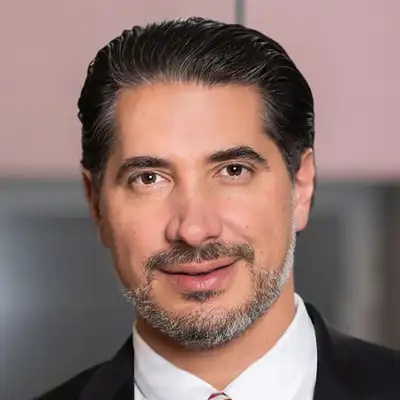
And so today we have Rudy Salo, and he's
gonna talk to us about his podcast and how
they actually use their podcast as part of
their syllabus and part of, their teaching
in each of their separate, uh, classrooms.
Jennifer-Lee: And
we learn what pedagogy means as well.
Neil McPhedran: We sure do.
Jennifer-Lee: Well, let's get started.
Neil McPhedran: Let's get into it.
Thanks for joining us today, Rudy.
It's good to have you here on
the "Continuing Studies" podcast.
Rudy Salo: thanks for asking me.
I'm honored to be here.
Neil McPhedran: Wonderful.
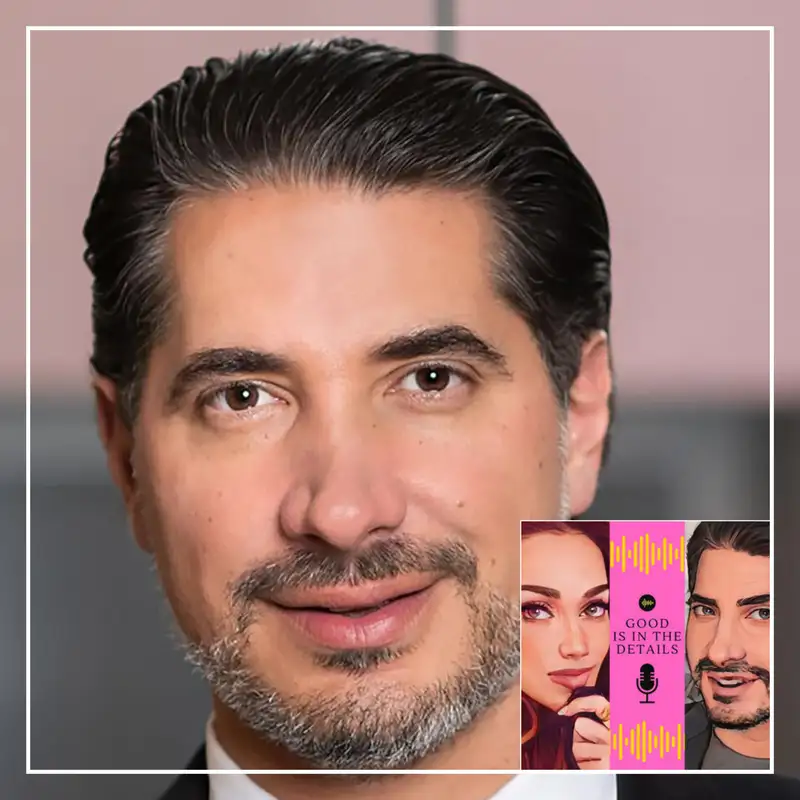
Rudy, you are, half of the,
Good Is in the Details" podcast.
What is your podcast about?
Rudy Salo: I am, the co-host of "Good
Is in the Details." The primary host
and the creator is my partner, Gwendolyn
Dolsky, who's not here right now.
But our podcast is, a philosophy podcast.
And it was interesting today,
somebody asked me, she goes: "Oh,
so on your podcast, you guys just
talk about philosophy?" Said: "No.
Let me explain what we talk about on our
podcast." We're a philosophy podcast,
but we talk about everything. Eyebrows
raised. And then I said, "Look, basically
what we advocate is how you approach
life, how you approach a subject, how
you approach something from, like,
film, pop culture, politics, love.
there's some kind of a historical, or
even current, philosophical teaching
that can help you get through that.
Like, when you're thinking through a
problem or you're trying to approach
something that you're not aware of,
like, use philosophy in order to
attack that problem." And what we're
primarily focusing on today in the
age of AI, is, critical thinking.
When we talk about critical thinking,
it's here is a topic, how to analyze
a film, how to analyze a news event-
how to analyze, misinformation.
how do you look at that
through a philosophical lens
and critically think about it?
What we advocate always is never
just take one side of a story.
Always take both sides.
Always listen to somebody that you would
never listen to, to hear their side of
the story, so then you could come to
a conclusion that is more grounded and
less subjective and more objective, which
is a philosophical approach to life.
And that could be applied to everything.
Jennifer-Lee: And I love what she said,
because obviously philosophy inspired
your podcast, and she was saying that
Socrates back in the day would go and
have conversations with many different
people, and creating a dialogue is
what you guys do on your podcast.
Rudy Salo: That's exactly right.
and today, you know, not to get
political in any way, shape, or
form, but everybody's saying we're
not dialoguing enough, right?
Jennifer-Lee: It's true.
Rudy Salo: We're not
dialoguing with this side.
We're not dialoguing with Canada very
well, but it's like, okay, well, how?
How do I go talk to the other side?
how could I do that?
Like, how could I go
do something like that?
We teach the tools to do that.
On our latest episode, which is entitled,
Are You Living In An Echo Chamber?' Right?
Are you only listening to
your side of the story, right?
How can you become better at hearing
other sides of the story so you can
engage in dialogue with your family?
One of the subjects that came up
during that podcast episode was there
were a lot of articles that came out
around Thanksgiving about how difficult
it was going to be for families to
even attend- Thanksgiving because
they were worried about getting into
fights with other family members.
we brought up some examples, and we tried
to like, where is some middle ground
where you could find something to agree
on and talk about with your family?
I was joking with you earlier
about, you know, I'm-- I work
in transportation finance.
I'm an advocate of public transportation.
Look, if there's one thing
in the world everybody hates.
I don't care where you come from,
I don't care where you live, I
don't care what your sex is, I
don't care what your religion is.
Everybody hates traffic.
Jennifer-Lee: Yeah.
Rudy Salo: Right?
So like, maybe if you're worried about a
very difficult discussion with somebody
or, a family member or anything like…
Why don't you talk about
how much traffic sucks?
Get on the same level and then,
you know, that kinda level sets.
It's very simplistic, but like, it's a
different way of trying to change your
own mindset when you're about to enter
into difficult conversations or dialogue.
Jennifer-Lee: Yeah, and that's the
hard part right now because I know
even last year a lot of people were
saying they are stopping attending
family events because of politics.
Rudy Salo: Correct.
Jennifer-Lee: Because right now
people are so politically divided.
And so it's like how do you avoid bringing
it up while you're carving the turkey?
Rudy Salo: Yeah, you're
carving the turkey.
don't insult the turkey- … please
don't hurt anybody's feelings
with, insulting the cooking in any
way, shape, or form, 'cause that's
a whole other set of problems.
But we really are trying on our show to
bring multiple people from multiple sides
of the political spectrum in order to
show that everybody can dialogue, right?
we ensure that that nobody could
just paint us as, "Oh, you guys
are just some blank wing podcast,
you know, and you're only gonna
have blank wing people on there.
I'm not gonna listen to that show.
What am I gonna get out of that show?"
We bring everybody to have a dialogue
'cause we are concerned about the future
of our country, the future of dialogue,
family relationships, work relationships,
and that's one of the reasons we
do the show the way we do the show.
Jennifer-Lee: The problem is that a lot
of people can't dialogue with each other.
It's always one-sided, and a lot of people
don't wanna listen to the other side.
Rudy Salo: And that's where critical
thinking helps because if you can try
to see where the other side comes from
by reading that newspaper or watching
that news program shut down your own
biases and listen, you might be able
to better engage in the dialogue
and bring up some things to that
individual that they never thought of.
And that can enhance
dialogue and conversation.
And truly like, what's
the point of philosophy?
What's the point of our show?
What do we advocate?
Curiosity, right?
we truly believe that happiness is
not a Porsche, it's not the mega
mansion, it's not, all the BS that
you see on Instagram and TikTok
about how people are living lives.
Happiness comes from engaging and
satiating curiosity, like getting
questions answered, knowledge.
So long as you know that
you don't know everything.
That was Socrates' tale that
you were bringing up earlier.
Socrates was the wisest man because he
knew that he did not know everything.
And if you know that, that's humility.
And if you have humility, that's
gonna take you a long way in life.
And that's one of the
major tenets of our show.
Neil McPhedran: We're actually
here at Higher Ed PodCon.
Jennifer-Lee: Mm-hmm.
Neil McPhedran: And now let's, you
and, Gwen, just gave a presentation
this morning podcasting as pedagogy so-
Rudy Salo: Yeah, peda- I
can't even pronounce it.
I pronounced it in a way she said,
"Whatever you do, do not pronounce
it that way 'cause everyone's gonna
be really weirded out." but yes.
what does that actually mean?
Neil McPhedran: Yeah.
Rudy Salo: I was like, "Gwen, what the--
what does that word mean?" She goes,
"Oh, it's teaching tool." I'm like, "You
didn't wanna just say teaching tool?" she
goes, "No, it just sounds cooler." So yes.
Very, you know, higher
ed-y of her, but yes.
Neil McPhedran: Okay, so, and, and
Gwen is a philosophy professor,
and you are a law professor.
so maybe tell us a little bit about
how you use this podcast in each of
your different, teaching scenarios.
Rudy Salo: Yeah, it's, really great
question because the genesis of "Good
Is in the Details," came from that.
Gwen wanted a deeper
connection with her students.
She was a fan already of podcasts, and
she knew that it was a teaching tool,
and she also knew that podcasts in and of
themselves are a part of this thousands
of years of traditions of dialogues.
and so she thought, "Why would I
not record, the author of this great
book that I'm teaching in class on
an episode that many students can
learn from in the future?" That
was kind of the genesis of it.
if I'm gonna have experts on, I'm
gonna have a conversation with them,
it'd be truly wonderful to record
it and use it as a teaching tool.
That was basically the tenet of the show.
I wasn't on the show originally.
I speak frequently about
public transportation.
she came to one of my talks and she
said, "Hey, would you like to come on
the show and talk about the philosophy,
your philosophy of transportation
and, you know, the history of LA
infrastructure?" I said, "Absolutely.
I will."
Because I, 'cause I approach
transportation and how to commute
with a philosophical lens.
and that's how, my philosophy is better to
let somebody else do the driving, right?
If there's a way for you to get from
point A to point B, even if it's a little
bit longer, but if you're able to read a
book or study that language or write that
novel that you always wanted to, right?
Instead of sitting around and
complaining that you don't have
the time to do something, we
all have 24 hours in the day.
Figure out how to better organize your
life to get more time in your day, right?
So I was pre-COVID, I got two and
a half hours back of my day every
day by using public transportation.
And that's how I was able to achieve the
other things that I was able to achieve.
So that was my philosophy.
So she brought me on, she interviewed
me, and then after that she said,
"Hey, look, this is really cool.
Like you're already on a number
of these transportation podcasts.
I did some acting podcasts.
Would you like to be
a co-host on the show?
I'm planning on using this as a part
of my syllabus." I said, "Absolutely."
And, and that actually sparked
the idea in my own brain 'cause
I, I, I do teach a law class.
I teach how to be a deal lawyer or
contracts 2.0, and I was thinking of
ways I could implement some of the things
we were talking about on our show into
my own teaching, because my classes
are two hours and 45 minutes long.
No matter how much material they can
give me, it's very difficult to teach
contracts for two hours and 45 minutes.
So I'm like, "I gotta make this
more engaging." So I've implemented
audio into my own classroom.
I've implemented, TED Talks.
I've implemented some of our
episodes, and I've used some of our
episodes as teaching tools for those
important instances where I need the
students to make a judgment call.
So I'm providing them with more
materials to make better judgments,
to think of things in a different way.
And I've also used, our podcast
episodes to have the students get
to know me a little bit better.
Have them know that like I was struggling
when I was in law school, right?
I absolutely, 100%, I was there.
Listen to this episode about what
is cognitive behavioral therapy.
I give the entire background of
what I went through in law school
and I try to introduce that episode
early on, and I feel like the
barrier between them and me is gone.
The personal conversations that
I've had with students has improved
as a result of me implementing
these episodes into my teaching.
Jennifer-Lee: we talked about this a
little bit in the lobby, what you're doing
with your, hours in the classroom, so
your two hours and 45 minutes, is you're
curating a really thoughtful lesson plan.
Opposed to like other people would
probably be like, "Oh, two hours and
45 minutes. I'll just stick a law
video on or whatever." And then like
you're not getting that quality.
It's the same thing with podcasting,
where it's like you really wanna
structure your episode properly as well.
Because again, you don't want to,
and a lot of people are guilty
of this, is they'll go in and be
like, "I'm gonna talk about this."
Rudy Salo: Yep.
Jennifer-Lee: And they're like, "I'm
just gonna blah, blah, blah, blah, blah."
Rudy Salo: Yep.
Jennifer-Lee: And you're not
getting anything from it.
So I think what you do with your
podcast and what you do in your
classroom is really thoughtful.
Rudy Salo: It, it is.
And, and even more to your point, yes, of
course, we prepare for every single guest.
I don't know how she does it, but
Gwen reads every book of every
person that comes onto our show.
I do my very best to read as much
as possible of my guests' books.
But just with my normal day job,
I'm a partner at a international,
very large law firm, Like, I'm
not able to read everything.
So we have prepared talking points.
But we don't have, "Well, here's
question one, and that's gonna lead to
question two, and you're gonna say this,
you're gonna do that." It's, they're
supposed to, this is a conversation.
There's gotta be dialogue.
I that's gonna be boring if you just
ask a question and get an answer.
There's no dialogue, right?
So, oftentimes on the show,
like in a normal conversation
I will jump in, you know?
Yes, I'll interrupt a guest while they're
talking, not rudely, but I'll be like,
"Oh, wait, Hold on. Wait a minute. What
you just said, sticking on that point,
well, what about this or what about that?"
And we like to see how it goes
because that's how a conversation is.
And that's how we do our show.
I hope that others do that and maybe most
people-- Maybe there's some people out
there that are not comfortable with that.
if you're coming onto our show, be
prepared to dialogue, be prepared
to have a conversation, 'cause
it's gonna be a conversation.
Neil McPhedran: I wanna come back to
something you were talking about, and
Gwen talked about it, earlier today in
your talk, And it struck me because using
your podcast as part of the syllabus,
and let's dig into that in a second.
But part of what struck me, um, was she
said, um, it also helps her students look
at her, and, and you were sort of saying
something similar, um, as humans, and it
created a different, um, relationship.
And I hadn't thought about that.
can you unpack that a little bit?
Rudy Salo: Yeah.
I am still a lifelong student.
I still take classes, online or,
through extension programs like UCLA.
whenever you enter into a classroom, the
teacher is up there and you are down here.
You don't know that person, right?
You're trusting that the university has
done their background, and they're hiring
somebody who knows their stuff, right?
Not always the case But I do feel
that when I get to know a professor,
I get to know their history, 'cause I
approach everything from a historical
background, that I have a connection.
And I learn more and I do harder
work when I don't wanna let somebody
down that I have a connection with.
And that has actually been told
to me by some of my own students.
they have said, "You're tough.
you're old school.
Nobody talks like you talk this way.
everyone's coddling us and telling
us everything is going to be fine.
A lot of it we think is BS.
You're actually giving us points from
your life and what are your struggles
and the thing that you, that, that you're
going through to better prepare us.
You are tough, and this is the
hardest I've ever worked in a class,
but I don't wanna let you down.
I think the connection there, the human
connection helps students work harder,
the ones that want to work harder.
Neil McPhedran: So you think because
they listen to your podcast, it takes
them out of this classroom scenario
to a certain extent, and it reframes
you almost and your relationship with
them, and therefore it just, it, it
creates a different, connection point
which carries over into the teaching
and, that yearning for them to do even
better with you as their professor.
Rudy Salo: Yes, but it doesn't stop there.
some of my relationships with my
students, A lot of them reach out and
say, "Hey, Professor, I gotta talk
about this job situation. Mm. you kept
harping on, unhappy lawyers and how
there's a big substance abuse problem
in the law, and you don't want us to
go down that road. We need to talk,
'cause I'm really unhappy." And it's not
just for the classroom, it's for life.
Like- there's-- these are-- 'cause in
the law, yes, there's tons of lawyers,
for sure there's too many of them.
We'll see if AI takes care of that.
But it is a referral business.
Your name goes a long way, especially
in markets like Southern California.
And I know that these students are
someday that I might be working for them.
And so to have that, connection with
them beyond the classroom is vitally
important for me as an individual, as
well as for my own, business networking.
And What if they work at
a governmental agency?
a lot of things in the law can
be solved with picking up the
phone and asking a question.
Like, it-- I know that
sounds crazy because-
Jennifer-Lee: But nobody
picks up the phone anymore, so
Rudy Salo: Well, they do if
they have a connection with you.
And that's extremely important they
feel more connected with me as their
professor, but also as a human, and
they know that they could come to me
for life advice and career advice going
forward, which is the reason why I teach.
Neil McPhedran: can we circle back
on actually h-h-how do you use these
podcast episodes in your syllabus?
It's interesting because your law
and, your co-host is philosophy, but
curious maybe you can give us examples
of both on, Gwen's behalf as well.
Rudy Salo: Gwen gave a couple examples
today where there'll be a topic, and she
teaches a number of different courses.
She doesn't just teach
like Philosophy 101, right?
She teaches a class about
philosophy
Rudy Salo: of sex and love.
And there's a lot of gender
issues in that course, right?
So she gave the example today about,
one of our favorite guests, Dalia
Schweitzer, she's been on four times,
who is a professor in her own right,
a professor, of film and film studies.
And Dalia had put out a book called
"LA Private Eyes," which is basically a
book about film noir and the detective.
but it wasn't like-- It's not like
a history book about film noir.
it's like a philosophical, sociological
look about like what is the
detective and who isn't a detective?
And she brought up the point
about how, what's the role of the
female in these stories, right?
Femme fatale, usually the negative.
You don't see a lot of female detectives.
there's one or two in history, but why?
why does the female have this
role, as a part of the story?
And she incorporates our episode into
that discussion, on her philosophy of sex
and love- Hmm We talk about the female,
we talk about the femme fatale, And she
has said that that has led to multiple
students getting more interested in the
detective story, getting more interested
in the role of the female in film noir.
The example that I gave
during, our discussion today
was in my course, it's brutal.
It's got a 3.0 grading curve, which is
very hard for law school, meaning even if
everybody earns an A, it doesn't matter.
I have to give some C's, I
have to give some B minuses.
Neil McPhedran: Right.
Rudy Salo: There's only a couple of A's.
there's one transaction,
it's transaction three.
It's the employment contract one,
where, that's the make or break.
Doesn't matter if you've gotten 100%,
if you choose wrong based upon all the
ways we've set you up to choose wrong,
you're gonna get a terrible grade.
I found that the materials that
we're providing just weren't enough
because the topic is so complicated.
So we did an episode, about the gig
economy and the explosion of the gig
economy during COVID, 'cause like I said,
everybody and their mother had a gig job.
And we analyzed the gig job, but we also
analyzed what the differences between an
employee and independent contractor are,
and w-what does it mean to be an employee
as opposed to an independent contractor.
I have implemented that as a part of
the syllabus I put that in there for
the students to listen to so they
have a better understanding of what
they should be choosing- correctly.
And I've noticed that as a result,
less and less of the students are
choosing the wrong setup because
we set them up to kind of fail.
and I've also noticed that the ones that
didn't listen to the additional materials
that I provide, are continuing to fail.
And the students used to be very angry
about the, hide the ball nature of things.
So I, I, I've implemented this episode
and those additional materials almost
to like protect me to be like, you
know, "Please stop giving me bad
reviews over something that the
university told me to give onto you."
Like, I gave you even more materials.
You chose not to."
Neil McPhedran: You led
them right to water.
Rudy Salo: I basically,
led them right to water,
Jennifer-Lee: You gave them a boat too.
Rudy Salo: And that anger from the
students has also dissipated as well.
So that's how I did it … well,
Neil McPhedran: I didn't
listen to the episode, I guess.
Rudy Salo: Yeah.
Neil McPhedran: So there you go.
All right.
So did
you, did you,create that
episode to solve that problem?
Or did you have the episode
and went, "Oh, this is a
Neil McPhedran: great way
to solve the problem"?
Both of you, do you approach it that way?
Like you're planning out an
episode for the syllabus?
Rudy Salo: No.
No, we let it happen organically.
Neil McPhedran: Oh, I like that.
Rudy Salo: Because, we learn after
the fact because we both listen to
the episodes several times, and then
we figure out where to plug them in.
We recently just, uh, recorded an episode
that was one where I did go into it with
the intent that I'm going to have… I
wanted my students to listen to this, and
I'm gonna incorporate this very early on
into my syllabus when I get it next year.
And that is, unhappy lawyers,
hope for unhappy lawyers, or I
forgot the name of the title.
But basically, we had, a
pretty well-known expert.
If you're in the law, you know
who this dude is 'cause he helps a
lot of lawyers get out of the law.
we had a very frank discussion about
lawyer happiness and how to approach
the law and how to think about it.
So that one is one where I did
record with thinking of it-
Neil McPhedran: Right
Rudy Salo: For my students.
but in general, no.
We usually think of after the fact,
we're like, "Oh yeah, we can use this now
here." Or, you know, do… I think Gwen
is thinking, always of maybe pitching
some more courses to her university and,
you know, this kind of collection of
these episodes could very well just turn
into, "Oh my gosh, like now I have…"
We have, like for example,
th- this is a crazy example.
We have about seven or eight
episodes on the why of true crime.
Oh.
Not true crime, the why of true crime.
we've gotten podcast hosts from
numerous, true crime podcasts.
And we asked them, "Why did you
do this? Why, why did you… What
was your reasoning to do this?"
And then we got into the analysis
of why true crime is so popular.
And what does that say about our society?
So we try to approach it from
a philosophical lens, like why
is it so popular with women?
Why is it that-- And like that, I
think that's a, it's a great course.
My fascination with true crime as
well as horror films, you know,
stemmed from something that I went
through when I was a kid growing up
in LA, and I talk a lot about that.
I talk about it a lot 'cause I think
it's something that's not talked about
enough, is when you go through some
kind of childhood trauma, true crime
and horror films helps you deal with
that PTSD because you can press pause.
You have control.
If you're watching a scary movie
and you're feeling those feelings
that you had felt when you were
vulnerable, you have some control there.
And so, I talk about how I used
horror films to kinda help me with,
uh, undiagnosed childhood PTSD when
I was eight years old, and the Night
Stalker was running around Los Angeles,
and I didn't sleep for a summer.
And, uh, my dad slept on a couch with a
gun on his chest for an entire summer.
And it's, you know, just thinking about
it drives me a little crazy I never
really got into why I like true crime and
horror until I started analyzing that.
maybe that'll help people deal with
some of their issues with that.
So I don't know.
That's an idea of a potential course
that could be generated from our podcast.
Jennifer-Lee: One fun question, uh,
before we head here, because I feel like
Neil and I could talk to you forever.
You talked about analyzing movies
and, uh, different characters.
What are your opinions of how lawyers
are portrayed in movies and TV series?
Rudy Salo: It's a great question.
The way lawyers are depicted, and perhaps
maybe this was the '70s and '80s, um,
actually leads to a lot of people going
to law school that they, that should not.
A lot of people go to law
school because they, they, they
see the trial, um, out there.
They think, they think
you're gonna go to court.
They think you're gonna be Tom
Cruise saying, "I want the truth."
Um, the chances of you even
getting in the courtroom are-
You can't handle the truth
… very, very, very, very, very low.
So the way I think about how the
law is expressed, um, in TV and, and
film shows is that it's incorrect.
It does not show the
true grind of the law.
And everybody says, "Oh, you should
watch 'Suits,'" or, "Oh, you should watch
this," or, "Oh, you should watch that."
I was like, "Look, like I watched a whole
bunch of legal stuff when I was a kid,
and sure that had some kind of impact
on me as to why I went into the law.
Uh, that is not how you practice law."
What I have told people, and there's a lot
of people scratch their head and they're
like, "That dude's shady." I go, "Okay.
You, you, uh, you, you wanna know, you
wanna know real, uh, you wanna know
what it's really like to practice law?
You wanna know the most accurate, the
100% most… I know for a fact there were
law firm lawyers in that writing room
writing, writing the TV show." And they
go, "Yeah." I go, "Better call Saul." And
they go, "What?" Uh, they go, "You mean
there's, you mean all lawyers are shady?
All lawyers are criminal?"
I go, "No, no, no, no, no.
See, you're, you're, you're missing the
point, you didn't see the nuances of what
Saul had to go through when he worked
at that l- at that law firm when he was
just this peon, and he had this brother
who was this, you know, big swinger.
And, and, and the, and the relationships
of the other lawyers, and the
relationships of business, and how you
get a client, and how do you, how do
you steal a client, and how do you steal
a client back, and, and in marketing
your name and everything like that."
I said, "Better Call Saul is
the most accurate show 'cause it
shows the pain of practicing law."
I've seen some things.
I've seen some things.
Jennifer-Lee: Oh, wow.
I think we end there.
You've seen some things even
though I wanna know what they are.
Rudy Salo: Yeah.
Jennifer-Lee: Well, thank you so much.
Uh, Neil and I have really enjoyed this,
Neil McPhedran: Yeah.
Rudy Salo: For sure.
Neil McPhedran: Thanks, Rudy.
This is great.
great to hear about how, you are
using your podcast in the classroom.
Rudy Salo: Thank you for the opportunity.
Really appreciate it.
Neil McPhedran: Yeah.
Awesome.
Okay, Jenn, here we are.
We're back in our home
studios, back from PodCon.
That's why there's a little
bit of a disconnect there from
the rest of the video, 'cause
we're back in our home studios.
Still in the afterglow of, of PodCon.
that was awesome.
And this conversation here
with Rudy was excellent.
Jennifer-Lee: We
Neil McPhedran: learned so
much, and I loved asking him
about how he thinks lawyers are
portrayed in television and film.
So I thought his answer
was really great to that
Yeah, that was, that was good.
a classic Jenn going off of our,
Jennifer-Lee: What?
Neil McPhedran: our pres-
prescribed questions, but I love it.
That's what we talked about in
this episode so that was great.
My big, uh, takeaway or thing that I
hadn't thought about before was just
how podcast actually sort of changes
the relationship between the professor
and the student, and just sort of r-
gives a different dynamic to it, uh,
and the benefits, uh, about that.
So definitely gonna th- think
about that as, as we move forward.
Jennifer-Lee: you and I are gonna
have some dialogue about what you just
said about me going off script so we
can make better choices when we're
interviewing people in our next episode.
So thank you so much for tuning into
the Continuing Studies podcast, a
podcast for higher education podcasters.
We hope you found this episode
informative and inspiring.
If you enjoyed the show, we encourage
you to follow and subscribe to our
podcast on your preferred platform
so you'll never miss an episode.
But if you found this episode
particularly valuable, please consider
sharing it with your friends and
colleagues who also might be interested
in higher education podcasts.
We also invite you to join your peers on
HigherEdPods.com, where you can connect
with other podcasters in higher education
and learn from others in the field.
Thank you for being part of our community.
We look forward to continuing to bring
you valuable insights and conversations
around higher education podcasts.
See you in the next episode
Creators and Guests