Beyond the Interview: Using a Book Club Podcast to Bring Academic Expertise to the Public
Barbara Clark: I think you're hitting
that demographic that can be hard
to reach with public outreach.
I mean, they're working, they have young
families, they're busy, but guess what?
They have a commute, so they
can listen- on their commute.
So we're meeting them where they
are, essentially, rather than asking
them to put one more thing on their
calendar that they have to do.
Neil McPhedran: Welcome to Continuing
Studies, a podcast for higher
education podcasters who want to
learn, connect, and get inspired.
I'm Neil McPhedran, founder
of HigherEdPods.com and
Podium Podcast Company.
Jennifer Lee: And I'm Jennifer
Lee, founder of JPod Creations.
If you're podcasting in
higher ed, you're not alone.
There's a fast-growing
community out there, and we're
here to help you tap into it.
Yes,
Neil McPhedran: we are, Jenn,
and we wanna hear from you.
Send us your ideas.
You wanna be on the show, let us know.
We'd love to have you.
Jenn, today we are chatting with two
people I met at PodFest in Orlando.
I just love going to these conferences
and doing a little meetup of other
higher education podcasters and then from
there, lining up a few people to come
onto our show, and this is just that.
So today, we are chatting with
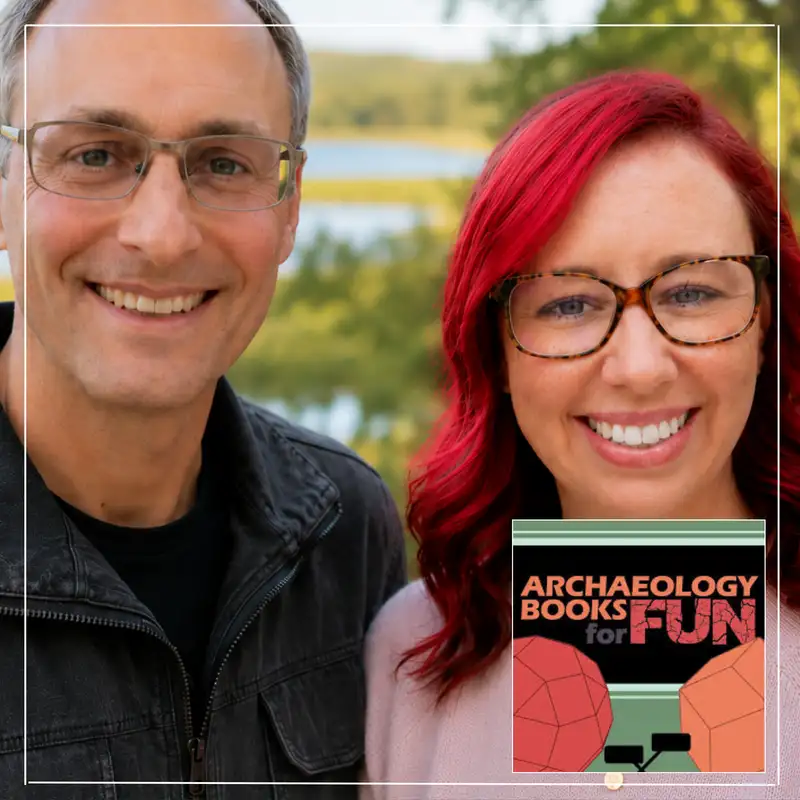
Tristan Harrenstein and Barbara Clark.
They're both the hosts and everything
actually, almost, for the Archaeology
Books for Fun podcast, and the show has
the best tagline, "Digging books that
aren't drier than dirt." And it just says
a lot about the personality of this show.
So, 'Archaeology Books for Fun'
podcast is quite a different style
actually than we've chatted with.
It's, it's a book club style podcast
and as, just as the title suggests,
it's dedicated to making archaeology
accessible and enjoyable for everyone.
Jennifer Lee: Yeah, and I like
the fact that they just state it,
the Archaeology Books for Fun.
I like it.
I understand what I'm gonna get
from this podcast because there's
a lot of misconceptions when
it comes to their topic, and I
know we talk about it as well.
Either some people think it's a little
sleepy or other people have it glamorized.
Like I remember watching back in the day
Relic Hunter, where the woman is hunting
the relics and you think it's super fun.
But I like the fact that they
actually teach us the proper
stuff when it comes to archaeology
.
Neil McPhedran: Yeah, totally.
What's really unique about this podcast
of, versus anyone else we've interviewed
so far on, on, on Continuing Studies,
it's, it, they use this book club
style that isn't an interview podcast.
And I think actually whatever field
you're in, do listen to it because
I think this is a really interesting
style of podcast that an academic
can use in whatever field they're in.
So anyway, let's get into it, Jenn.
Welcome Barbara and Tristan.
So great to have you here on this
episode of Continuing Studies.
Tristan Harrenstein: Thank you.
Barbara Clark: Yeah,
thank you for having us.
Neil McPhedran: So we met actually
in person at PodFest in January.
We met at one of those little meetups.
It was really nice to get to know
you, and so I was like, "I gotta
get you on the Continuing Studies
podcast," and here we are, Jen.
Jennifer Lee: I'm glad Neil's
doing some heavy lifting now.
You're doing my role because usually
Neil says I'm like the networking
queen, so I'm out there always at all
the conferences bringing people in.
Yeah.
Neil McPhedran: So your podcast,
Archaeology Books for Fun, why,
why don't we just start there?
Love the title.
Yeah.
Thanks.
Yeah, it's such a great title, and
there's some good branding as well
too, and I really wanna get into that.
But maybe let's just start
with what's your origin story?
Barbara Clark: Tristan,
I'll let you have this one.
Tristan Harrenstein: All right.
So we work for the Florida
Public Archaeology Network.
So we do outreach and education about
archaeology , the past, and science.
We work with all ages.
And we typically end up working with
kids to seniors, and we often miss
the working age adults in between.
And so, part of the reason for this
was we want to reach that audience that
we don't typically reach very easily.
But we just thought let's
try it and see how it goes.
And then we're still doing it and we
enjoy it, to our surprise I think.
Barbara Clark: Yeah.
Yeah, definitely.
We didn't know if this was gonna be
something that we would continue or how
successful it would be, and we think
we have 50 episodes now, right Tristan?
Tristan Harrenstein: Where I'm
editing the 51st right now, yeah.
Neil McPhedran: Well, congratulations.
That 50 mark is good.
I would say y- your show is really fun.
Having listened to a couple of episodes,
you guys have a great rapport, like I
think Jenn and I do, but I think that's
part of it and maybe that's part of
why you guys are still going at it.
Do you think that that's part of it?
Barbara Clark: Definitely.
I mean, Tristan and I have worked together
for over a decade now, and I think we read
each other's thoughts quite frequently.
Apparently we also order
the same thing for lunch.
I think our dynamic works really well.
We know each other well enough and
we know the subject matter well
enough that we can bounce things
off each other pretty easily.
Tristan Harrenstein: Yeah.
I would not be doing this on my own.
I need someone to bounce ideas off of and
get something different than what I come
up with on my own and someone to talk to.
Typically we'll record face-to-face,
and that's pretty big deal for us.
I know it's not feasible for everybody,
but it certainly makes a difference for
us to be able to do that face to face.
Jennifer Lee: It's funny because Neil
and I live five minutes from each other
and we still do a virtual podcast.
Tristan Harrenstein: There
definitely are some advantages, like
keeping the audio tracks separate.
That's a thing I still
struggle with, but yeah.
Barbara Clark: We built a recording
studio in our office, and it
was quite the engineering feat.
And I will give Tristan most of the
credit because he actually designed it.
I was just there as manual labor.
Tristan Harrenstein: We're
still tweaking all that.
So there's a lot of skills
I've had to learn to do this
that I did not have before.
Doing all the production and stuff,
I had never done any of that kind
of thing before, so it was a bit of
a learning curve to figure it out.
Jennifer Lee: How'd you
guys decide to do it?
Were you just looking across the office at
each other one day and you're like, "Yeah,
we should, create a podcast together"?
Tristan Harrenstein: We work for an
organization that has a bunch of people
employed in different places around the
state, and we actually share an office.
Barbara Clark: Yeah.
Tristan Harrenstein: So that's one of
the reasons we decided to do it together.
Barbara Clark: And we really wanted to
hit that working adult group because
Tristan said we hit the children.
We, we don't hit the children.
We do public outreach with children
and, you know, we do library programs,
like we're gearing up for our
summer reading programs right now.
And then we do a lot
with the senior citizens.
But, you know, working age adults, when
we're doing our outreach, they're at work.
And podcasting is something that not
only is it something we can do while
we work, but they can listen to it
whenever is convenient for them.
And one of the really big benefits is once
it's out there, it's out there for good.
So you record it once- And then people can
continue to listen to it for however long.
So I think that's a huge benefit.
It's not like a lecture where you
have to go and give it 50 million
times to reach 50 million people.
Neil McPhedran: Yeah.
Tristan Harrenstein: Another reason we
wanted to do this too is because there
is a lot of unethical channels producing
content about archaeology out there for
anti-science reasons, literally them going
out and looting sites for fun and profit.
And we've talked to our peers
about this too, is archeologists
don't have a voice at the table.
And so part of the reason for
doing this too is that, you know,
get us out there so we are present
at least, even in our small way.
But that's something we've
been trying to push our peers
to do a little bit more too.
Jennifer Lee: Well, and also you're
busting a myth too, because don't take
offense to this, but usually people
think archeologists are dry, and you
guys have such great personalities.
Tristan Harrenstein: Thank you.
Barbara Clark: Well, yeah.
Thank you.
And I will say within the archeological
community, you know, we specialize
in interpreting to the public.
So I mean, yes, there are definitely-
Neil McPhedran: Interesting
… Barbara Clark: as in any academic
realm or whatever, there's going
to be the folks that are kinda
dry and don't really understand or
know how to speak to the public.
And you have to speak to them
differently than you would, you know,
at a conference full of academics.
And we've been trained to do that,
and we have a lot of experience doing
that, and I think that helps a lot.
Neil McPhedran: Well, speaking of
dry, that, I, I love your opening line
for each episode, "Digging books that
aren't drier than dirt." That is great.
Yeah.
That is such a good way to
frame what you're trying to do
with this podcast, actually.
Have you been using that line
off the top since the beginning?
Tristan Harrenstein:
Not since the beginning.
Our core idea for this was we wanted
to read and talk about books that
involve archaeology in some way, but
are written for general audiences, so
something that people, in theory, could
also read, as opposed to the academic
reporting and stuff, which your average
person's never going to want to pick up.
And I don't always wanna pick up
unless I'm looking for information.
Barbara Clark: I'm an archeologist,
and I don't necessarily
wanna read those for fun, so.
Tristan Harrenstein: Right.
So that tagline came from that
original idea, and then us
realizing we need something a
little more tagline-like to use.
Neil McPhedran: I think for other
podcasters out there, I, I think
something like that off the top is great.
It's a really good start to the show.
It really sets it off, and you can really
sort of get a flavor for the show quickly.
So, I really like your format.
It's engaging.
Can you give us an insight
into how you decided to being
focused and discussing books?
'Cause sort of coming from the outside,
as I've listened to a couple of
episodes, it feels very conversational.
But how did you land on
that structure and format?
Barbara Clark: I think it
just came about organically.
We wanted it to be like a discussion.
You know- the two of us as professionals
talking about this book that wasn't
necessarily written for professionals.
With a book, you have a
natural flow too, right?
You have chapters, and you can go chapter
by chapter, and that's what we try to do.
And we've discussed doing different
segments and things like that, but we
haven't really instituted any of that.
And I don't know, now that we're
talking I'm like, wait, do we want to?
'Cause it sounds like it's working.
So I don't know if we
want to tweak it too much.
Tristan Harrenstein: And that's the
thing we, we've always done too, is
we are constantly trying to figure
out better ways to structure things
and better ways to reach audiences.
Some skills I haven't necessarily come
to the table with is how to, you know,
format a title and thumbnail for YouTube
so that people will engage with it.
But, you know, those sorts of things
we have to learn that we don't
necessarily get trained in, but
there's plenty of resources out there
that, you know, can help guide us
and get us started on this stuff.
The PodFest Expo actually gave
us a fair number of ideas that
we've been implementing, and we've
been seeing good results so far.
Barbara Clark: I think something
we try to keep in mind is maybe
somebody will read the book, but we
want it to be interesting to people
that won't read the book as well.
I mean, hopefully they
do pick up the book.
That's one of the goals.
It would be great if they read
along with us, but if they don't,
we want them to still be able to
understand what we're discussing.
Tristan Harrenstein: I will say we've had
a couple books we don't recommend, but
otherwise, we want them to read the book.
Barbara Clark: Yes.
Okay.
Yeah, that's fair.
Jennifer Lee: I love it because, again,
we said this topic could be kinda dry.
And, like, for me, my only idea of,
like, fun archeologists is that old TV
show called Relic Hunter, where she,
like, goes and finds all the items.
So I'm glad that you guys are
bringing archaeology to people like
myself who might not understand it.
Tristan Harrenstein: That's our goal.
I mean, that's our goal as
our job as a whole, and then
this is an extension of that.
Neil McPhedran: The default for a lot of
academic podcasts is to interview people.
So get on other academics, other
scholars, and interview them.
Versus your approach, you know,
you're covering a topic, and
you're doing your job of educating,
but just in a different way.
Is it time-consuming, do you think,
more than an interview would be?
'Cause you gotta read the book-
Barbara Clark: I was just going to say
… Neil McPhedran: and you
gotta prep yourself, I think.
Barbara Clark: So we actually do
read the books, and, you know,
we're reading them with an intent to
discuss them, so it takes a little bit
longer 'cause you're taking notes and
trying to link back to other previous
books you've read when you can.
We might research articles that are
related to it for further reading.
So it is a little bit more work, which
I think is one of the reasons a lot
of people default to the interview,
because I like to read personally.
Tristan Harrenstein: It's
still work, to be clear.
I'm sure it's
Barbara Clark: It's still work, but it's-
Neil McPhedran: Yeah, I'm not…
Barbara Clark: It's a lot of work, but
I think it, it does give us a niche, you
know, that is a little bit different.
And, and I understand not everybody
is a bookworm, but I think we try to
make our discussion interesting enough
that people who have no intention of
reading the book will still wanna kind
of tune in and listen to us, hopefully.
Neil McPhedran: That's the
interesting part for me.
As you said about five minutes ago, you're
making the assumption that a number of
listeners will not actually read the book.
But you're using the book as the tool for
the education and to dive into a topic.
Tristan Harrenstein: It lets us talk
about some aspects of archaeology
from a professional perspective.
So, you know, how does the
book handle this aspect of
archaeology ? Does it do it well?
Is it doing it poorly?
Is this accurate to reality So it's
allows us to really have some, fun
conversations about this stuff.
Barbara Clark: One of the funny
comments we've gotten is that people
really enjoy the podcast when we
don't like the book because we get-
Tristan Harrenstein: Yeah.
Barbara Clark: on our little soapboxes
and start pretty much preaching about
how horrible this book is and why.
Tristan Harrenstein: We've
gotten worked up a couple times.
Barbara Clark: Yeah.
Tristan Harrenstein: But we don't want
to read bad books all the time 'cause we
don't actually enjoy reading those books.
Jennifer Lee: I remember going to
school and you would buy the Coles
Notes version of the book, but it
was a book based on the book that
you had to read in school, but it was
like they just did a quick summary
of all the things you need to know.
And this is kind of like what you're
doing but in a more modern form.
If you're a student or even if you're
someone interested in this topic,
you can get the gist of it before
having to read the actual book.
Tristan Harrenstein: We have read
a couple books that I know are
common for students to read, and
we do see a little bump around the
first of the semester sometimes.
So, I think that definitely some
people are using it that way.
Neil McPhedran: But
that's not the intention.
You're not just summarizing a book.
As you said, you're digging into it.
No pun intended.
Or maybe pun intended.
Tristan Harrenstein:
No, go, go for the pun.
It's fine.
Neil McPhedran: You're in some
cases questioning the science
from an archaeology perspective.
Barbara Clark: The science and the ethics.
Tristan Harrenstein: Ethics is a big
one because one of the things people
think of is, with archaeology is
it's just in the past, but in reality
our world today is informed by that
past and it affects people today.
It affects descendant communities.
And so some of the books we've dealt
with where we've had our most issues
is how descendant communities have
been treated by the people involved.
I won't even necessarily say the
archeologists sometimes, but yeah.
Neil McPhedran: I want to just sort
of keep drilling into the mechanics
of your podcast as this is other
podcasters out there listening.
One of the other things that really
struck me about your show is the branding.
The name is clever, cover art is great.
You actually gave me, when we met
in person at PodFest, you gave me
a sticker, the Archaeology Books
for Fun, which is the cover art.
And I've actually had it on my
desk since we met, so it's working.
It's really good.
How did you come up with the name, and
then also now how you're using the cover
art for your episode art, and I see
you've weaved it into a video format
as well too, but it's really good.
It's fun.
Maybe you can sort of dig
into that for us, please.
Oh, I keep going with that pun again.
Barbara Clark: It's okay.
I think it's the most appropriate pun.
Tristan Harrenstein: We use it.
It's fine.
Neil McPhedran: Okay, good.
Thank you.
Tristan Harrenstein: Yeah, so we wanted
a name that kind of told people what
it was about, what the intention was.
Barbara Clark: And I remember a
discussion about, you know, there's
a lot of book- club-style podcast,
but we wanted archaeology to be
what set us apart from all of those.
And I remember having a discussion
about the word archaeology and where
we wanted to place it within the title.
And I think we went back and forth.
Tristan Harrenstein:
Yeah, it's a big word.
Barbara Clark: Yeah, it's not always
an easy word to use either, so.
Neil McPhedran: No, right.
Tristan Harrenstein: Visually
and spoken, obviously, so,
Jennifer Lee: It's so long
for thumbnails as well.
Tristan Harrenstein: Uh-huh.
Jennifer Lee: And even
in the search engines.
It's just long.
How else do you pair something with it?
But you guys did a great job.
Neil McPhedran: Well, I guess that's
a good segue into the cover art,
because if you look at it, you've
given the word fun more real estate.
You've emphasized that.
So that was an obvious
sort of choice there, too.
Tristan Harrenstein: Yeah.
Emphasize fun over what you would
maybe expect archaeology to be.
It's about- you know, not taking
it … Well, I don't know,
we take it pretty seriously.
But we laugh and we joke about things.
And it's not just the dry academic idea.
It's what we wanted to
tell a public audience.
Barbara Clark: I think that's really
important because I think a lot of
archeologists, and probably a lot of
academics in general, they will give
a lecture to the public the same way
they would to a group of professionals.
And so, we really wanted to emphasize the
fact that this was not necessarily … I
mean, archeologists can listen, we
would love to have archeologists listen,
but they're not our intended audience.
Jennifer Lee: Why?
Because they're not fun?
Barbara Clark: They're a lot of fun, but-
Tristan Harrenstein:
They're already convinced.
We don't need to convince them.
Barbara Clark: Yeah.
They already know.
Jennifer Lee: Yeah.
I like the little spheres that you
have as your little hosts on the mic.
How did you decide that?
Tristan Harrenstein: Well, the
graphic is all stuff I did, and it's
based off of my office actually.
And I have limited artistic skill, so I
went for as simple as I could visually.
And then I knew I couldn't do,
like, a caricature or anything, so I
asked Barbara what shape she wanted.
And-
Barbara Clark: And I was
like, what did I say, Tristan?
I was like,
Tristan Harrenstein: I think
you Googled what's the most
complicated shape, which is-
Barbara Clark: And I sent that to Tristan.
Tristan Harrenstein: I was picturing
triangle, square, you know.
But no, we got whatever that is.
And so that's how they happened.
But talking about branding, we do have
a little bit of an issue with them
because a lot of people see those shapes
and they think Dungeons and Dragons.
Neil McPhedran: Oh.
Tristan Harrenstein: We've
actually gotten some feedback
that that is actually a thing.
So we might need to rethink about
rebranding at some point and changing
it up to try and differentiate us a
little bit more, 'cause it doesn't
exactly communicate what we're trying
to do with the podcast visually.
So it's a thing we might need to address.
Jennifer Lee: At first I was
like, is this, like, rocks
because of, like, archaeology?
I was like, do you see
yourselves as rocks?
I don't know.
I was getting way too into it, but-
Tristan Harrenstein: Nope.
The real story's a lot simpler
…
Barbara Clark: one thing we learned at
the PodFest Expo, everybody was like,
"Don't put a microphone in your logo.
Everybody knows-
Tristan Harrenstein: Right
… Barbara Clark: you're a
podcast." So we might need to
look at changing that as well.
Tristan Harrenstein: I think in
our case what we're trying to do is
communicate those shapes are the hosts.
I think not necessarily successfully,
but That's why we did that.
But yeah, it was always the plan from
the start to do a video version of this
too, because we have a YouTube channel,
and so, I just found a nice little
tutorial actually on how to do the
pop filters around the shapes whenever
you're talking and then I'll work in
some images and stuff when they're
relevant or when it's not, like, human
remains or something that we can't share.
Jennifer Lee: This is what I tell
people with podcasting is your topic
doesn't necessarily have to be visual,
even if you're doing video or not.
Neil McPhedran: It's true.
Tristan Harrenstein: Yeah.
Neil McPhedran: Let's go back to PodFest.
You mentioned a few minutes
back that you found it quite
valuable and you learned a bunch.
What are some of those things that you
picked up while you were there and you've
been implementing into your show since?
Tristan Harrenstein: I'd say we had
been running for a couple years.
We were doing monthly for quite
a while because we didn't know
what we were in for, essentially.
Yeah.
And then we've switched to twice a month.
And we were looking for ways
of reaching more audiences.
And we had been making some changes
throughout that had some effect, but
a few of the things that really seemed
to make a big difference is titles that
spark curiosity, thumbnails that go
along with it, and then we have, like,
maybe a six to eight second teaser
right at the start of the episode.
I shortened all that too.
So all that seems to have had an effect,
and we are seeing Spotify actually push
us every once in a while and everything.
So that's been good to see go up.
Barbara Clark: Yeah, seriously.
It's a lot of work to podcast, so it's
nice to see those numbers increase.
But one of the things we also learned was
making your thumbnail kind of stand out.
And one of the things that we did,
I remember we were sitting at lunch
or dinner at the PodFest, and we
went through and just searched on
Spotify book club podcasts to see
what their thumbnails looked like.
And a lot of them, they use, like,
flowing cursive and pastel or lighter
colors 'cause they're definitely
marketing towards women, it seems.
But ours is a little bit different in
that we're academic but not academic.
And so we wanted to make sure that our
thumbnail stood out amongst the book
club style podcasts, and ours does.
But that wasn't necessarily intentional.
One of the things we've learned is
to make sure that when you're looking
at your colors and fonts and things
like that, you want to stand out.
Tristan Harrenstein: We looked at history
and, archaeology podcasts similarly.
They use a lot of subpoena
colors and that kind of a thing.
So having the bright colors that we
have in ours does help us stand out.
Neil McPhedran: I think that's a
really good takeaway that, that a lot
of podcasters overlook, is looking at
your competitive set, not just from
a format perspective, but visually,
how do you stand out in the platforms?
I would encourage podcasters to go look
at your show in each of these platforms.
And I like that lens that you put on
it, which was, are we standing out?
Are we differentiating from our
other, quote unquote, competitors?
Tristan Harrenstein: Yeah.
So you have to have your content,
of course, for your podcast, right?
But one of the things that we
aren't necessarily trained to do
is how do we package that content.
And so, that is a thing that we've been
talking about, we are still trying to
figure out and we're still developing.
Neil McPhedran: Yeah, it
is a ever-evolving thing.
I don't think you ever
get to the perfect state.
I like this notion of kind of looking
at it as you go and evolving it,
your format, your content, but also
your visual version of your content.
So I think that's a really good takeaway.
Jennifer Lee: And that's the thing
I think a lot of people just look
at their numbers, but it's, do you
guys actually look into what episodes
people are watching the majority of,
and then being like, "Well, okay,
maybe these set of episodes are more
in the topics that people wanna hear,"
and build your strategy off of that?
Barbara Clark: A little bit, yeah.
We love looking at the numbers.
Tristan Harrenstein: I might too much.
Barbara Clark: But I think, you know,
we look at what the book was discussing
for those specific episodes that were
doing really well, what might be going
on in current news or issues and,
you know, if that's affecting them.
And for one of our books, we did
Hoof Beats, which is, it's about the
archaeology of horses and humans,
and our interactions throughout time.
And we've noticed after that
book We're hitting a younger
demographic and a lot more women.
. And so, you know, we're currently
talking about what to do for our
next book and how do we piggyback
off of that to grow our audience.
Tristan Harrenstein: We didn't do this
intentionally, but we did decide probably
a fiction murder mystery was about
the best next book we could have done.
That's what we're doing right now.
So it seems to be sustaining pretty
well at the moment, which is nice.
Jennifer Lee: That artwork on the last
one, there's like a house on fire.
Tristan Harrenstein: Yeah.
Jennifer Lee: I was like,
"This makes me wanna watch it."
Barbara Clark: Good.
That's, that, that's the intent.
Jennifer Lee: And it's funny because
when I think archaeology books, I
don't think about murder mystery.
Barbara Clark: Yeah, I mean, there's
not a lot of, or at least good
fiction out there when it comes to
archaeology that … But Marianna
Evans, the author for this particular
book series, she does a phenomenal job.
We actually had the opportunity to
interview her, and she was telling us
about the research she did and things.
And it's … It was really nice
to be able to bring her on and get
some behind the scenes, because,
we both really enjoyed that book.
Tristan Harrenstein: Well, and she's
real clever with it too, because
archaeology and crime scene analysis
share a lot of the same techniques, and
so it makes sense for an archeologist to
be involved in these murder mysteries.
We don't usually do fiction on
our podcast, but it's been a nice
change-up from the heavier nonfiction
sometimes to stop and do that.
Jennifer Lee: And your
audience so far seems like it.
They're not like, "Oh, why
are they doing fiction?"
Tristan Harrenstein:
Haven't complained, so.
That's good.
Well, even though it's fiction,
we're still talking about
our experience in archaeology
.
We're still bringing
real world experiences.
You know, this is definitely a
thing that happened in the field.
We just had one where there's
always the person on the crew
that's the talker, right?
And that's a thing that's
represented in the book.
And then there's, every once in a while
there's one that's, this is not what
we would actually see probably, or
sometimes you do it for the narrative.
That's fine.
But gives us stuff to talk about, so.
Neil McPhedran: Well, it's the beauty
of the format of your show is you can
branch off into fiction kind of a thing.
So that's great.
So maybe we just pull back a little bit.
As you mentioned, your focus is really
that public outreach and education.
W- where do you see podcasting fitting
into that broader mission going forward?
Do you see this as an opportunity for
other academics who are in a similar
public outreach education role?
What have you learned along the way?
I'm sure you've picked up a few
things that really work for that
broader mission that you're part of.
Barbara Clark: Yeah, I think one
of the benefits to podcasting is
you put it out there once, and
people can continue to listen to it.
I mean, we've seen even some of our very
early episodes grow in listenership,
so it does work So there's that
benefit, and additionally you're
hitting that demographic that can be
hard to reach with public outreach.
I mean, they're working, they have young
families, they're busy, but guess what?
They have a commute, so they
can listen- on their commute.
So we're meeting them where they are,
essentially, rather than asking them
to come and do, put one more thing on
their calendar that they have to do.
And I think that's really helpful.
And I think for, in any academic study,
I think getting the public involved too
is really important, even if you don't
do public outreach as part of your job.
Because a lot of our funding comes from
public sources, and having the public
understand what you're doing makes
it easier to potentially get funding.
It also makes it easier for people
to understand what you're doing
and why you're doing it, you know?
And I think a lot of times we see
something on the news, I know I've
seen this, where there was a study
being done, and people are like,
"Well, that's stupid. Why do we need
to know something as mundane as that?"
But then the podcasting gives you
a chance to discuss how you can use
that information in the real world and
know how it's benefiting the public,
and I think that's really important.
Tristan Harrenstein: It's a similar
situation to archaeology . You're not
necessarily worried about destruction
of sites in other fields, but does your
discipline have a voice at the table?
Are you being heard- or is it just
the critics being heard, or just
the pseudoscientists being heard?
So that's definitely valuable, I
think, to all sciences that way.
Neil McPhedran: That's a really good
insight, especially in the podcasting
space, which has a lot of loud
voices, especially pseudoscience.
I think that that is this larger
opportunity academics and scholars have
to join the conversation, if you will.
It's this open source thing that
you can just start putting it out
there, and you'd have a direct voice.
You know, we have to have our
eyes wide open in that it's gonna
be hard to compete against some
of these really big, huge shows.
But at the same time, this is your
opportunity to put out your direct
voice and to be part of the discourse.
Tristan Harrenstein: Yeah, because
if not, then you're just letting
them control the discourse entirely.
Neil McPhedran: I think that's great.
I think that's a good kind
of close to our conversation.
I think there's a lot of really
good insights for fellow higher
education podcasters here.
So thank you both so much
for joining us today.
Barbara Clark: Yeah.
Jennifer Lee: Yeah.
Thank you.
Tristan Harrenstein: Thank you.
Barbara Clark: Yeah, it was fun.
Thank you.
Neil McPhedran: Jenn, that was
another amazing episode, and just
like the title says, fun, I gotta say
I really enjoyed that conversation.
And the one thing that really
struck me was Tristan's point about
archeologists, or actually sort of
more academia broadly, if you aren't
part of the conversation, then other
voices are gonna shape the conversation.
And really it's, I think it's a, a call
to action for, for higher education
folks to join the conversation, and
they did such a great job of explaining
how podcasting for them, and then this
specific format that they've adopted and
they use, has given them that ability
to join the conversation and to be part
of the conversation to dispel some of
the things out there that are just wrong
about archaeology and archeologists.
Jennifer Lee: And I like the
fact that we're just seeing
more and more in general.
We've talked to other podcasts in
the past, like the one from Yale
where they talked about art books.
I love that books are being included
into podcasts, because I think that's
something that people didn't think
was gonna happen, and the fact now
that it's opening us up to diverse
topics, I think it's really cool.
Neil McPhedran: That's great.
Well, Jenn, why don't you read us out?
Jennifer Lee: Thank you for tuning in
to the Continuing Studies podcast, a
podcast for higher education podcasters.
We hope you found this episode
informative and inspiring.
If you enjoyed the show, we encourage
you to follow and Thank you for tuning
into the Continuing Studies podcast, a
podcast for higher education podcasters.
We hope you found this episode
informative and inspiring.
If you enjoyed the show, we encourage
you to follow and subscribe to our
podcast on your preferred platform
so you never miss an episode.
But if you found this episode
particularly valuable, please consider
sharing it with your friends and
colleagues who are also may interested
in higher education podcasts.
We also invite you to join your peers on
HigherEdPods.com, where you can connect
with other podcasters in higher education
and learn from others in the field.
Thank you for being part of our community.
We look forward to continuing to bring
you valuable insights and conversations
around higher education podcasts.
See you in the next episode.
Creators and Guests