Do Podcasts Count? Journals, Peer Review, and the Future of Academic Work in Audio
So I think we really have to come to
terms with, the fact that there are more
ways than one beyond the monograph to
communicate good intellectual scholarship.
I think two, and you're starting to see
this a little bit, universities creating
the infrastructure to produce podcasts.
I think we're moving in that direction.
As you all know, academia moves
at a glacial pace, but right
now in this world that we live
in, all bets are off the table.
So why the hell not try
something different?
Welcome to Continuing Studies podcast
for higher education podcasters who
wanna learn, connect, and get inspired.
I'm Neil McPhedran founder of Higher
ed pods.com and Podium podcast company.
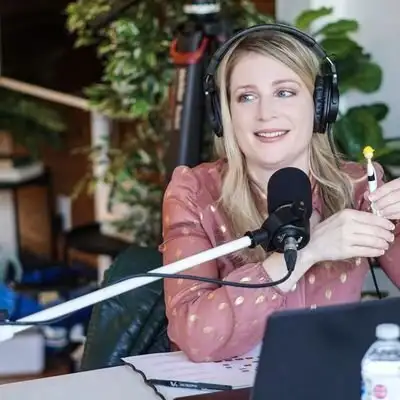
And I'm Jennifer Lee,
founder of J Pod Creations.
If you're podcasting in
higher ed, you're not alone.
There's a fast growing community
out there, and we are here
to help you tap into it.
That's right.
And there's no better way to tap into
it than at higher ed Pod Con, which
is happening this July in Cleveland
early bird registration is open.
We're looking for speakers.
Submissions are coming in, but we're
going to two days by popular demand.
So please get your speaker submissions
in and tell everyone about it.
Yeah, I'm really excited.
And also for this show, If you wanna be
on the show or know somebody we should be
interviewing, email us in the show notes.
Yes.
Got that email there.
I just gotta put one more thing in
here, Jen, which is, I was super
inspired by everyone that, we heard
from about our 2026 predictions.
Episode, which was the previous one
to the one you're listening to here.
So many good voices from literally around
the world getting their predictions in
for higher education, podcasting in 26.
So if you haven't listened to
it, go back and listen to it.
But thank you so much for
everyone who reached out to us.
We love it.
If you're listening, we'd
love to hear from you.
Okay, Jen.
So in this episode we are
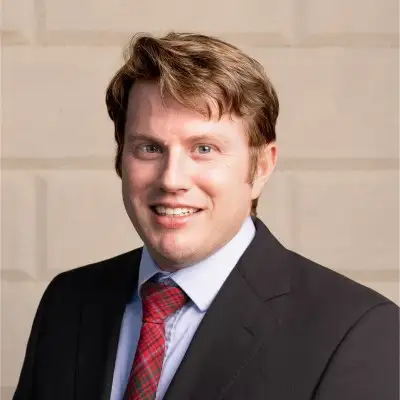
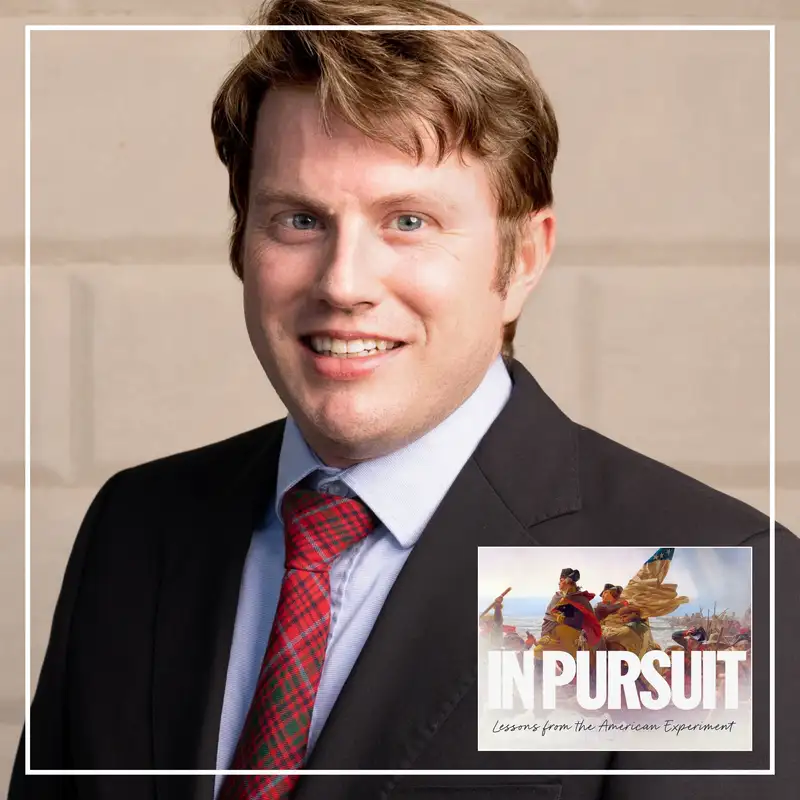
talking to Jim Ambuske.
Jim is presently director of Digital
History for More Perfect, where he
plays a central role in advancing In
Pursuit, a national civics initiative
that translates the lives and leadership
of Americans throughout history
into actionable lessons for today.
It's actually really cool.
You should go check it out.
We'll put a link to it in our show notes.
And if that's not enough, Jim is also the
co-founder of Revolutionary Histories.
Which is a podcast production firm that
specializes in narrative, documentary
style podcast, and interview series.
I am super excited to talk to Jim,
and one of the things I'm excited to
dig into with him is something that
I've got on my thing for 2026 for
higher education, podcasting, which is
academic work legitimized as podcasts.
And I'm really curious about this and
talking to all kinds of folks out there.
So I really wanna dig into this,
how peer review, archiving,
citation system, what about the
idea of a journal for podcasting?
So that's what I'm excited
to get into with Jim.
Yeah, he's just a fascinating guy.
Like I'm just excited to talk more
about peer review, because there's
gonna have to be some type of review
system, but how do we figure that out?
Let's get into it.
Jim, it's so good to have you
back on continuing studies.
Well, Neil, Jen, thank you
very much for having me back.
I'm delighted that you thought I
was worthy of return appearance.
Absolutely.
You definitely worthy.
We love it when people come back.
So Jim, you've changed your role
since we last had you on the podcast.
At the time you were at R2 studios and we
had a, a great conversation about that.
We'll drop the link to that
episode in the show notes.
We focused in on that episode around
making history heard, bringing
the past to life through podcast.
That was the actual title of that episode.
So tell us about your new role.
I am now Director of Digital History
working alongside Colleen Shogan, who
is the 11th archivist of the United
States, the first woman archivist of
the United States on a project called
In Pursuit, a project of More Perfect.
More Perfect is a national civics
organization dedicated to engaging
Americans in democracy and history and
participating in our democratic life.
And In Pursuit is a really kind of
America 250 project in the sense that
it is dedicated towards drawing lessons
from America's past so that we can
write the history of America's future.
Dr. Shogan recruited 72, I think authors
to write short, 1200 word essays about
former presidents and first ladies.
The idea of being focusing on some kind
of element or challenge that they face
during their term of public service or
throughout their life, contextualizing
those experiences, but then figuring
out how we can learn a productive
lesson from those moments so that as we
approach the 250th anniversary of the
United States, we can deduce from those
moments in history how we can try to
form a more perfect union in a sense.
So there'll be essays, they'll
be publishing on Substack
beginning in February, 2026.
And I'll just say very quickly, go
to inpursuit.org to sign up where
you can get the essays when they
come out starting in February.
We also have a podcast as well as
videos and educational materials, and
I'm running the podcast and working
with our collaborators on some of
the videos and editorial content.
It's a great moment to be
attempting a project like this.
Wow.
That sounds like a large project.
It sounds very interesting as well too.
Like you feel like you're
biting off a lot there.
Yeah.
Well, and you know, until I came on
board, Colleen was a one woman show.
I mean, there are other project
co-chairs and whatnot, but she
was doing the bulk of the work.
so be before we jump into the meat of the
conversation today, I'd love to just get
your take without getting into specifics
about R2 studios, but your take on the
state of funding, I guess, for academia
and how, how do you see that affecting
higher education academic podcasting,
it's made it much more difficult.
As listeners will likely know, the
rise of Doge in early 2025 took a weed
whacker to most of the federal funding
for humanities projects, including the
National Endowment for the Humanities
National Archives funding N-H-P-R-C
funding, which funds a lot of our
documentary editing papers, projects.
Our library sciences, grants,
things of that nature.
So it's been very tough.
Higher ed has been hit extraordinarily
hard in the United States, and without
going into too many details about
the kinds of pressure campaigns that
are being put on universities, it's a
difficult environment in which to work.
It is a difficult environment right
now for academic freedom, and it is
a difficult environment to receive
funding unless you're towing certain
narrative threads about the history
of the United States or certain people
who participated in that history.
So even though some of the project
funding lines have survived, the
criteria by which projects are judged
and the kinds of projects that the
federal administrators now want to
see is vastly different and much more
constrained than it was previously.
And a lot of that funding, of course, is
going to, um, America 250 projects, but a
very particular take on American history.
And so, I had a lot of conversations
with program officers and former program
officers about all of this because
as you might imagine, certain fences
are being put up around funding and
certain criteria are being applied.
The question is whether or not we
should even be applying for it.
The answer is yes, because if folks who
have good ideas and can figure out how
to navigate these difficult circumstances
don't apply, well, somebody else will.
And those somebody else's might
not be doing good history.
So it is a difficult environment.
Funding is smaller than it used to be.
The rules are different,
the fences are up.
But I think we gotta keep trying.
You gotta keep plugging away because if
you're gonna build hopefully something
permanent with those funds, then it
will simply be a part of a chapter,
one chapter of American history that
then we can still look back on and, and
hopefully utilize in the future, so.
How do you feel that we get rid
of some of those roadblocks?
How do you encourage those
other voices to still break
down the walls and continue on?
I think it's a really terrific question
and it actually kind of gets to some
of the things we talked about in the
last episode we did together, but the
sort of fragmented nature of higher
ed in this moment and particularly
in the historical profession where
there are fewer and fewer jobs.
There are increasing demands on
a professor's time to get tenure.
So that limits the time for
good productive scholarship.
But you know, folks like myself who, I
guess I'm academic adjacent in some ways.
I mean, I always sort of have
never had a tenure track position.
Those of us on the periphery, you
might say, who are still in the
game, but not necessarily of it.
are finding ways to do podcasts and
documentaries and forms of public
history that are still fundamentally
reliant on the good scholarship that our
colleagues are doing, that we are doing.
But because we're doing them as
independent projects or as part of
collaborative organizations, that
gives us a great degree of flexibility.
Without, you know, potential federal
oversight or other kind of oversight to
tell Good stories from the past, based on
compelling scholarship in ways that would
satisfy our peers in the profession, but
also reach the public in ways that other
forms might be constrained at this point.
I like your positive attitude, Jim.
you said we're gonna keep pushing
through, I think a few minutes ago,
I think that's the way it has to be.
And so, um, all power to you
and anyone who's listening.
We're gonna put Jim's contact
information in the show notes.
I'm sure you'd love to hear from others.
Yeah, I'll do motivational speeches.
How about that?
Yeah, there you go.
That's excellent.
So Jim, the reason we wanted to get you
back on today was I noticed a LinkedIn
post you had put up in late October,
early November about The Digital
Archives in the Commonwealth Summit.
And that's the Commonwealth of
Virginia, which is a, a mini
conference that you attended, but,
uh, you're also one of the organizers
I'd love for you to share a little
bit about this, who really attends
and what are you really digging into?
The Digital Archives in the Commonwealth
Conference or Summit started in 2017.
My colleague and I, Loren Moulds,
were working on a number of digital
projects and we, we kind of surveyed
the landscape and there wasn't really
a forum where, as we said, librarians,
technologists, archivists, historians,
and other humanities practitioners
could get together in Virginia to talk
about the creation of digital archives.
What does it actually mean to, you know,
put existing archival material online
or assemble them in a different form
and create research platforms as we were
attempting to do at UVA law library.
But the first one was in 2017,
fairly successful, and we went until
COVID forced us to take a pause.
We were finally able to bring it back
in the last couple of years, and this
year it was at the Virginia Museum
of History and Culture in Richmond.
It's interesting to think about the ways
in which the conversations have evolved.
When we first started, it was about
digitizing images, how to put those
into a accessible digital archive.
What were some of the conversations
taking place about metadata?
When we brought it back last year,
as you might imagine, a good portion
of the conversations were about AI
and the rise of generative AI and the
role that plays in coding, metadata
construction, and accessibility.
This year we were fortunate to
very deliberately assemble a group
talking about the creation of oral
history archives, oral projects,
or audio projects in general.
So, you know, just for example, we
had Dr. Anne Fertig, who's at the
United States Holocaust Museum.
She oversees their encyclopedia,
and one of her goals is to do audio
recordings of all the entries.
It's capturing audio in service
of accessibility and dissemination
of those really important entries.
And then Laura Stoner from the Museum of
History and Culture talked about their
Vietnam, veterans oral history project.
And we also had Sylvia Marshall from
the Virginia War Museum talking about
their oral history initiative as well.
It was a really fascinating conversation
and opportunity to think about the
meaning and purpose behind creating
these archives, but then also
the question of what comes next.
Hmm.
If you think about an oral history
project, often historians will work with
the transcripts from those conversations
to produce scholarship or written work.
The increasing question in my
mind is, well, you're creating
these wonderful oral archives.
You're hearing the voices of these
people, you're hearing the intention
in their voices, the emotion in their
voices, the tone of their presentation.
You're hearing their personalities.
What are the opportunities to
bring those into a podcast format?
I think it offers a really
exciting opportunity for creators
to draw on existing oral history
archives, to start telling
stories in really compelling ways.
So.
So you started this conference
in 2017, you must t see a large
advancement, growth, evolution,
however you wanna put it, of this.
Mm-hmm.
Multimedia content scholarship.
Are you and your colleagues seeing
this as a ever growing thing?
I think there's real opportunity
for it to continue exponentially.
And I think in part because, and
especially my younger colleagues
are much savvier at social media,
at thinking about how to craft
compelling visual presentations
than people of my generation.
That's not to say that the
younger folks are digital natives.
That's a, a completely false assertion
that we continually fall into.
But Gen Z have really figured
out how to use things like TikTok
and YouTube to create compelling
presentations and storytelling.
So I think in that sense, to answer your
question, Neil, yes, I think there's
tremendous opportunity both in audio but
also in video as well, to keep going and
not simply just to feed the algorithms
because it's a creative challenge.
It's also creative liberation in some
ways to try to figure out how to tell
stories that you might've just told on
paper before, but then to do it either
in audio form or into documentary.
And I'm getting a little bit of
experience this right now as part
of my new job, the podcast we're
developing is video and audio.
And I'm really proud to work alongside
my team because it's the most polished
video production I've ever seen, and
I'm learning all sorts of things about
how to craft visual narrative in many
ways that are different than in audio.
And so, I just think there's so
many different stories to tell.
There's so many different
ways to tell them these days.
Of course, it's always gonna be a
question of funding and possibly
institutional support, but I think it's
worth doing and hopefully I can make
a little bit of that happen for folks.
I like that Jim.
More encouragement for
you to keep going there.
I think as a carry on a little
bit about what you were saying.
I attended a symposium at NYU in
the fall, and we had an episode
about it actually as well.
It was called Podcast Intellectuals,
and there was this recurring theme about
how academia still treats the written
monograph as the currency of scholarship.
Why do you think that is and how
does podcasting challenge that?
Yeah, it's a great question, and
you're right, the monograph remains
sacrosanct, which is okay because that's
still a foundation of scholarship.
But, but to your question about why
is it essentially trusted more, you
know, I think in part because it's
been the foundation of scholarship
for a couple of centuries, but more
intensely since the early 20th century
when the professions became professions
and the standards began to be put in
place for what counted as scholarship.
And increasingly so since the 1950s.
I mean, if you look at
dissertations in history in the
1950s, they're like 35 pages.
Maybe they've got some footnotes.
my dissertation was 400 pages and God
knows how many footnotes were in there.
And so it's a, it's a
form of trust, but verify.
And with a audio project, I
think part of the issue is that
there's two things going on.
One is, there is the assumption that
something that is put out for the
public is fundamentally un-scholarly
and therefore unworthy of being vetted
by folks in the Ivy Tower, which is
fundamentally untrue because just
because it's accessible, it doesn't
mean it's not rigorous and scholarly.
And number two, to your question, I do
think that audio projects and podcasting
and connecting with the public, in
getting 50,000 downloads versus the
average monograph sells 643 copies
over a five year period, so you're
potentially reaching a greater audience
than you would with your monograph.
That can seem threatening.
You can sort of see it as, well, what
am I even doing if I am only writing
this book that is only gonna reach a
very small fraction of the population.
That's not to say that all podcasts are
gonna reach tons of people, but you can
kind of see that there's a, a sort of
introspection that takes place and whether
or not what I'm doing is even worth doing.
Hmm.
The answer is yes, you should.
Even if your monograph sells 643
copies, there's a generational
opportunity to inform states of
the field and understanding about
the past or other fields as well.
It's just that there should be a
place, and there is a place where
you can do that good scholarship.
You can disseminate that in audio form
and you know, you might not necessarily
see the footnotes, but if you put in
the work and the scholarship and the
vetting, then you've got a product
that's equally as compelling in
many ways as the standard monograph.
Yeah.
If podcasting were to be recognized
as a legitimate academic work,
what would the requirement be?
Like peer review, archiving, you name it.
It's a great question.
I've been thinking about it a lot
in part because a colleague of mine,
who's the editor in chief of, academic
Press, has been asking me about this
because she has an interest in possibly
pursuing this down the line as a means
to diversify the press's portfolio.
But what would a peer
reviewed podcast look like?
We were starting to go down this
road at George Mason with some of our
graduate students who were thinking
about podcasts as dissertations.
It would have to be peer reviewed, both
for the intellectual content and the
argument that's advancing, but also by
professional audio creators who understand
the presentation of a story in audio form.
And what are all the wraparound
elements that go into that presentation?
Because if you think about it, right, if
you're peer reviewing a monograph, there
are no sound effects, there's no music
to amplify or play on your emotions.
No sound effects, as I said,
to sort of situate you in the
soundscape of historical period.
Certainly, you know, in my century, in the
18th century, all my friends are dead, so
I need voice actors to reconstruct voices.
They're not necessarily gonna sound
like they did in the 18th century.
Does that then somehow make that an
inauthentic presentation of the past?
I would argue no, because
something is better than nothing.
so all those considerations
then have to go in place.
Then of course.
What's the marketing plan?
How is this going to shape the field,
both in terms of what you're doing in
that podcast, but also its ability to
reach others, both public and scholarly.
So I think there's a lot of great
questions to figure out, and I think
this is something that university
presses should be doing because the
scholarship is gonna be sound, and
it's not simply just a matter of,
well, you just turned it into audio.
Because as, as both of you know,
there's a lot of work that goes
into making something compelling
from an audio standpoint.
so there's a real, I think, interesting
opportunity for university presses and
presses in general to invest in that
space, to work with people they know
and trust, who are smart people who
have interesting things to say, and
then work with other creative peoples
in a collaborative format to bring
those stories to life in ways that
the monograph not necessarily will.
Hmm.
Jim, it was interesting you were
referring to University Press.
actually my next question was
around the traditional journal.
Mm-hmm.
Maybe just tease those apart a little bit.
University Press versus a journal.
Maybe this is a really dumb question, but
I, you see those as two distinct things?
I think so, and in part I say
that because journals are so hyper
specifically focused on really
foundational scholarship, the fundamental
building blocks that eventually
might become a book in somebody's
work or someone's trying to make a
decisive intervention in 30, 35 pages.
But that doesn't mean that
journals can't have podcasts.
The American Historical Association, which
publishes the American Historical Review.
Has a podcast called History In
Focus, which is a really clever thing.
It's hosted by my colleague Daniel
Story, where he talks with someone
who has published an article in the a
HR about the substance of their work.
And so if you're like me, who, and
I will confess, I, I don't read
the journal cover to cover, but
occasionally I will be enticed to dip in.
But if I don't have time and if I can
listen to this scholar talk about their
work and give me, you know, a good
high level overview of what's going on.
That's a really valuable service for
somebody like me and for others as well.
Then maybe as a sort of inciting moment
to go look deeper into that article.
I think they are separate.
I would not imagine that journals given,
if they are pressed for resources and
whatnot, would have the capability to do
larger audio projects, but you never know.
Thanks for bringing up Daniel Story,
also a former guest on our show.
He was excellent and he came to
Higher Ed Pod Con as a speaker
this past summer as well.
It was awesome.
I
I will see him later this
week, so I'll tell him
Excellent.
So say hello.
Just to follow along then to what you were
talking about there is, what I'm curious
about is what do you make of the idea of
a Journal of Podcasting or some formal
accreditation body for scholarly audio.
I think that would be a terrific
idea, and I think that we need greater
opportunities for those of us who
are doing this work to get together.
I mean, you're doing
that with Pod Con, right?
Mm-hmm.
That's a tremendous value, but I
think that's needed in part because
there needs to be a kind of regular
form where those of us who are doing
this work are talking to each other,
learning from each other, getting
excited about ideas, critiquing ideas.
In the history space we haven't
had a really dedicated history
podcast conference at all.
I mean, we're doing something
at AHA here in the coming days.
But I would love to see a history focused
podcast conference that brings in not just
folks in the academy, but we have a lot
to learn from our colleagues who are doing
history podcasts outside of the academy.
Journalism or other independent producers
who are doing some really compelling stuff
that see how to create in ways that we
do not, and what can we learn from them?
What can they learn from us?
If you've ever been to a podcast
conference, there're a lot of fun.
There are a lot more fun
than academic conferences.
It's like going to a jam party, right?
So I never want to go to an
academic conference again.
No, just go to a podcast conference.
I think there's a real need.
I think there's a real opportunity.
It's a question of what format
and who's all involved, but I
would co-sign your idea neil.
I feel like academic conferences though,
would probably have better snacks.
Well, so the Resonate Podcast Conference,
which is held every year at Virginia
Commonwealth University at the
Contemporary Art Institute in downtown
Richmond, put on by a gentleman named
Chioke I’Anson, who is a professor and one
of the leaders of Virginia Public Media.
It is a fantastic conference
with fantastic snacks.
And it's so successful now that the
tickets sell out within minutes.
Like it's just impossible to get in.
I gotta say, just as an aside,
the one I attended at NYU, uh,
the Podcast Intellectuals was
one had like a whole salmon.
Like I was like blown away.
Okay, let's let, let's
get back on track here.
How can institutions support podcast
based scholarship without losing
what makes podcasting so distinct?
It's creativity, the
accessibility, so on and so forth?
I think there are a few
things that need to happen.
One, and I'll use history as an example,
but I think it applies to other fields
where the monograph is the preeminent
vehicle by which you get tenure.
Until there's a greater acceptance
of digital projects or other kinds of
scholarship that have the intellectual
substance of a monograph, but don't
necessarily appear in monograph
form, I think it's difficult.
I'll give you an example, Andrew Falk, who
host a podcast and won the first Sinclair
Podcast Prize from the American Historical
Association, said at our conference last
year, that he didn't feel comfortable
starting a podcast until he had tenure.
Hmm.
So the ways in which academia is
structured still leads to really good
scholarship, but it also in, in many
ways prevents risk taking because if
you don't meet certain requirements to
get your tenure portfolio, you miss out
on a lifetime appointment potentially.
So I think we really have to come to terms
with, uh, the fact that there are more
ways than one beyond the monograph to
communicate good intellectual scholarship.
I think two, and you're starting to see
this a little bit, universities creating
the infrastructure to produce podcasts.
At Mason, I think there were like four or
five studios just around the main campus.
Some of them weren't really used because
they were built in a hype period and
no one knew what to do with them.
But you're starting to see more and
more faculty turning to podcast creation
as an assignment in ways that is much
more appealing to a younger crowd,
but also reflects the different ways
that that students learn and allows
them to express their creativity
beyond simply writing a paper.
So I think that's a piece of it.
But in terms of bigger productions
and faculty led productions, you
know at, at the end of the day, you
have to decide what your goals are.
If you're comfortable getting
5,000 downloads, great.
You've achieved something
really fascinating.
You've took a creative risk, you've done
something experimental in ways that moves
both the scholarship forward, but also
the audio medium forward; that's terrific.
Right?
But again, like then if you want to
go to a, a higher budget production
or potentially reaching a, a wider
audience, that's, a series of different
layers because at the end of the
day, it's gonna require more money
to do a narrative series like my
own World's Turned Upside Down, or
some of the other stuff that I do.
If you wanna reach those wider audiences,
then you're thinking about, uh, a
pretty substantial marketing budget,
perhaps a distribution deal with a
studio And what does that entail?
You have to calibrate your
ambitions, calibrate your goals,
calibrate what you would be
satisfied with, and go from there.
I think we're moving in that direction.
As you all know, academia moves
at a glacial pace, but right
now in this world that we live
in, all bets are off the table.
So why the hell not try
something different?
You said that so well, but I have
one more thing to wrap it up with.
no limitations, what do you see
or hope for higher education
podcasts in the future?
So another good question.
One of the things that I'm seeing is that
universities are dissuading their faculty
from cross institutional collaboration.
Everybody's retrenching and
circling the wagons in part because
there's a great deal of fear about
everything out there these days.
I think what I would like to see is
some kind of greater infrastructure,
kind of like the network that you
all have built where we can submit
our series and highlight that work.
But also the History Hit network
in the uk, is working with faculty
members at different universities
and creating really compelling
podcast series, interview series,
but then video, documentary series.
Leveraging the talent that's in the
UK and some in the United States
as well, to explore the past in
a subscription based service that
makes use of some of the best talent.
And I think it would be interesting to see
a framework created in the United States
that would do the same thing, give space
to academics who are trying to create
a good scholarly podcast and leverage
resources across promote among shows.
So that's what I'd like to see.
Yeah,
You know, if any major funders
are out there, they'd like
to underwrite that vision.
Well, this is something that we're
really wanting to tackle in, in
this year and maybe beyond 'cause
I don't think we're gonna be able
to tackle it in one year, but.
With with higher ed pods.com,
where we've built this directory
of higher education podcasts,
right?
We're getting it to a place where it
definitely is the largest directory
of higher education podcasts.
We've started to create
categories within it.
W we see our next step is to create an
academic scholarly layer, if you will.
As we've seen on this podcast.
It's everything from an alumni
podcast to a sports team podcast,
to up to a professor who's, has a
compendium to his or her textbook.
What we've been talking about for the last
half hour is scholarly academic focus.
If it's gonna work, it has to
have the rigor, which you've
discussed, Jim, the existing rigor
that's applied to the monograph.
This isn't something we're gonna do on our
own, but we need folks like yourself to
advise, come on board, to be part of this.
It has to be something that's
built from the world of academia.
we've started to build something
from a directory perspective.
The next step is how do we build
some sort of, that's why I was asking
about the Journal of Podcasting,
some sort of podcast journal into it.
Some sort of recognition that this
podcast here is actually an academic
work, it's a scholarly work, and designate
it separately and index it that way.
Yeah, no, I think that's a great point
because validation's only gonna come from
people who are willing to say, here is the
criteria by which things will be judged.
Here is something that that
passes muster, you know, and
it's not gonna happen overnight.
But getting that ball rolling and creating
the framework of the institutions that
permit, that kind of vetting, that kind
of promotion, and that sort of seal of
approval, if you will, would go a long
way to convincing some colleagues, not
all of course, but some colleagues that.
We're doing good work.
It's just not necessarily between
boards and in your local bookstore.
Oh, I like that.
That's a good way to put it.
We started from a LinkedIn post and
here we are, it's been a great journey.
Thank you so much for sharing
and being transparent about your
thoughts and where things are going.
Really appreciate you coming
back onto continuing studies.
Thanks for having me, and I'm happy to
come back a third time just so I have
a compelling lead over other people.
Yeah, there we go.
It'll be like SNL where
we need to do Jackets
Yes.
Thanks so much, Jim.
Thank you very much.
I just love talking to Jim and I'm
really happy that he is a second timer.
I said he has to be a third timer
though, because I think we've had
someone else that has done two times.
Usually we have a really
strict vetting process.
Just joking, we love having
people back on, but again, a
really fascinating discussion.
Discussion.
Yeah.
I love the fact that we've been doing
this long enough that we have people.
Quote unquote, back on Jen.
I know.
So this year will be our
third year anniversary.
Do I get a present?
Because usually on like anniversaries,
there's like wood, I can't remember
what three years is, but uh.
I feel like me and maybe the guests
should get some presents for that.
I'm gonna have to ask Gemini
for if, for a podcast co-host,
what's the three year gift?
I wonder what that
would, what it would say.
okay.
Well let's just end it here.
Why don't you just read us out there, Jen?
Perfect.
That was a very radio broadcaster of you.
Uh, thank you for tuning into the
Continuing Studies podcast, a podcast
for higher education podcasters.
We hope you found this episode
informative and inspiring.
If you enjoyed the show, we encourage
you to follow and subscribe to our
podcast on your preferred platform
so you'll never miss an episode.
But if you found this episode
particularly valuable, please consider
sharing it with your friends and
colleagues who also might be interested
in higher education podcasts.
We also invite you to join your peers on
higher ed pods.com, where you can connect
with other podcasters in higher education
and learn from others in the field.
Thank you for being part of our community.
We look forward to continuing to bring
you valuable insights and conversations
around higher education podcasts.
See you in the next episode.
Bye-bye.
Creators and Guests