Higher Ed Podcaster Predictions For 2026
Neil McPhedran: Welcome to Continuing
Studies, a podcast for higher education
podcasters to learn and get inspired.
I'm Neil McPhedran, founder of Higher
Ed Pods and Podium Podcast Company.
Jennifer-Lee: And I'm Jennifer-Lee,
founder of JPod Creations,
podcasting is broadcasting.
And we want you to know you're not alone.
In fact there are many of you
higher ed podcasters out there and
we can all learn from each other.
Neil McPhedran: That's right, Jen.
And this episode to kick off 2026 is
a great example of that, where we are
drawing from a number of voices and people
that we've chatted with previously and
we've asked them to give their predictions
for 2026 for higher ed podcasting.
Jennifer-Lee: I'm really excited
about it because after we grabbed the
clips, I didn't realize like how many
people around the world we talk to.
And it's really neat to see that it's
not just in North America, that the
higher ed space is like very worldly and
some of them have become our friends.
So I think it's a really
cool thing to check back.
And of course there's so much
knowledge that they have and there's
so many new things coming up, so
I'm excited to hear what they say.
Neil McPhedran: Exactly.
So the following is some hot takes we
gathered from various friends of ours,
as you so rightly say, either focused on
generally what they see as predictions for
the higher ed podcasting space in 2026.
Or some of them more specifically
are going to tell us what
they are specifically doing
on their podcasts in 2026.
So this is great.
I think when we say off the top to
learn and get inspired, this is a
classic learn and get inspired episode.
Jennifer-Lee: Love it.
Neil McPhedran: Okay, so first we're
gonna lead off with a British voice.
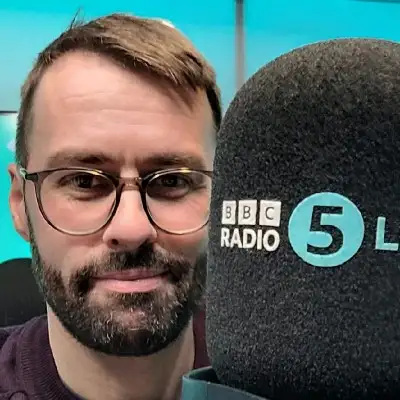
So this first clip is from Carl Hartley.
Carl is full-time lecturer in journalism
at the University of Leeds, where he
teaches broadcast and digital journalism.
He's also the academic integrity
lead within the School of
Media and communication.
So lots of podcasting in there.
And if that's not enough, Carl is
also freelance senior journalist at
BBC where he regularly reads the news
for 5 Live on weekends and holidays.
Jennifer-Lee: Another fun fact is
doing this podcast, we didn't realize
how many people are connected to each
other and he actually works with Brett.
Spencer, who's coming up
in the next few clips.
Neil McPhedran: That's right.
. Let's listen to Carl's take.
Carl Hartley: Hello, I'm Carl Hartley.
I'm a lecturer in journalism
practice at the University of Leeds.
I'm also the producer of The Sound of
Politics podcast, hosted by Professor
Stephen Coleman, and my prediction for
higher education at podcasting in 2026
is that academic leaders will start
at giving podcasting more recognition.
Now, it might not yet match the same
status as books and journal articles,
but it will gain real value throughout
2026, almost like a new academic currency.
And if books in this new world are worth
around a hundred pounds, podcasts might be
worth around 50 pound currency in academia
circles, with the hope that one day with
peer reviewing podcasts that could be
worth the same in the eyes of the academy.
And looking ahead at, to an individual
project, uh, something that Professor
Stephen Coleman and I will focus
on is that using podcasting to
improve political literacy, oracy,
and media skills in schools.
So during the first half of 2026,
we're gonna be working with teachers
in secondary schools in the UK on
this project, which we'll see school,
pupils creating their own podcast
episodes, The Sound of Politics Gen
Z, that's what we're gonna call it.
And I'll be sharing some of our early
findings at the education group podcasting
conference that I'm organizing at the
University of Leeds in June, 2026.
But the one thing I do know is that
academic podcasts are growing and
2026 is just gonna be an amazing year.
Jennifer-Lee: I love his voice.
Neil McPhedran: Yeah.
Well, there's a reason he's still
reading the news on the BBC.
Jennifer-Lee: I know.
Perfect.
And I love what he said about schools
recognizing podcasts, and I think they
need to learn to do that more because
I know that we discussed that some
people even bake it into case studies.
So good prediction.
Neil McPhedran: Yeah, I think this is
one I'm really interested in in '26,
and if I was gonna do a prediction
myself, I think this would be something
along this lines of academia, I like
how he calls it a currency, trying to
figure out podcasting as a currency.
And it really speaks to the publish
or parish dilemma or, you know,
focus that a lot of academia
and scholarship is based around.
And how does podcasting
work into that mix?
Versus just a book or a monograph.
So great prediction from Carl.
Okay, so the next one
is from Jenna Spinelle.
And Jenna is the adjunct professor
at Penn State University and
McCourtney Institute of Democracy.
And let's roll Jenna.
Jenna Spinelle: This is Jenna Spinelli
from the Democracy Works Podcast and
the Democracy Group Podcast Network.
My prediction for higher ed podcasting in
2026 is that we'll see more universities
looking to podcast as a PR vehicle.
A place to get their faculty out there
to talk about their research, their
books, their papers, their articles,
the things that they're working on
to further their scholarly research.
I know there are some folks who are
doing this and have been doing it for a
while, but my sense is also that there
are quite a number of university PR shops
who are focused on getting articles or
interviews or op-eds placed in mainstream
media and those kinds of things, rather
than harnessing the power of niche
media to reach audiences who are already
interested in that particular topic
that the faculty member is working on.
So I hope that for university's sake
and for podcaster's sake, that we
see more of this type of outreach
and collaboration happening in 2026.
Neil McPhedran: I like
this one from Jenna.
It's different from what Carl's
saying, but along the same lines
of higher education, academia, the
institutions using podcasting as
more of a vehicle, putting more
credence and importance into it.
In Jenna's case, she's talking about it
from a PR vehicle, which I think is great.
Jennifer-Lee: It's what I've been
saying all the time this past year
to a lot of different clients,
and it's the fact that you're
creating your own media station now.
Because traditional media is going
and things like promoting your school
on traditional television stuff
is not as much of a thing anymore.
So I had this conversation with someone,
they said, I want to have a podcast
so we can control the narrative of
what we do and give ourself exposure.
So I think she's right on the money.
Neil McPhedran: That's great.
Okay next we have Kate Young.
Jennifer-Lee: We love her.
One of our originals, OGs.
Neil McPhedran: That's right.
Kate I think was on
episode two, I believe.
Kate is host, writer and producer
of the This is Purdue podcast.
Let's hear what Kate has
to tell us about 2026.
Kate Young: Hey Neil and Jen.
Kate Young here.
Something our This is Purdue podcast
is focusing on in 2026 is experimenting
with episode length and formatting.
So we're gonna plan to do a four part
mini series with shorter 15ish minute
episodes that will be dropped all at
once as a binge play on our podcast
RSS feed and our YouTube channel.
So we're really excited to get into
this different type of storytelling and
experiment with our first binge drop.
I'll give you a little hint.
This series is focused on a world
famous aviator with huge Purdue ties.
This also helps with our strategic goals
of reaching a more global audience.
And just enhancing produce brand awareness
overall, because this story is one of the
greatest mysteries of the 20th century.
So cheers to 2026.
Jennifer-Lee: I love this idea
because micro casts are becoming
a big thing in many genres.
So again, I think Kate is seeing
the future and the fact that they're
doing 15 minutes, and I love the
fact that they're dropping them all
at once, so we don't have to wait.
Neil McPhedran: Yeah, this is great.
It really speaks to one of the things
that I've come around in my thinking,
I guess, in 2025 and really sort of
one of the things that I'm looking
forward to with the podcast that we
work with in '26, is thinking about
the short form elements that can
come out of that long form episode.
Some of the parts equally more
than the whole, basically.
So previously my thinking was we
have this long form piece of content.
We create some shorter forms
pieces of content out of it, and
to create discovery and drive to
that longer form piece of content.
And I've kind of changed my
thinking that it's like all of it
that we should really think about.
There's gonna be an audience out there
who's only gonna listen to or come across
maybe those shorts, two or three or
four of those shorts from that episode,
which is just as important or is just as
valuable, I guess, as if someone was gonna
tune into that long form piece of content.
So it really speaks to giving
options for an audience versus
trying to get them all to come to
this long form piece of content.
Okay, let's move on to
our next prediction.
We're going back to the UK and
we are gonna get our prediction
next from Brett Spencer.
And Brett Spencer is the senior
lecturer and director of the Center of
Podcasting and Excellence at the city,
St. George's University of London.
And is also an executive editor at BBC.
So like Carl's keeping
a foot there in the BBC.
Let's roll Brett's prediction.
Brett Spencer: A prediction for
higher education podcasting.
Well, it's exactly that.
More podcasting usage in higher
education and more podcasting courses.
I think we're still at the
very beginning of the journey
for podcasting in this space.
I know I've been inspired by many of
the guests on this show this year to
do new things and I think there is an
exciting road map ahead for all of us.
I'm recording this on the morning
after the, the shooting of Bondi, the
shooting at Brown University and the
death of Rob Reiner and his wife, and
the world seems a very dark place.
And one of the projects I'm working
on next year is just something that's
really fun and I think the podcasting
world in 2026 will respond in these
darkened times with projects that are fun,
provide escape, and spread humor and joy,
whether they be audio or video or both.
Neil McPhedran: Okay, so I
like this one from Brett.
Similar to ones we heard previously he's
talking about the increasing importance
of podcasting in higher education, but
coming at it from another angle, which is
podcasting, being part of the educational
journey of university academia.
I just love how we're seeing so many of
these predictions being about the ever
increasing importance of podcasting
in the higher education journey.
Jennifer-Lee: He brings a lot of great
points and that I just, you know, I think
what Brett does as a whole, and I really
say go back and listen to his episode,
because I think what he's teaching the
students in this kind of new space for
journalism is really important on ways
we tell stories so that like he's saying,
more use of podcasting in the higher
education space, I think is really great
because more people that share their
stories or are able to investigate things
and bring it to the forefront through
this medium of podcasts is a great thing.
Neil McPhedran: Excellent.
Yeah, you make a good point there, Jen.
We'll be sure to drop links to each of
these folks who are giving us predictions.
We'll be sure to drop links in the show
notes to their episodes that they actually
joined us for their full episodes.
You can hear more in entirety
if you haven't already.
Okay, Jen.
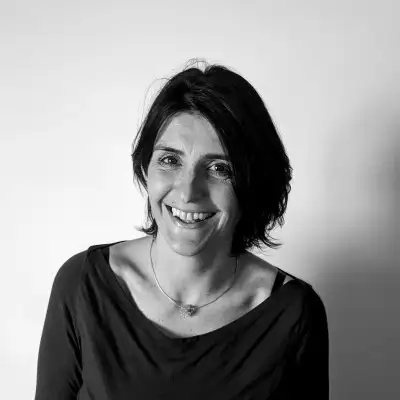
So next up we have Marta Perrotta,
who is the associate professor at
the University of Roma Tre Italy.
And she is also director of Roma Tre
Radio, the web radio of the university.
We're heading to Italy.
Marta Perrotta: Hi, my name is Marta
Perrotta, and next year I'm launching
a new podcast at Roma Tre University.
It's a research diary built around
a major ERC funded project in our
department of mathematics and physics.
The name of the project is Swim.
We have built a unique laboratory
dedicated to the search for
extraterrestrial liquid water
and for environments that
might be favorable to life.
The mayor researcher of this
project is Elena Pettinelli.
My prediction for higher education,
podcasting in 2026 is this, the
most impactful university podcasts
won't try to just explain results.
They have to document processes.
People outside academia keep
asking the same questions.
Why does research take so long?
What do you actually
do all day in the lab?
We have been surprisingly
bad at answering that.
This podcast is about showing how
research is built from scratch.
Most days aren't about breakthroughs.
They're about designing instruments,
building simulation tanks, fixing
what breaks, repeating measurements,
and listening literally to the
sound of machines running for hours.
In 2026, I think audiences will
trust universities more when we stop
presenting science as fast or heroic
and start presenting it as a slow,
careful, and deeply human process.
Before you can answer big questions about
life beyond earth, you have to spend a
lot of time in a room building the tools
and let you ask those questions as all.
That's the story we are going to tell.
Jennifer-Lee: I love this.
Again, this is the great thing about
podcasting is when people come up with
these ideas to explain things, the fact
that they are gonna do more podcasts
about how research is actually done,
because I think sometimes people don't
realize the lengthy process for research,
especially when it comes to science.
I think everyone thinks that it
just magically happens overnight,
so I love the fact that they're
doing a specific series on this.
Neil McPhedran: Yeah, what they're
working on in 2026 is sort of what
Carl talked about off the top, which
is actually infusing podcasting, or
maybe a better way to put it, is the
output, the research, the scholarly
research, the output is the podcast.
And in this case, to your point, is
just fantastic how they're bringing
people along from outside of academia
to hear about the research and what the
outcomes are gonna be of this research
instead of it being squirreled away in
some journal that a handful of people
read, it makes it way more approachable.
This is excellent.
This is exactly what Carl off the top
was predicting and Marta is working on.
I love it.
Okay, next up we have Elvin Freytes.
And Elvin is co-host and co-founder of
the Ed Up Experience podcast, where they
interview and share insights from college
presidents, ed tech innovators and thought
leaders in the higher ed podcast space.
And he's also one of our
co-founders of the Higher Ed PodCon.
Gotten to know Elvin quite well
in '25, and I am really looking
forward to our PodCon in July, this
upcoming July in this year, 2026.
Okay, let's hear what Elvin has to say.
Elvin Freytes: Hey everybody, this is
Elvin Freytes, co-founder of the Ed Up
Experience, and my hot take for 2026 in
regards of higher education podcasting,
here's where I think's gonna happen.
I think we are going to see
podcasting basically a part
of the entire student journey.
Yeah, that's right.
From recruitment, enrollment to
retention, to graduation, to, uh,
teaching and learning, to career
services, to alumni services, you name it.
I think we're gonna see
podcasting embedded throughout
that whole student lifecycle.
And who knows, we may even have
podcasting live events, more live
events on different campuses.
Think of an admissions crew having a
podcast live at a high school instead
of a regular recruitment event.
So yeah, look out for more podcasting
throughout the whole lifecycle
and more podcast events happening.
So that's my hot take for 2026.
This is Elvin Freytes
co-founder of Ed Up Experience.
And please feel free to learn more
about Ed Up at EdUpExperience.com.
That's EdUpExperience.com
Jennifer-Lee: I love this.
He's predicting that podcasting is
gonna be included in everyday student
life, which I actually think is really
something that, not just higher ed
is doing, but in a lot of industries.
And I love the fact that he says more
live events on different campuses.
Thinking of it as part of like a
recruitment process too, because of course
specifically in the States, they do that
day where you go, or like it's weeks where
you travel to the different campuses.
So I can definitely see this for
new students as a recruitment tool.
Neil McPhedran: Yeah.
Again, Elvin is really playing into
this theme that I see sort of coming
out of a lot of these predictions,
is this continuing elevation
of the importance of podcasting
within higher education overall.
So we've seen that everything from,
uh, the actual research of academia
to, as Elvin is saying here, just
in general, the whole experience.
So let's take a lot of the nuts and
bolts of higher education, if you will,
of how prospective students decide
where to go, et cetera, and all the way
through that experience and infusing
podcasting into all those components
and corners of higher education.
Excellent.
Really good and I love the theme
that we're seeing coming out
of all of these predictions.
Okay, so next step we have Jim
Ambuske and he is Director of
Digital History at More Perfect.
He also is producer and host of a number
of history related podcasts, which
he sort of talks about off the top.
So let's hear what Jim has to say.
Jim Ambuske: Hey
everyone.
I'm Jim Ambuske, the narrator of
Jim Ambuske: Worlds Turned Upside Down,
the co-host of Revolutions in Retrospect,
and the producer of Finding Jane Austin.
I think in 2026, podcasters in higher ed
and beyond are going to have to grapple
with the rise of AI in podcast production.
For good or ill, AI has rapidly
become part of our everyday lives,
and in podcasting, AI can repair
and enhance audio in ways that would
normally take a person several hours.
Potentially freeing them up to do
other creative and intellectual work.
And it can help us create social media
clips to help amplify our stories.
But the question is, I think how far do
we push it, especially in the humanities?
Should we use AI to produce scripts?
Should we use AI generated
voices to narrate series?
Or vocalize primary sources
of figures, long dead.
Should we allow the artificial echo
to triumph over the human voice?
I think we'll be grappling with those
questions about AI in 2026 and far beyond.
Jennifer-Lee: Jim is talking about
the hottest topic of 2025, and of
course as now we enter into 2026, I
don't think it's slowing down at all.
AI and how it involves itself
in podcasting and specific here,
higher ed podcasting, and this is
something that we all grapple with.
Yes, we gotta figure out how to use
it properly, but what parts do you
use it in and what parts do you not?
Neil McPhedran: Yeah.
I think this speaks to education
and higher education in general of
how AI is disrupting and how that
works its way into it, in general.
But I love his take of sort of what does
that mean for higher education podcasting?
And his prediction on that too is great.
Okay, so our last prediction
here is from John Boccacino.
He is the Senior internal Communication
Specialist at Syracuse University,
where he is the host and producer
of the 'Cuse Conversations podcast.
So let's hear what John
has to say for 2026.
John Boccacino: Hi, I'm John Bacino,
host of the 'Cuse Conversations podcast.
This past year we explored out of this
world discoveries involving gravitational
waves and black holes, met passionate
student leaders dedicated to making
a difference in their community,
and even introduced you to a father
and son broadcasting duo, taking
the sportscasting world by storm.
Those were some of the Syracuse
University success stories
that we told on the podcast.
While this upcoming year,
we plan ongoing even deeper.
From advances in the STEM fields and
the humanities, to developing and
building the next breakthroughs in
artificial intelligence, Syracuse
University is producing problem solvers
who will become the next generation
of leaders in their respective fields.
We all know attention spans are
decreasing, but of point of pride
here on the podcast, every episode
has a completion rate of at least 60%.
We wanna capitalize on that attentive
and engaged audience by spotlighting
the impact of our talented students,
decorated faculty, dedicated
staff, and accomplished alumni.
They're really making a difference
on campus and around the world, and
I hope you'll join me next year for
more orange stories that matter on
the 'Cuse Conversations podcast.
Jennifer-Lee: John still bleeds
orange, and I love the fact that he
talks about orange stories that matter
on the 'Cuse Conversations podcast.
Of course, that is their school colors
and they say they bleed orange, so I
love that he's bringing it back to that.
Also, it's interesting he is talking
about attention spans because even
though podcasting, most people listen
to long form content, it is starting
to deteriorate a little bit and
we're going to more shorter content,
which some of our previous guests
have mentioned in these predictions.
So I love the fact that they're
still trying to work with the
long content because they still
see a lot of fruit from that.
So I'm excited about that.
Neil McPhedran: Yes, agreed.
Jen and I, I think what's interesting
is similar, I guess, to a couple
of the other ones we've heard about
previously here, is diving more into
the storytelling of the actual research.
So whether that's scientific STEM
advances or in the humanities even.
But going beyond the storytelling
of the individuals and the school
spirit, digging more into the actual
work that's done at the university and
featuring that, which I think is great.
So again, similar to this theme of
using podcasting as part of the academic
tool of surfacing what typically could
be squirreled away, as I said, in a
journal or in a dense academic research
paper that very few of us lay folks
are going to access, but bringing all
this amazing stuff that's happening,
in this case for John at Syracuse, out
into the open for the wider world to
learn about, which I think is great.
Okay.
That was awesome.
Thank you so much to everyone who
submitted their predictions for 2026.
I am so excited about this year.
Jen, you and I have been focused
on the higher education podcast
space for a number of years.
We've been doing this
podcast for three years.
I just personally have been incredibly
motivated to see just how much more
important podcasting has become
with some of the podcasts I've
worked with for a number of years.
But just, you know, in general, as we
just heard from almost every single one
of these folks we just listened to, just
how important and the ever increasing
importance of podcasting in the academic
world and for the actual academic
and research work that's being done.
So I just, I'm really
excited for this year ahead.
Jennifer-Lee: Yeah, I am too.
I can't believe we've been doing this
for three years and as of August, I've
known you for four years and whoever
thought we'd go on this journey together
when we met each other back in Dallas.
So I'm really excited to keep
exploring and, and it's really neat.
I think the thing that I'm taking
away this year is like when we go to
different conferences, even if they're
not higher ed specific, people know our
podcast and it's really cool to see,
even though I might not believe them and
make them pull it up on their app, but.
Neil McPhedran: I love it.
Okay, so Jen, we'll be at a few
conferences this year and obviously
we've got Higher Ed PodCon in July.
We are also going to be going
to the London Podcast show.
Jennifer-Lee: Yeah, I bought my ticket.
Neil McPhedran: Bought your ticket.
Good.
When this episode comes out
is during Pod Fest in Orlando.
Jennifer-Lee: Are you going?
Neil McPhedran: I'm going to that.
So hope to see you all there.
Let us know where you're going.
'Cause we'll come and we'd
love to meet you in person.
Otherwise, Jen, why don't you read us out.
Jennifer-Lee: Perfect.
Thank you for tuning into the
Continuing Studies podcast, a podcast
for higher education podcasters.
We hope you found this episode
informative and inspiring.
If you enjoyed the show, we encourage
you to follow and subscribe to our
podcast on your preferred platform,
so you'll never miss an episode.
But if you found this episode
particularly valuable, please consider
sharing it with your friends and
colleagues who also might be interested
in higher education podcasts.
We also invite you to join your peers on
HigherEdPods.com, where you can connect
with other podcasters in higher education
and learn from others in the field.
Thank you for being part of our community.
We look forward to continuing to bring
you valuable insights and conversations
around higher education podcasts.
See you in the next episode.
Creators and Guests