How MIT Turns Teaching into Podcasts, Video, and Reach
Brett Paci: when OCW started out,
the assumption was that it would be
mainly valuable to other educators,
that they would be the main audience.
And a really great surprise was that, no,
like most of the people who use it are
just lifelong learners all over the world.
I'm really proud of the fact that we
have, we have served both audiences.
you have really interested educators
who are gonna watch those shorter topics
about teaching, but then you also have
this huge casual audience, like me.
You know, we have this saying within
OCW, Brett gets it because there's
not a lot of things I get, right?
Like, I don't come from an academic
background and we want those people too.
We want the people like me who
find something on our channel.
And then when we started the
podcast, we work with this great
producer, who really helped us,
think about the important questions.
And I think he was really crucial, in
saying like, you still need to think
about what are you bringing to the table?
Who's your audience specifically?"
Like have a thesis, right? You're
not just like, "Oh, we're talking
to this wonderful professor, but
like what are you gonna talk about?
What's intriguing about
that person and their work?"
Neil McPhedran: Welcome to Continuing
Studies, a podcast for higher
education podcasters who want to
learn, connect, and get inspired.
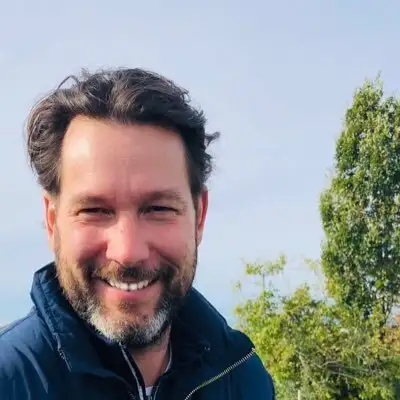
I'm Neil McPhedran, founder
of Higheredpods.com and
Podium Podcast Company.
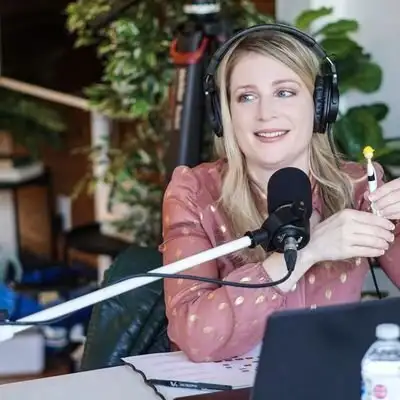
JenniferLee: And I'm Jennifer Lee
Gunson, founder of JPod Creations.
Podcasting is broadcasting.
If you're podcasting in
higher ed, you're not alone.
There's a fast growing
community out there, and we're
here to help you tap into it.
Neil McPhedran: That's right, Jen.
Speaking of community, we're just
gonna do a little thing here called
Where in the World is Jen and Neil,
because we are going to be at a bunch
of conferences over the next few months,
and we'd love to see you in person.
So Jen, in May, you're
gonna be in London at-
JenniferLee: The Podcast Show.
Neil McPhedran: And what
were, what are those dates?
JenniferLee: The 20th to the 21st.
Neil McPhedran: Great.
But you're actually in London
for a few more days, so-
JenniferLee: I am.
And I'm going to hopefully find a lot
of our UK friends and meet up with them,
the people that we've been talking to in
the last few years on continuing studies.
Neil McPhedran: Our contact
details are in the show notes.
So reach out to Jen and reach out to me.
I'm in the UK as well the next
month in June at ePod in Leeds.
I'm super excited about that.
I'm actually going to be
presenting my abstract.
JenniferLee: Yeah, you're speaking.
Neil McPhedran: And I've started
working on my paper, but I got,
what do I have six or seven weeks?
So I better get moving here because
I'm being a classic student here and
I need to get moving on my paper.
And in July, Jen, we are both at
Higher Ed Podcon in Cleveland.
And actually, we're gonna be recording
live episodes while we're there.
There's a really cool podcast studio there
that we're gonna be making full use of.
So, if you're going and you wanna be on
Continuing Studies, now is your chance to
get in a studio with us and do it live.
We're really excited about that.
Okay, so Jen, we got lots of travel
ahead of us, I'm really excited.
And reach out to us, we'll put
all those links in the show notes.
We wanna hear from you.
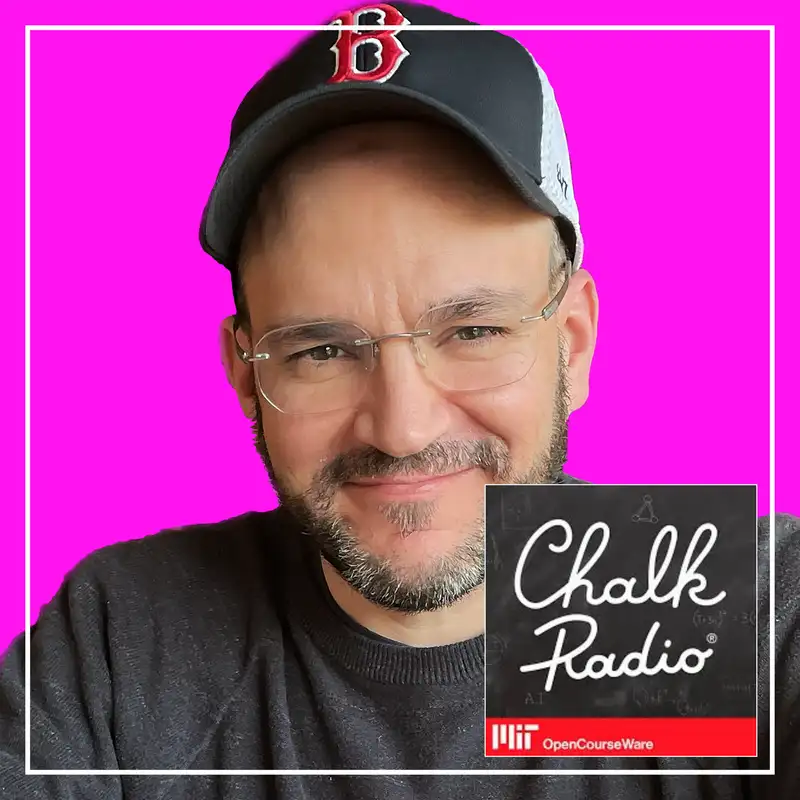
So Jen, in this episode, we're
talking with Brett Paci and he is MIT
OpenCourseWare's assistant director of
media production and the co-creator and
producer of the Chalk Radio Podcast.
It's been around for eight
years, so lots of insights there.
And he has worked at MIT
OpenCourseWare since shortly
after it launched 20 years ago.
So, lots of really interesting
insights about how they've
used multimedia and podcasting.
And in recent years, he has led the
remarkable growth of the initiative's
YouTube presence to over six million
subscribers, which is quite amazing.
JenniferLee: One day we can strive
to that six million subscribers.
Neil McPhedran: That's great.
Okay, so this episode, we've got just
chalked full of insights here for you.
Pun intended.
So let's jump into it.
JenniferLee: Let's go.
Neil McPhedran: Brett, so
great to have you here on this
episode of Continuing Studies.
Brett Paci: Yeah, thank you for having me.
This is exciting.
Neil McPhedran: So maybe before we get
into the world of podcasting, which
we're gonna get deep into today, let's
start with what is MIT Open Learning?
Brett Paci: Yeah.
So start sort of the
other way around, right?
So OpenCourseWare came first and now
OpenCourseWare is part of sort of
an umbrella organization called Open
Learning, which is really about all sorts
of online educational offerings from MIT.
Some of which are free like
OpenCourseWare, other things that
are paid offerings like MIT XPro,
which has a more specific focus, I
guess, in certain fields and industry.
So we're all sort of under the same roof.
So OpenCourseWare, you know, if you go
back 25 years, you know, it was a time
like around 1999, 2000 when, I guess
you could say everybody kind of figured
out how this new internet thing worked.
And so the next logical step is
like, how do we make bank, right?
Like how do we profit off of
whatever it is that we do in
this new on- online space?
So, you know, MIT was no different trying
to figure out what do we do with this?
And while a lot of other places decided
we're gonna try to offer courses
online and people can pay, a lot of
times a reasonable amount, you know,
just for a certificate or something,
or maybe something even, even more.
But MIT kind of made a radical
move and decided to just give
everything away for free.
So of course, you know, that was, it
was a pretty big deal at the time.
It was announced in the New York Times.
And it's really great, you know, to
work in a place like this, knowing that
that's your mission, you know- Yeah.
... over the years, I can't count the number
of times, you know, people will ask
me what I do, and then the follow-up
question is like, wait, what's the catch?
Like MIT is giving away all of
their educational materials for
free online and there's no strings
attached, and the answer is yes.
That is what's happening here.
So that's, that's the origin, and we're
going strong to this day, and, and the
Institute seems committed to carrying
this forward for another 25 years.
Neil McPhedran: That's great.
So let's now jump into Chalk Radio.
So what is Chalk Radio, and how did that
come together, and how does that fit
into this world of open learning as well?
Brett Paci: Yeah, it's great
questions, because it kind of
goes back in the early years.
At the very beginning,
video wasn't really a part.
So I guess it's kind of interesting,
right that video is kind of what led
us to podcasting, but video wasn't
a part of things at the beginning.
Uh, over time, you know, we'd find
out, oh, this, you know, extraordinary
math professor Gil Strang had
his lectures filmed back in 1999,
let's put those on the website.
And so those moments would happen, and
of course, people reacted really well.
It's like, I'm sitting in a
classroom at MIT learning from
these amazing instructors.
And so, you know, once YouTube
came around, which yes,
we predate YouTube, right?
We started a channel, uh, didn't really
put much on it right away, but, you
know, over the following couple of
years, we started adding more and more
and, and that has just exploded, right?
So, so then you have YouTube really
becoming a huge part of what we
do, you know, just kind of jumping
back to the present, there's-
Neil McPhedran: You guys
have a really big channel.
Brett Paci: I think we're over
6.2 million subscribers now-
Neil McPhedran: Yeah.
... Brett Paci: or something like that.
And, and it's fascinating because,
you know, we have the, the website
proper, right, OpenCourseWare-
Neil McPhedran: Right.
Brett Paci: or OCW.mit.edu, and
they've had about the same impact,
although YouTube has done it
over a much shorter time, right?
Neil McPhedran: Huh.
Brett Paci: So the, the numbers
are very similar, you know, of
people using the actual website.
And then, so one of the things-
Neil McPhedran: That's cool.
... Brett Paci: that happened later
was we decided that, we saw a need
to not just share what MIT faculty
are teaching, but also share the
methodology, why they teach the way they
do, what are the techniques they use.
You know, other educators
use our site a lot.
Neil McPhedran: Mm-hmm.
Brett Paci: Maybe they wanna
know how do you decide how much
to cover in a course, right?
Mm-hmm.
And so they'll sort of look to OCW to
figure out how much should I tackle
where I'm teaching, whether it's a
community college or even high school
teachers will sometimes use, like, intro
stuff that might be relevant to them.
So we hired Sarah Hansen, who's the
host and co-producer of Chalk Radio.
Her role was really to do what I just
mentioned, share more about how people
teach at MIT and not just what they teach.
And so an evolution of that was she
was interviewing faculty, transcribing
those interviews into text-based
pages on the website, talking
about how they run their class.
And then at a certain point said,
you know, these are like really
great conversations I'm having.
Maybe we should film some of these.
So we started filming
some of the interviews.
They were usually around, we'd usually
break them up into short videos.
Neil McPhedran: You guys
were early into the shorts.
Brett Paci: I, I don't know
if we knew it at the time, but
the format just kind of fit.
Neil McPhedran: Yeah, totally.
Brett Paci: Um, and then what
happened was, you know, we realized,
like, these are actually great
full length conversations, a lot
of the time they were, right?
When the faculty had the time to give us.
And so we said, "You know, maybe we
should start a podcast because this is
where people consume, you know, maybe
half hour, hour long conversations and
we don't have to leave anything on the
cutting room floor necessarily, uh,
even though we do, but so that seemed
like the next, you know, logical step.
And that's how Chalk Radio came about.
JenniferLee: I just wanna say that I think
a lot of times in podcasting, there's such
a misconception that, oh, you're gonna
start a podcast and you're gonna have like
tons of followers and things like that.
But I wanna talk about the fact
that you guys had the YouTube
channel before, you're kinda OGs.
A lot of people don't realize the people
that are successful in podcasting are
people that have built a base up prior.
So it might have not
been a direct podcast-
Brett Paci: Yeah.
JenniferLee: But it took you guys a while.
And I just think a lot of people think
a lot of podcasts are more overnight
success, but I don't realize you've
actually been building this, it might
have not been Chalk Radio at the moment,
but you've been laying the seeds for it.
Brett Paci: The OCW following, you're
right, we had 17 or 18 years under
our belts before we even considered
podcasting, you know, and that's part
of the reason why we wanted to put
it in, in some form in front of that
big following that we had on YouTube
already, which might've been, you know,
three or four million at the time.
So-
JenniferLee: Yeah, not small.
Not small.
Brett Paci: Right, right.
We have quite an unfair advantage over
a lot of other podcasts starting out.
JenniferLee: Not unfair you did the work.
That was my point of that.
Brett Paci: Yeah, yeah, right, right.
JenniferLee: It took a lot of
work, it took you time, right?
Brett Paci: Yeah.
Yeah.
And plus the MIT name, right?
And so that's what's so big on
YouTube if somebody's looking for,
you know, linear algebra and then-
Neil McPhedran: You come to a page
of results from Googling that,
and one of those results is MIT,
you're like, "Oh, they must know.
"
I, I just wanna jump back
a bit into the video thing.
I think what's really interesting about
what you said, and we've talked a bunch
on this show about, and this long form
piece of content that then we spin out
shorts and whatnot for, and we originally
sort of looked at those as th- th- those
were discovery mechanisms to drive you
back to the long form piece of content.
And really how we look at it is
more, it, it's the sum of the parts.
You know, the, there's an audience
that are just gonna consume those
short form bits, if you will, but
they're still part of your audience.
And you guys came at it the
other way around, which I
think is super interesting.
The rest of the podcast world right now is
grappling with doing the long form, need
the shorts, what do we do with the shorts?
You guys started there and you
went, "Hey, we could do long form."
Brett Paci: Right.
Yeah.
And, and to tell you the truth, those
short form ones, I wouldn't say they
were super popular either, even on our
YouTube channel, even with all the users.
But what I think is really a credit
to our organization, the original
mandate going back to 2001 was really
to cover the entire curriculum.
And of course, there's an asterisk
of, like, there, there are things that
cannot be turned into a website, right?
There's a lot of very, like, student
discussion heavy courses at MIT that
you're not gonna film because, you
know, you're protecting the students.
Neil McPhedran: Right.
Brett Paci: But generally it was to
cover the entire curriculum, not just the
stuff that, you know, does gangbusters
on online or on YouTube, right?
So people are always drawn to the computer
science to finance, you know, those
are some of the biggest ones, to math.
But the mission is to cover everything.
So when it came to those initial shorter
segments of these interviews with faculty
talking about specific teaching concepts,
they weren't super popular, but we still
valued them a lot because the people that
were watching them were other educators.
Which is interesting, when OCW started
out, the assumption was that it would
be mainly valuable to other educators,
that they would be the main audience.
And as it turned out, a really great
surprise was that, no, like most
of the people who use it are just
lifelong learners all over the world.
I'm really proud of the fact that we
have, we have served both audiences.
So yeah, it really runs the gamut of,
like, you have really interested educators
who are gonna watch those shorter topics
about teaching, but then you also have
this huge casual audience, like me.
You know, we have this saying within
OCW, Brett gets it because there's
not a lot of things I get, right?
Like, I don't come from
an academic background.
So we want those people too.
We want the people like me who
find something on our channel.
And it's happened to me a lot of times.
You know, my favorite example, John
Gruber, economics professor at MIT who
is on one of our recent Chalk Radio
episodes, you know, he teaches his intro
to microeconomics and he talks about how
so many people he meets tell him like,
"Oh, I hated that class in college."
And he says it's because
it's taught really poorly.
And then when I watch his videos, I'm
like, "Oh my gosh, this is fascinating."
He's relating it to things that
we all deal with every day, to the
supermarket to, you know, Ticketmaster.
And, and so he's making it accessible.
And hopefully there, there are
people who are gonna pursue that
however far they wanna go with it.
But we did sort of start shorter form.
Then I guess when we started the
podcast, right, we, we also have
evolved from short form to longer form.
Our first stage of Chalk Radio was not
super short, but it was not very long.
So we were, we started out, you know, as
like more of a narrative based podcast,
like an NPR type thing, right, where
we work with this great producer, Dave
Lashansky, who really helped us, you
know, think about the important questions.
And Jen, you mentioned earlier
how, you know, a lot of people
will start a podcast and they
think, "Oh, this is gonna be great.
Everybody's gonna love it
because, you know, I'm talking.
Who wouldn't wanna hear that?
" And I think he was really crucial, you
know, in saying like, "No, no, no, no.
J- you know, just because it's MIT,
just because he's our MIT faculty,
you still need to think about what
are you bringing to the table?
Who's your audience specifically?"
Like have a thesis, right? You're
not just like, "Oh, we're talking
to this wonderful professor, but
like, what are you gonna talk about?
What's intriguing about that person
and their work?" And so we would do the
interview, then we would send it off to
Dave, our producer who fortunately did
all the editing too and all the scripting.
Mm. Yeah, we would record, you know,
Sarah would do the voiceover and, and
we'd send it back and we'd get this sort
of pretty much finished episode back.
Neil McPhedran: That's a lot of work to do
that and you've evolved since then, right?
Brett Paci: Yeah.
Boy, that's interesting.
I haven't thought for a little
while now about why we started to
transition more away from that.
It is way more work.
And so what we're seeing now, even
with some of our colleagues who are
starting up podcasts is that they're
shying away from that because it's so
much work, but I also think that's sort
of how things have shifted anyways.
I still enjoy listening to Radiolab
and these like sort of heavily, heavily
produced and engineered podcasts, right?
But I think what we're finding now is
that you kind of have to be okay with
how people wanna consume things, right?
Like-
Neil McPhedran: Good insight, yeah.
Brett Paci: Um, when you heavily produce
something, if there's a lot of narration
and it's very carefully planned and
especially something like Radiolab,
you feel like if I, if I space out
for two seconds, I'm gonna be lost.
And so you kind of know it's gonna
demand more of your attention.
And I find myself, even as a
consumer, sometimes I'll kind of
avoid those or I'll put them off
because I think, well, I don't really
have time to dedicate to focus.
You know, I need to listen to
something when I'm walking or I'm
doing laundry or whatever and I
need to be able to check out, right?
And so one of the interesting things
that we're dealing with now is
like, where do we wanna be, right?
Do we wanna be something that
demands people's attention?
You know, hopefully we're, we're really
engaging and helping people keep interest
as the podcast goes along, but should
we also be okay with this idea of like
in a long form conversation that is
just more free flowing and it's okay if
people wanna check out from time to time
because frankly, you know, my thinking
now is that they're probably more likely
to check it out if they feel like it
doesn't demand their constant attention.
JenniferLee: I think it depends on
the audience because I think with
podcasting, any type of media, there
is different areas for everyone.
So we can't all be one thing.
Yeah.
We need variety.
So it's like if everyone goes to
interview format, which Neil know
is my biggest pet peeve-That's
Neil McPhedran: what we are
JenniferLee: talking about.
No, but we're doing it right, but-
Neil McPhedran: Good.
That's right.
That's right.
JenniferLee: And I just find not
everyone can do an interview podcast.
Yeah.
But everybody wants to do it because
everyone turns on the podcast and
they're like, "Oh, well, I gotta have
an interview podcast." And it's like,
no, sometimes you should just be a
solo podcast or you should be a co-host
in podcast or you'd be a Q&A podcast.
But like that's why I loved
when you were talking about the
short clips because, again, I'm
gonna bring up my favorite word.
When I was in broadcasting school-
... This is what you learn in radio.
You learn to put your information that
you have and it's a great exercise
for everyone and information that
you have into 30 seconds or into 60
seconds and you gotta get in and you
gotta get out and you have to give the
listener a through line through the
whole time and you gotta be engaging.
Once you hone in that 60, 30
seconds, then you're able to
expand it to 30 and 45 minutes.
Brett Paci: I think where so many
people go wrong is like everybody's
casting themselves, right?
Whereas, you know, uh, on a Hollywood
movie, the director's gonna figure out
who actually works on camera and with
podcasts, everybody's deciding that
they sound great on, on mic and that
they know how to, how to carry out an
engaging interview, which as we know,
with the number of podcasts out there,
the odds are very low that somebody's
actually gonna be really good at it.
JenniferLee: Yeah.
Except if you're Neil and I.
Brett Paci: Exactly.
Yeah.
JenniferLee: I love how you were talking
about we just wanna cast ourselves
and maybe we're not great at it.
Another thing though that I
find, of course, is such ongoing
debate is audio versus video.
And my thing is some people are better
on audio and maybe they shouldn't
start with video, maybe they'll get
there and eventually they can add on
video, but that's a whole other beast.
You guys went from video
to audio back to video.
What made you return back?
Brett Paci: Yeah, so it's weird, right?
Just so I don't confuse the listeners,
I mentioned before that we always
put the podcast on YouTube, but
what, what they were, the majority
of our backlog of episodes are
on YouTube as a cassette tape.
So you don't see Sarah
interviewing the guest.
You just see this awesome animation
by my colleague, Jason Player, who
works with us at OpenCourseWare.
But we did that because we just
figured, you know, I mean, people
aren't super interested in just
watching a cassette tape role.
Mm-hmm.
But it was a, you know, some
people will listen, right?
And it's exposure on this big
YouTube channel to hopefully get
people to subscribe to the podcast.
The interesting thing we've learned
about our YouTube channel is the
traffic and the engagement doesn't
necessarily correlate to the quality.
So you can make something really great.
We've made some really great videos
that were, you know, produced as
short videos and they're fantastic
and they're not getting 100,000 views.
That's generally just the stuff I
mentioned before, like an intro to
deep learning, we'll get hundreds
of thousands and eventually
millions of views, things like that.
So Chalk Radio, the podcast as a
cassette tape animation on YouTube
wasn't doing like huge numbers either.
And so that was really part of the
reason for doing it, but the real
reason was that I have the best
job because I'm just a producer.
I get to sit in the room and
watch these interviews happen.
I'm never the one on microphone,
even though I am today.
So I'm hearing Sarah interview
these really fascinating MIT
faculty members and there are
these wonderful moments happening.
I, I can remember this specific episode.
If you go not too far back in our
library a few years, there's an interview
with Anne White who talks a lot about
nuclear energy and there were these
delightful, very human moments happening.
I remember she was like quizzing
Sarah, "Do you know what the
cleanest form of energy is?
" And Sarah kept getting them wrong.
And the more it happened,
the more they both laughed.
And I just thought like, "Man, it's really
sad that no one's seeing this because
I'm the only person on earth that saw it.
" So, so that was really the impetus for me.
And, and we will have those
moments for social media.
So, you know, the, the- Yeah.
... the current, you know, my job
description and title has evolved over
the years too and, you know, now it
includes video engagement and strategy.
And so it's like, we think we have a
great show, but how do you get people out
there to know that you have a great show?
And the easiest, most effective way to
do it is if you can share those short
little video clips of the episode of some
really, really interesting or educational
or entertaining moment that happens, you
know, during the course of the interview.
And so that's kind of how we did it.
What I love about my boss, Kurt Newton,
the director of OpenCourseWare, although
I also have another boss now, that's
another story is, is for me- Next
Neil McPhedran: podcast episode.
Brett Paci: Yeah, next episode, because
that's how Open Learning is evolving.
So, but the, to me, this
was a no-brainer, right?
So I, I'm, Sarah and I are
on the same page with this.
It's great.
We go to our director and say, "Hey,
like, this is a no-brainer. If we film
these things and put an actual video on
our channel, you know, with, with two
people's faces on camera, like, that's
obviously gonna do better numbers and
be more engaging than just watching
the beautiful cassette tape spin."
Right.
And he said, to my surprise, "Well,
we don't know that for sure." And
I was like, "Wow, you're right.
We actually don't know.
" It's a, it's a really good hunch- Yeah.
... but we actually don't know for sure.
So he said, you know, let's call it
a pilot and I think that was also
a, a, a fantastic decision because
that gave me and Sarah this sort of
freedom to feel like we can try things.
So the f- the thing that we did on the
first two episodes was we, we had the
first one with this amazing longtime OCW
legend, Professor Andrew Lo, who teaches
finance and also with like an AI and
healthcare slant, and he was terrific.
And so we did that.
The setup was a little more formal.
We had him and Sarah sitting in nice
chairs, kind of across from each other.
It almost felt like, you know, Andrew Lo
live, like on stage with Sarah Hansen.
Neil McPhedran: It was kinda like
the, like the classic YouTube
podcaster set kind of a thing?
Brett Paci: Yeah.
Right.
And, and, and in, in a
slightly more formal way.
And then, so then for the next episode,
which we recorded a day later, because
we said we're, we'll do two of these.
It was with a completely different type
of guest, the magnificent Ana Bell who
teaches computer science, she teaches like
an intro Python programming course that's
extremely popular on our YouTube channel.
And we said, let's have a
little more fun with it.
We also knew her, I knew her.
We've had a lot of interactions from
filming her course over the years, so we
had a little bit more of a comfort level
just from knowing the person- Right.
to where we could say, you know, let's
have a little more fun with this.
Let's try something different.
And since it was a pilot, you
know, we weren't, we didn't get
picked up for an entire season, as
they say in, in Hollywood, right?
It was just do two episodes.
So we changed the format, we put
them at a table, that sort of typical
YouTube style show with the actual
podcast mics showing up on camera.
Neil McPhedran: Right.
Brett Paci: And so that
was a lot different.
So I, I love the fact that we
got to experiment with that.
Now, going back to was it a
no-brainer, it did work extremely well.
The stats on YouTube were really good.
Neil McPhedran: So we saw a discernible
difference between the ones with the
cassette tape versus these newer ones that
you've put up that have the full video.
Brett Paci: Yes.
And, you know, I could throw out
something that sounds really amazing,
which is like the, the first episode,
something like 20 times more traffic
than a standard cassette tape episode.
But what we've also found is
there are so many factors that
determine the success of it, right?
And some of it is the guest, some
of it is their field, and then
some of it is sort of just like
this screwy YouTube algorithm-
Neil McPhedran: Yeah.
Brett Paci: That is
extremely unpredictable.
we've learned a lot in this experience
over the past five or six years of
doing Chalk Radio and in all of the
other videos that we put on our YouTube
channel, full lectures and other things.
And so I feel like the place
we're at now is like we know
where to cast the net, right?
So you, we, you film a full episode
with this person, you know they're
really interesting, you know they're
great, you know, the topic is
interesting, but sometimes the full
episode, the numbers aren't very good.
So Jen, to what you mentioned
earlier, we also do the shorts, right?
you were dead on when you said we kind
of have to do all of it, you know,
so you have the full length episode,
then we will take some segments from
it that we think are interesting.
So with Andrew Lo, you know,
it was, should AI plan my
retirement for me, right?
With Ana Bell, it was, do you
still need to learn how to
program if AI can do that for you?
And what was interesting about the two
episodes, and, and this is where I'm
going with this, is like, the first
one, full episode had huge numbers.
Some of the clips did pretty good.
The second episode, full episode,
did not have huge numbers.
It had better numbers than when we
didn't actually film it, but they
weren't like outstanding, but then that
particular clip, which was maybe four
or five minutes long, did huge numbers
as well, sort of like more on the
scale that the other full episode did.
So I think for us, it's, we've learned a
lot from it, we'll cast that net, we'll
do this full thing and then we'll just,
kind of share it out in different forms on
social media, in YouTube shorts, and then
we'll just kind of see, certain things
click with people and we're just glad, you
know, people are getting value out of it.
Now I will say too, the other, I think
the thing that people assume happens
and doesn't necessarily is sort of like
the throughput of if you have a YouTube
short and people like it, they're gonna
go back to your channel and subscribe.
So I think there, there's a lot
of dicey things to learn there.
You know, there's things that YouTube
wants us to do, which is like make shorts,
but you kind of have to figure out which
things do they want us to do because it
serves them and keeps people on YouTube
and which ones are really beneficial
for, for our channel, for our content.
Neil McPhedran: That's
a really good insight.
I also really liked the way you guys
approached the video, as a pilot
and as you said, it gave you a bit
of freedom to try different things.
don't get hung up on the one
thing and treat it as a pilot.
that's a great way to a- approach it.
especially if you're, like, all of a
sudden you gotta build out some studio and
spend a whole bunch of money on, on a set.
Brett Paci: Right.
Right.
Neil McPhedran: I mean-
Brett Paci: Yeah.
Neil McPhedran: Maybe a better
way to do it is try different
ways and figure out what it is
before you start to build a set.
Brett Paci: Yeah.
and I should add, we
did kind of build a set.
I mean, we did this in a very,
like, extremely low budget-
For a lot of people, it can
be a very expensive endeavor.
For us, we're just fortunate, you know,
there's a studio right nearby MIT, Giro
Studio, who are fantastic to work with,
and they kinda gave me like, picture a
little kid on the floor in their bedroom,
like, laying on the floor and coloring
and their legs kinda kicking around in
the air, that was me in their studio.
we have this amazing relationship
where they're just like, "Yeah, you
know, screw around in the studio,
like, put together a set, you know,
we put together this set of fake
chalkboards," which is also really funny.
You know, I had been walking around MIT
trying to find discarded chalkboards
and then realizing, like, "Oh, man,
these things weigh, like, a billion
pounds." And this, this colleague,
Jim Kane, an engineer, of course,
was like, you know, "What about
foam core?" We're like, "Wait, what?
" And then I was like, "Yeah, I guess that
could work." And, and, and shockingly,
like, chalk shows up really well on foam
core and it looks like a real chalkboard.
So- Cool.
So anyway, this, this is how,
you know, a lot of these kind of
fortuitous things happened that
we could actually do this- Yeah.
... in a very, very cost effective way,
but it's something we're actually
still grappling with now because we
can't, it's not really replicable.
It's not sustainable going forward.
So, but yeah, I, I, I mean, you
know, we always think, like,
everybody wants creative freedom
and if I think something's a good
idea, I just wanna be able to do it.
And, uh, some, a lot of times
having somebody say, "Well, hold up
there. Let's treat it as a pilot."
And then that actually opened
up more creative possibilities.
Neil McPhedran: Yeah, that's great.
Also, I think the outside we think,
oh, it's MIT, they've got this giant
endowment and all this money, you spent a
few hundred dollars to try to get- Yeah.
video going.
But still, you went at it from
a pilot perspective with trying
different things and you didn't
spend some big, huge amount of money.
Brett Paci: Yeah, we, we try
to be fiscally responsible,
I guess is the word, right?
And it is, it is challenging to explain
to people why we, you know, on our
website, we ask for donations, right?
And, and people kind of say
the same thing, but MIT has
all the money in the world.
MIT, the institution covers the
majority of our operating budget,
which is really fascinating.
Again, going back to the
beginning, this is why people
say, "Wait, MIT really does that?
it's a shameless plug.
We recently produced a documentary
about the origin, the story of
OCW for our 25th anniversary.
And, and there's an interview of an OCW
user from Uganda who found OpenCourseWare,
and I love the way he describes it.
He said, "I found, I found these lectures
on YouTube and I thought this can't be the
MIT." Like, why would they do that, right?
when you're giving something away
for free, you know, you can't just,
uh, spend money carelessly, I guess.
Neil McPhedran: That's good.
Well, I think that's a good spot
to end this wonderful conversation.
There is so many incredible
nuggets in here for your fellow
higher education podcasters.
Thanks so much, Brett.
Glad to have you here.
Brett Paci: Thank you both.
JenniferLee: So many
great insights as usual.
The one thing that I really like, and we
kind of get into this a bit, is the fact
that he started with short form content.
And for me, learning in broadcasting,
that's how we really structure
everything was to really make sure
you know how to get into something
and get out and keep it engaging.
So I love the fact that that's how
they started, and then they were
able to build longer content on there
that was engaging for their audience.
So we don't talk too much about structure
on this podcast, and I really like the
fact that they were really starting with
structure, and they were able to elongate
it eventually after learning the nuts
and bolts of what worked and what didn't.
Neil McPhedran: Yeah.
I thought that was a really interesting
insight, Jen, because we've kind
of come at it the other way, right?
So it's over the last couple of years,
it's focusing more on creating short form
content out of the long form content.
The other part that struck me was how
they deliberately approached it as a
pilot, and it gave them this freedom, I
think, to honestly test different things.
And instead of the decision being,
"Yep, this is what we're doing, and
that's what, the way it is, " they had
a hypothesis that it was gonna be super
successful, but they were willing to
walk it back if it wasn't, and they were
really, truly looking at the numbers.
So I think that's really good.
It's more forgiving, you
can test your way into it.
I really like that.
JenniferLee: And I think right now with
this whole, you have to do video, I like
the fact that they didn't feel pressured
and they were able to cut the noise out.
Neil McPhedran: Oh yeah, really good.
Well, another great episode,
and why don't you read us out?
JenniferLee: Thank you for tuning
into the Continuing Studies Podcast, a
podcast for higher education podcasters.
We hope you found this episode
informative and inspiring.
If you enjoyed the show, we encourage
you to follow and subscribe to our
podcast on your preferred platform
so you'll never miss an episode.
But if you found this episode
particularly valuable, please consider
sharing it with your friends and
colleagues who also might be interested
in a higher education podcast.
We'd also invite you to join your peers on
higher ed pods.com, where you can connect
with other podcasters in higher education
and learn from others in the field.
Thank you for being part of our community.
We look forward to continuing to bring
you valuable insights and conversations
around higher education podcast.
See you in the next episode.
Creators and Guests