How Science Vs. Turns Research Into Stories: Jokes, Citations, and a Lot of Editing
Blythe Terrell: If you're complaining
about vocal fry in the year of our
Lord 2026, I'm deleting your comment.
But if you're calling us out because you
think that we mishandled something or
you disagree with our findings or you
think we mischaracterize something, like
by all means, you know, like we're here
to be peer reviewed as well in a way.
Neil McPhedran: Welcome to Continuing
Studies, a podcast for higher
education podcasters who want to
learn, connect, and get inspired.
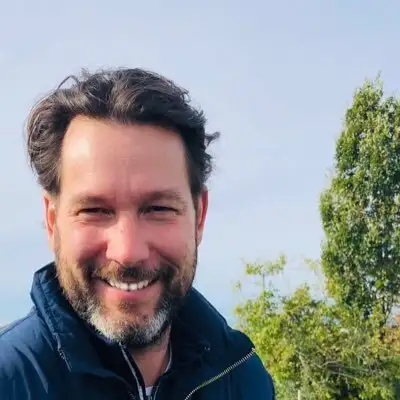
I'm Neil McPhedran, founder
of HigherEdPods.com and
Podium Podcast Company.
Jennifer-Lee: And I'm Jennifer-Lee,
founder of JPod Creations.
If you're podcasting in
higher ed, you're not alone.
There's a fast growing
community out there, and we're
here to help you tap into it.
Neil McPhedran: That's right, Jen,
and we'd like to hear from you.
We've got our email in our show notes.
Drop us a note, ask us questions,
give us ideas for upcoming episodes.
We really want to hear from you.
Jennifer-Lee: Yeah, our email's in the
show notes and please drop us a line.
Neil McPhedran: Okay Jen, so today
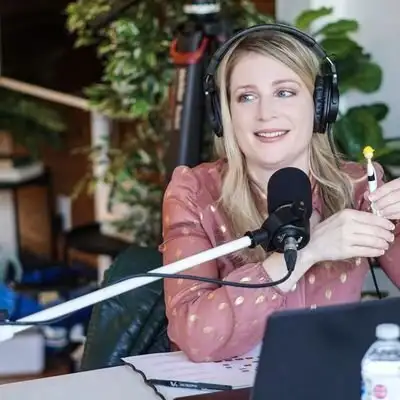
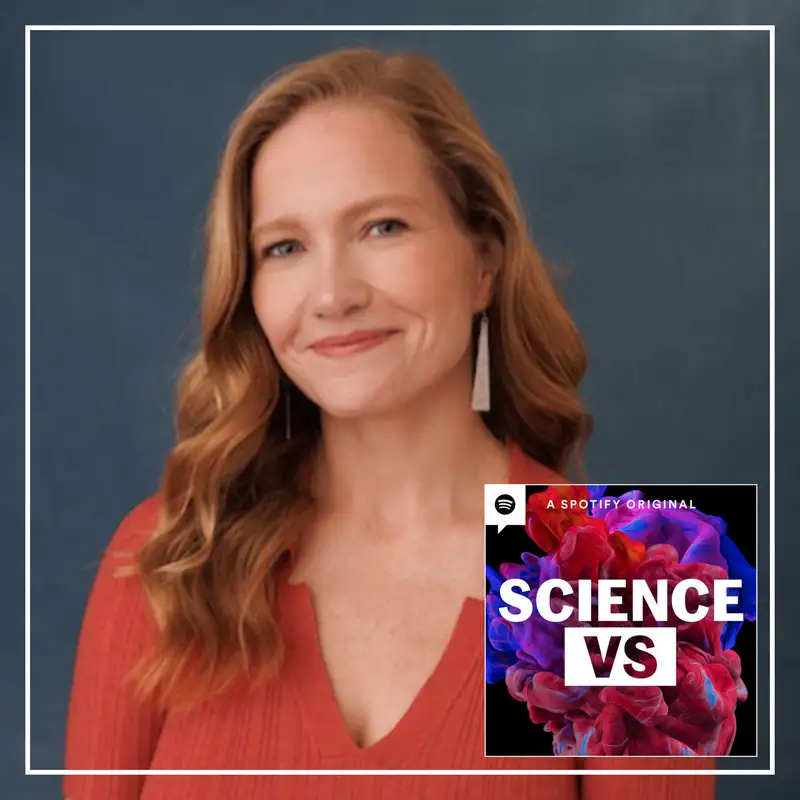
we are chatting with Blythe Terrell.
She is the executive editor of Science
Vs., which I think is probably one of
the biggest podcasts from an audience
perspective that we have chatted
with here on continuing studies.
I mean, let's be honest, higher
education podcasts are typically
more niche or niche as our American
friends say, but Science Vs.
is huge.
It has upwards of over a half a
million listeners for every episode,
and according to Rephonic, they get
over 2.2 million monthly listeners.
Wow.
Jennifer-Lee: It's crazy.
And that's what I love,
the power of podcasting.
Neil McPhedran: Yes.
Jennifer-Lee: Is that you don't even
know you're reaching that many people.
And we really enjoyed talking
to her because not only is it a
huge podcast, but the format too!
When you think of those types of
podcasts of like, oh, they're getting
so many listens, we typically think
of the big interview formats like Call
Her Daddy and other ones like that.
But this is a narrative
podcast, which I think is great.
It is a more heavy lift, and there's
a lot more moving parts to it.
But I think a big part of that
success is that's narrative.
Neil McPhedran: That's right.
And Blythe is not only the executive
editor for Science Vs., She's
also a NYU instructor where she
teaches the audio unit to graduate
students at NYU's Science, Health
and Environment Reporting Program.
So I found that part of the conversation
super interesting that she is not
only a practitioner on a big spotify
podcast, but she is also teaching and
supporting the upcoming podcasting
community from a science perspective.
Jennifer-Lee: Yeah, and we also
have a little cheeky conversation
with the collaboration she has done
in the past with Queen University.
So let's get started.
Neil McPhedran: Let's get into it.
Welcome Blythe, it's so great
to have you here on this
episode of Continuing Studies.
Blythe Terrell: Yeah,
thanks for having me.
Happy to be here.
Neil McPhedran: Well, why don't
we just start from the top.
For those of our audience who aren't
aware of it, 'cause I think most of
us are, but tell us about Science Vs.
and what's your role with the show?
Blythe Terrell: Yeah, absolutely.
So Science Vs.
the tagline is kind of like we pit
facts against everything else basically.
So, we look at fads, trends, and the
opinionated mob to find out what's fact,
what's not, what's somewhere in between.
That's the tagline we've
had for a long time.
But basically it just shows that does
a bunch of rigorous research into
the scientific research literature.
We've got a team of producers, huge
nerds and many with science backgrounds,
and they do deep dives on topics that
are in the news, roaming around the
internet, all kinds of stuff to sort
of lay out like, okay, what's got
science behind it and what doesn't?
Uh, so that's the conceit of the show.
Started by Wendy Zuckerman, who's
in Australia and I am the editor
of that show, which I've been doing
for about eight plus years now.
Neil McPhedran: And a, a lot
of the higher ed podcasters we
interview are more straight up like
this show, more interview style.
We do come across some more narrative
and whatnot, but Science Vs.
is a bit different, right?
You're, you're creating more
stories and you're going deeper.
You're kind of jumping in and out
of an interview and grabbing clips.
Blythe Terrell: Yeah,
Neil McPhedran: I guess what I'm getting
at is there's a lot more editing and
there's a lot more of a team involved.
Maybe you can just sort of
fill us in on a bit of that.
Blythe Terrell: Yeah.
Our process is a huge
pain, so yes, absolutely.
We are a narrative show.
We sort of try to do some storytelling
around the side, and a lot of times that
means, you know, like walking through
a specific study with a particular
researcher in the first half of the
show, and then the back half of the
show we're hearing from somebody else.
Sometimes as many as four scientists
who are sort of walking us through
Neil McPhedran: Wow.
Blythe Terrell: The story of
their research, how they sort of
came to a particular conclusion.
So there are six of us.
We've got four producers, and then Wendy
is our host, executive producer, and then
me, and then we have an audio engineer.
And so everybody on this show is like
running down scientific research, trying
to find good talkers who can tell us
stories, who we can have fun with.
It's also a show that has a lot of
like silly puns and goofy jokes.
We take the science
seriously, but not ourselves.
So,
Neil McPhedran: Love that.
Blythe Terrell: We'll make
a lot of very silly jokes.
We make a lot of like nineties Disney
movie references for some reason.
Make a lot of John Wick references.
Love it.
Yeah.
I'm like, why do we talk
about John Wick so much?
He's so relevant to so many things.
Our show is like really heavily edited
and cut together, and then we have
the independent fact checkers come
in, and then we rerecord, so there's
a lot of pieces to the process.
Jennifer-Lee: Why narrative though?
Because I know there's so many different
podcast formats and I love narrative.
Neil McPhedran: Mm-hmm.
Jennifer-Lee: Because of my background
in theater and everything like that.
But narrative is hard
and it's a heavy lift.
What made you guys go in that direction?
Blythe Terrell: Honestly, I mean,
part of it is that we started at a
company called Gimlet Media, and the
conceit of the company was kind of
like, we make a narrative podcast.
Right?
Right.
So, I mean, honestly, that's
a big part of it is like that
was the ecosystem we were in.
And also, when this show started, it was
10 years last year, so it was 2015, 2014
bubbling up and when the show started,
that's what the ecosystem kind of was.
Neil McPhedran: Right?
Blythe Terrell: It was
a narrative heavy time.
Neil McPhedran: Yeah.
Blythe Terrell: And you know,
we've moved away from it a
little bit in some episodes, but
that's our DNA and we like it.
And then sometimes we've been
doing more two ways and more
chats, you know what I mean?
Like we've been mixing it, mixing
it up a lot more because we're also
in a space where we're needing to
make more episodes at a faster clip.
And we find as you're sort of
alluding to that, sometimes we
just don't have the time to give
everything the narrative treatment.
Neil McPhedran: Yeah.
Blythe Terrell: And also, I don't know
if everybody wants that all the time.
Jennifer-Lee: Yeah.
Well it's funny because you talk about
not everyone has the time and obviously
it's something that you and I hear
all the time is like podcasting takes
too much time and then you guys are
like the whole different ball game.
Blythe Terrell: Yeah.
I mean, I think we all appreciate the
puzzle of it, of narrative you know?
Of sort of what's working, what's not,
and how do you write this transition?
How does this fit?
And we have been lucky enough, I
think, frankly, to have the resources
in the team to make narrative.
And for a while we were part of
this production studio that had a
lot of people who were teaching us,
you know, how to make narratives.
So I think that we were
in a unusual position.
I think most podcasters are not in that
space where they're like, we've got.
A company behind us and now
our show's owned by Spotify.
We just have more time and probably
more resources money-wise than
a lot of shows do, and it's a
huge lift and it's not easy.
Yeah.
See, I mean, none of it's easy, but,
Jennifer-Lee: but that being said, I'm
really glad that there are production
companies out there that do the narrative,
because I think that's the one thing
that I worry about with podcasting is
that sometimes we all just get into the
interview format because it's the one
we see a lot and there's so many great
different types of podcasting out there.
Blythe Terrell: Yeah.
For us, some days we're like,
why do we make our lives so hard?
Like,
Neil McPhedran: But I think that's what
sets the podcast apart and I think that as
a listener, I truly like that part of it.
I think for academia, actually
more narrative would be better.
When you're digging into like,
like what you're tackling a
topic, you're not bringing on a
guest with a book necessarily.
Right.
And I think that's a totally
different frame of reference.
And I think in academia.
Your way in makes a lot of sense where,
and it's science focused, and so there's
something you've observed or there's
a problem, or you want to dig into
something, you might need to talk to
four different researchers about it to
really properly get into that topic.
Right.
So I think the conundrum for higher
education and academia is budget and
without as much budget, it's hard
to do in a narrative style and it's
hard to chase down a story properly
and interview for re researchers.
Mm-hmm.
Blythe Terrell: Yeah.
And you know, I. I joke about this,
or maybe it's not really a joke.
I mean, I say that every one of our
episodes is like an undergraduate
thesis in terms of the amount
of research that goes into it.
That's great.
You know, we tell everybody that
how many citations we have, we
release them publicly, we release
our transcripts, fully cited.
We have independent fact checkers
holding our feet to the fire.
You know, we're tweaking words.
We're like, ah, it's
percentage point, not percent.
Like we're really in there.
We still make mistakes, but we aren't
trying to make sure that like we're
representing all the research correctly.
And it really, what we
really are trying to do.
Is to give people a glimpse
of the research landscape.
So you know, if you're covering a
topic like autism, for example, like
we did the autism episode last year,
a couple of them, and it's like, we
have to talk to four researchers.
Our audience expectation is that like,
you are gonna give me depth, right?
And so a lot of times we're like.
Okay, this is gonna be a
project like buckle up.
Here we go.
Jennifer-Lee: I'm curious because I come
from real background, so obviously we
get a lot of feedback and commentary,
especially with the topics that you
guys are diving into, like autism.
Do you guys get a lot
of polarizing comments?
Blythe Terrell: I mean, yes, we get
comments, we get emails, people being
mad on the internet, which is their
right to be, but what's interesting is
that we find sometimes we get comments
and we're like, yeah, you know what?
They're right.
Like we could have
healed that differently.
Like that probably was not great.
Hmm.
Honestly, happened to us recently.
We did an episode about.
A case study where it's this new format
we're trying, where we sort of look at one
case study, like one paper where something
sort of like surprising happened, right?
And it was about, it was from the eighties
and it was a girl in Lisutu in Southern
Africa who basically the story, it was
the story of her getting pregnant and
then when she went into the doctor, they
found that she didn't have a vagina.
Like she had this particular
condition where she didn't have
like a full vaginal opening.
And so we were talking about
that case report in this episode.
Then we got some feedback from people
who were like, you guys were kind of like
intending to laugh at her, but they're
like, oh, you were sort of like you have
a light tone and you're sort of talking
about like, wow, this is a wild story.
And you're not really thinking
about the fact that like this is a
15-year-old girl who is probably is
experiencing something really traumatic.
And that's an example.
Like we got some feedback from
a lot of our longtime listeners
who were like, oh, I think you
guys kind of missed on this one.
And we were like, yeah, you know what?
I think you're right.
You know, we think you're right.
So we.
Really try to actually engage
with a lot of those comments.
That's
Neil McPhedran: great.
Blythe Terrell: Especially
if they're in good faith.
So on Spotify, they have,
Spotify is a comment feature,
and you can delete comments.
If somebody is talking about women's
voices, I just delete it, right?
I'm like, if you're complaining about
vocal fry in the year of our Lord
2026, I'm deleting your comment.
But if you're calling us out because
you think that we mishandled something
or you disagree with our findings or.
You think we mischaracterize something
like by all means, you know, like we're
here to be peer reviewed as well in a way.
Jennifer-Lee: Yeah.
There's a difference between actual
feedback and like just dumb comments.
I feel like we could just create
a podcast about dumb comments.
Blythe Terrell: Oh my gosh.
Well, you let me know.
Neil McPhedran: It's not
even just dumb comments.
To your point about the vocal fry,
we just, on one of the shows we work
with, which is Stanford show, he
interviewed another Stanford prof.
Who she is just brilliant and she
just had so much great stuff to say.
And.
That was like so many of the comments that
came flying in and it just to discredit
a person for, for just the sake of it.
Jennifer-Lee: And so when I worked
in radio and this, like I said, it's
nothing new and I worked on a pop
station and my boss, because I was a
midday drive, we'd get phone calls.
This is back in the time of phone
calls, kids, no texting here,
Blythe Terrell: and
Jennifer-Lee: they would
phone up and complain to him.
About my voice.
You know, they
Blythe Terrell: wanted
your voice to be higher.
Like
Jennifer-Lee: she, yeah, they wanted to
be more what we perceive as it's changing
now, but obviously there's a lot of
psychology we perceive as more feminine
when you're like up in a higher register.
I luckily don't comment on this
podcast, but luckily with podcasting,
I've actually not gotten any
comments about my voice until now.
You're
gonna
Neil McPhedran: get one now?
Blythe Terrell: It's so interesting.
Or we'll get the ones that are
like, oh, you say like too much.
That kind of thing too.
Jennifer-Lee: And that's why I
always tell people you tried being
on the air and see how good you are
anyways, but like in real life I get
comments on my voice all the time.
Blythe Terrell: It's a great voice.
Haters
Neil McPhedran: not to delegitimize
your deep voice there, Jen,
but I love it 'cause I'm your
co-host, but I do appreciate it.
I wanted to just sort of jump back
to the show notes and citations.
Tell us a little bit more about that.
That's the drum that I've been
pounding and shows that we work with.
We really lean into and really feel
like the extra effort to create
those citations to treat it with some
of the academic rigor is important
to have proper show notes to have.
Chapters, transcripts, et cetera.
Maybe you can tell us a little bit
more about that, because I think that's
important for higher ed podcasters.
Blythe Terrell: Yeah, I mean, I
think it's really useful in part
because in podcasting, there's
no way to really show your work.
You're not going to name
every paper that you read.
You're not going to necessarily even
name every scientist you spoke with or
every academic you spoke with, right?
There's not a way for people to get that
information, and so they also don't know.
The depth of research that you did, and
that's kind of what we were finding.
Oh yeah.
You know, we sort of had people coming
to us and saying, well, you came
to this conclusion, but it seemed
like you got there really quickly.
And we were thinking about that and
thinking like, you know what, maybe
we're not showing our work enough.
Maybe they don't understand that
we are doing a lot of research.
And you can say things like.
I talked to 10 different
scientists about this.
Those things are helpful.
But we realized that it was helpful to
our listeners to feel as though they
were getting the depth of research that
we knew that we were giving them, and
we got a really great reception to it.
I mean, a lot of people will respond to
us or we'll have kids who are like, this
really helped with my paper honest stuff.
Oh, perfect.
Which is fine and great, but I
think what we realized is that it
really helped people understand.
The work that was going into
it, because it's so invisible
in audio a lot of the time.
And then having the transcription
too, they could just see it.
We're like, we're not trying
to hide behind anything.
Or if you look at our citation
and you're like, I think you
mischaracterized that paper, let us know.
And that has happened too.
You know, I mean, again, we, we find that
we benefit from that level of transparency
also, because if people want to look,
they, they can, and we're not perfect.
Maybe we did mess something up, you know?
I think it just added some
additional legitimacy to the
research that we were doing on
the show, and I would recommend it
Neil McPhedran: back to the more work.
But it's valuable work and it's work
that I think coming from an academic
background and our audience here is
higher education podcasters, so mm-hmm.
I am glad that you shared that, and
I think that there's some just built
beyond search, and I think that's
kind of the thing that gets sort
of chucked around in podcasting.
Shove more into your show notes 'cause
it's helps you with search in the apps,
but your team is coming at it from a
completely different reason and it's
more of an academic rigor perspective.
Jennifer-Lee: Yeah.
I think it's so important and sometimes
people just don't even wanna do the
show notes and mm-hmm do the transcripts
now, because some of the platforms that
you're on, they charge you to upgrade.
To put your transcript or things on.
So if they're first trying and they
have a budget, especially higher ed, we
know sometimes the budgets are tight.
Blythe Terrell: Yeah.
Jennifer-Lee: People are like,
well, I don't need to do that.
And you're like, well, we can set it
up properly or not, because again, that
it's not just searchability for us.
It's something that I hope
doesn't go away, but we'll see.
Blythe Terrell: Yeah, absolutely.
I mean, we'll make a public
transcript as a Google doc.
We'll put it like a tiny URL
into the show notes, and so just
directing people to that space.
But yeah, I get it.
Because you really do kinda
have to back check that, right?
Like if you're putting it
out and presenting it as
like, okay, here's the work.
You know, you can't be casual about
it if you really want people to Yeah.
Find that utility.
But I think we've found
it to be really useful.
And our transcripts, oh, they're
like popping up on Reddit or wherever
and we see people using them in
different ways, which we're glad about.
I mean, the whole point of our
show is like, we wanna get the best
science that we can find out there.
So like the more places
it can go, the better.
Jennifer-Lee: And I like the fact
that students use it too, because
I've talked about this before.
I've heard coffee shop conversations of
teachers being like, they're worried that.
Kids are using too much
AI without thinking.
Mm-hmm.
So the fact that they're listening to
your show and grabbing the transcript,
but they're at least like finding
other sources besides just ai.
Blythe Terrell: We're like
transcripts made by humans for humans.
Neil McPhedran: So not only are you
one of the executive producers on
Science Vs., but you also teach it NYU.
Maybe you could tell us
a little bit about that.
Blythe Terrell: That's so cool.
I do, so I've been teaching at NYU
for about four years and I currently
teach, they have a science, health
and environmental reporting program.
And it's a graduate program
for master's students who wanna
become science journalists.
And so I've been teaching their audio
unit for the past four years, and I also
teach a course at NYUI teach podcasting
to master's in PhD science students.
So those students can be from any field.
Any science field at all, and if
they're interested in podcasting, in
being on a podcast like as a guest
in speaking about their research, I
teach a workshop for them as well.
They're both really fun.
I love teaching both of these courses.
It's been great.
Neil McPhedran: That's excellent.
So the, those are courses which are not
part of a podcasting program per se.
They're courses that are part
of the science stream or sort
of thing, is that correct?
Blythe Terrell: Yeah.
The Science, health and Environmental
Reporting Program one is Right.
That's for journalists and it's the only
audio course that they do as part of
that, unless they wanna, like NYU also
has an audio program that's separate.
So if they wanna go on to do
more audio, they can, but what I
teach is just sort of like this.
Part of when they're learning everything
they're doing writing courses,
they're doing video courses, they're
sort of doing investigative stuff.
So that's what that first one is.
And then the other one is a sort of
workshop that's kind of outside of.
For the science students, it's this
workshop that's outside of their normal
coursework and it's free for them to take.
It's not for credit.
So it's kind of like something that
they really, if they really wanna
like know more about podcasting, know
more about audio, and also usually
I start off by talking a lot about
how to be a good podcast guest.
My first lecture is usually like.
How to be the kind of podcast
guest that gets invited back.
And we talk a lot about what that
means and what journalists are looking
for, what podcasters are looking for,
and how they can speak about their
research and lean into these different
parts of their personalities, even
if they want to connect with people.
And because podcasting
is so personal, right?
You sort of also wanna connect
with the people you're hearing.
So we talk a lot about that.
Jennifer-Lee: Well, scientists get such
a bad rep for not knowing how to speak,
or sometimes people may feel that.
They're not very lively.
So do you find that they enjoy doing
a course where you kind of help
them be better guests on podcasts?
Blythe Terrell: Yeah.
I found my last group in particular, I
mean, they were like, it was a Friday
morning class, it was three hours.
They were like the breakfast club.
By the end.
It's like they're all texting each other,
but they've all been, they all get excited
about it because I think it's, I think
it's a space where they can step outside
of their lab or their regular coursework.
The stakes are low, frankly,
because it's not a graded situation.
So they can kind of have fun.
And I think that our show on science
first is like the main thing.
You know, we want, we want good
information from scientists, obviously.
Like we need the accuracy.
We need like.
Them to speak clearly about the science,
but we also want them to have fun with us.
Mm-hmm.
And we wanna give a scientist on
the show, a space to have fun,
because that's the tone of the show.
And sometimes you gotta be sensitive
about that depending on the topic.
But we have lots of scientists who come
on who listen to the show sometimes and
they're like, I'm ready to have fun.
I'm excited to be here.
We're gonna be
Jennifer-Lee: playful a little bit.
And so I try to take that energy to.
Blythe Terrell: My classes too.
You
Jennifer-Lee: guys can
have a little bit of fun.
Blythe Terrell: I think my read as a
non-academic, so hopefully you don't get
angry letters about this, but I think
the thing that I feel working with a
scientist who wanna communicate their
work is also, I think so much of the time
is spent when you're speaking publicly,
speaking to people who are in your field.
Mm-hmm.
Who understand your
research and who you are.
You're defending a thesis, you are giving
a talk, you're doing a presentation
of some kind, and you're talking to
people who know what you are talking
about, and there is a certain way that
you need to talk and present yourself.
That space to earn respect and to like
connect with your fellow academics.
Right?
And that type of energy is so different
from how you wanna appear on like a
podcast that random people who know
nothing about your field are listening to.
Right?
And you really have to code switch
from that academic space into like,
I'm about to talk to my neighbor next
door, the person, another scientist who
works in a completely different field.
My grandpa, whoever, and I think
that that's what I'm trying to like
sort of help scientists do in those
spaces is to say like, it's okay to
not speak your academic language.
And in fact, if you speak your
academic language, the people who are
listening to this are not going to
understand what you're talking about.
So we do a lot of, I think it's hard.
I think it's very hard for a
scientist to step outta that space.
And I have a lot of respect for
everyone who tries to do it, and I
have a lot of respect for everyone
who has figured out how to do do
it well, because it's not easy.
Jennifer-Lee: It is hard.
Well, it's not just hard scientists.
It's many industries when you're
dealing with experts, right?
And I do a lot of work in the home
building space and love home builders,
and they're smart and I can't build a
house and they can, but like a lot of the
technical jargon we have to be like, okay,
tell the listener because you're ideal.
Listener is a homeowner and
the homeowner's not gonna
understand all this jargon.
Mm-hmm.
About HVACs.
Like, I don't know what an HVAC is.
You know what I mean?
Blythe Terrell: Yeah, exactly.
It's like that is your area of
expertise, which is why you're here.
It's so valuable.
And then your job as a podcaster is
like to try to help them translate.
They're amazing expertise, just something.
Yeah, absolutely.
I mean, and that's what's so fun
about this particular workshop
where it's a bunch of different
scientists from different disciplines.
You know, my math master's student
needs to sit down with my biological
anthropology PhD student, and they need to
be able to have a conversation where one
is drawing information out of the other.
So we do a lot of that, and I think they
find that to be really good practice.
But like in asking other people
questions and helping them explain
their work is such a skill too.
And I think it's also, it's
humbling for me, right?
But I also think it's kind of humbling
to have that experience of like, oh,
I'm trying to explain my research
and here's where I'm stumbling.
Why am I stumbling?
And then asking somebody about
the research and being like,
oh, this part's hard too.
You know?
I think it's nice for them to be
on all sides of that interview.
To be the interviewer, the interviewee
as well, and like learn all and
learn both of those sets of skills.
Jennifer-Lee: I love that.
And just changing a little gears, because
there was something else that I know
we talked about before when you and I
met, but you also have done two peered
review papers with Queens University
trial, just because the topics are
something that Neil and I don't really
get to talk about on this podcast.
So
Blythe Terrell: I love to talk about that.
Yes.
Perfect.
Thank you.
Thank you for bringing that up.
Yeah, so Science Vs.
The team has also has actually
co-authored two peer review papers,
as you mentioned, with uh, Queens
University researchers, including
Caroline Al is the PI of the lab up
there, sex Lab, and those papers are on.
The first one that we, that came out was
on Blue balls, AKA epidermal Hypertension.
Neil McPhedran: You're the first person
on our show to ever say Blue Balls.
Yeah,
Blythe Terrell: exactly.
Came to plan my flag as the first
person to say Blue Balls on this show.
So that's the first one we did.
And I'll tell you the second one
we did is about the so-called
orgasm gap between cisgender hetero
men and cisgender hetero women.
Women who are cisgender, women
who are in relationships with
men tend to have fewer orgasms or
orgasm less frequently than men do.
Hmm.
And so that's the other
published research.
That one just came out I think last year
also with the same group of researchers.
The bad story.
We were working on episodes about
these topics and as we mentioned,
our show is heavily researched.
You know, we really wanna give people
the research landscape and as we were
looking at these two topics, we were
like, there is not that much research.
Hmm.
Like the, you know, the
cupboard is a little bit.
Bearer than we would like it to be.
Jennifer-Lee: There's a lack of
research on a lot of medical stuff.
Blythe Terrell: Yeah.
Well listen, and I'm not suggesting
that that epidermal hypertension
should get more funding than vaccines
or anything like that, but I'm just
saying, or you know, menopause.
But we noticed there was not that
much research and we were like, you
know, could we do like a sort of
casual, like a sort of survey of
our listeners and just try to get.
Some not official, not capital
S science research, but can
we get some research on this?
And thousands of people responded to
our survey for both of these topics.
Right?
Wow.
So we had thousands of our listeners
and they were sharing it out and
obviously it's a convenience sample
and we know that, but we got so
much input and we got so much data.
We were amazed by that.
That Wendy the Ho, our host was like,
you know what, could we publish this?
Could we work with somebody?
Hmm.
So Dr. Caroline Pcal is a friend of
the show, had been a guest before.
So Wendy reached out to her and said,
Hey, wouldn't you all be interested?
Would your lab be
interested in partnering?
And she was like, well, lemme take a look.
You know, lemme see if I can get
sort of ethics approval and all these
things that you need to do right.
To sort of actually publish.
And they did.
They ran the statistical
analysis, her team took it over.
They analyzed the data,
they wrote up the paper.
We shared drafts back and forth.
And both of those topics have been
published in peer reviewed journals
at this point, which is really cool.
Neil McPhedran: That's amazing.
So.
There are the episodes,
just like other episodes.
Mm-hmm.
But then there was a compendium
from the research perspective, it
was sort of more expanded upon, or
did the episode itself encapsulate
that research that was published?
Blythe Terrell: So our episode
schedule had to move faster
than the academic research.
Neil McPhedran: Yeah.
Blythe Terrell: Schedule.
Neil McPhedran: Makes sense.
Blythe Terrell: So our episodes
had come out and we said in the
episode something like, oh, you
know, this is our early findings.
It's based on our survey.
I'm gonna look up the papers, actually.
So we mentioned the
research casually in the.
Episodes try to be clear
that it's just a survey.
It's not fully analyzed,
it's not peer reviewed.
And then the researchers basically
took the ball and ran from there.
And then the papers came out.
I think in both cases years later,
Neil McPhedran: we'll put it in
Blythe Terrell: our
Neil McPhedran: show notes too.
Blythe Terrell: One of them we
were able to pay to be open access.
The other one, unfortunately.
So the blue balls paper is actually,
I mean it's about blue balls,
but it is a serious topic, so.
It's called Blue Balls and Sexual
Coercion, a survey study of genital pelvic
pain after sexual arousal without orgasm,
and its implications for sexual advances.
And the focus of that paper was actually
like, how often are people feeling
pressured into sexual activity that
they might not want to participate in?
Because someone else is
saying, oh, I have blue balls.
You gotta like help me out here.
So that was actually
the focus of the paper.
Oh, whereas our episode was like a little
more lighthearted than that, right?
Like it's pretty serious.
And then the orgasm gap paper is
called Examining the orgasm gap in
a diverse sample with mixed methods.
And so that's sort of more
like descriptive, but we
have others in the works too.
Nope.
Well, I might be the first person to
mention this topic on your show, so.
So other research we have in
the works, a poster was just
accepted at a pain conference.
About anal sex and pain.
Jennifer-Lee: Oh wow.
Maybe I should be the
title of this podcast.
Neil McPhedran: Maybe not.
Blythe Terrell: Okay.
Your clicks
Neil McPhedran: that one.
That'd be called clickbait, I think.
Blythe Terrell: Exactly.
You might end up with a shadow ban or
an actual ban, but that one is more
about like, you know, how often are
people participating in anal sex and
how often are they experiencing pain
and like what are we seeing from that?
And like who's reporting
what and who's participating.
Neil McPhedran: And
Blythe Terrell: I think we had
thousands, I should double check,
but I think it's, I mean, it was more
than 10,000 responses to that survey.
And that's a topic where you're
like, I don't know how many people
are gonna wanna talk about that.
Participate.
And it turned out a lot of people did.
So it was cool.
And we can't say, I just can't
say enough good things about the
researchers at Queen University.
They're just like absolute superstars.
And we are in love with them and
obsessed with them and very appreciative.
Neil McPhedran: Wow.
We're, we're Canadian, so we're biased.
I think I know of about seven or
eight kids going there right now, so
Blythe Terrell: well tell them if
they're interested in sex research.
Neil McPhedran: Yeah, there you go.
Blythe Terrell: We go Dr.
Caroline, she's the one.
Neil McPhedran: Good.
I do think, like, I know we kind of
chuckled about these topics a little
bit here, but I wonder, do you think,
because you're coming at it from a
podcast and because as you sort of said
originally the ethos has a little bit
more of a humor, that you're not taking
yourselves as seriously like, like mm-hmm.
Perhaps.
Getting more people to do a survey on a
topic like this or tackling a topic like
that, coming from it, where you're not
out of the gates coming from participate
in this academic science survey.
Mm-hmm.
There's more of a, the Science Vs.
Wrapper around it.
Like, do you think that that helps
you sort of get people to participate?
Blythe Terrell: I, I think
there is an element of that.
So first of all, we have great listeners
who've stuck with us for many years.
They're wonderful.
And I think part of it is we call
out and say like, Hey, do you wanna
help participate in some science?
You know, whether it becomes an
actual published paper or not.
I think they get excited about that.
So we do have kind of a, an
existing audience of people
who love science, interested in
science, and who love these topics.
We do a lot of topics about
sexual health on the show, and
we find that they do really well.
Listeners, a lot of them,
they get really excited.
So I think that's part of it, but I
think it's, it sounds a little bit
intimidating to join a research study.
Yeah.
And it's like, am I gonna
have to talk to somebody?
Do I have to fill out a survey
with somebody with a clipboard?
All these are also online surveys
and it's a little bit easier to fill
that out about a sensitive topic.
Right.
You know, I think we have a
big, strong nerd community and
I think that's a real asset.
Jennifer-Lee: I also think that people
just want to be more vocal now too.
Mm-hmm.
And talk about these topics because
there's so many, before things were
taboo, and even just with different
health things I've gone through
in the last few years, it's like.
We all wanna talk about it and we want
a community, and it's okay to talk about
these things, where before everyone
was like, don't talk about your health.
And it's now it's like, wait,
I'm not crazy because you
are also talking about it.
Blythe Terrell: I think
that's totally true.
I think there's been an unleashing.
For lack of a better term, I be people
wanting to share their health information
and to feel less alone is, I feel
like what you're alluding to is, yeah.
You know,
Jennifer-Lee: it's not just me.
And it's like we laugh at these topics,
but they're serious things and people too,
like don't know, and they feel shy about
it, so they probably feel like, mm-hmm.
Oh wait, someone's asking
me a survey about this.
Like finally I feel heard.
Blythe Terrell: Right.
I've been training for this and, right.
Yeah, exactly.
And also it's, you're filling out
a survey and I think it's really
interesting to see when it pops out,
whatever pops out in the research.
So many people are experiencing the
same types of things, and I think
it is, even though it's just sort
of survey data, we also collect
sometimes qualitative data and common.
We hear from a lot of people who are like,
yeah, I experienced this thing, and then
we see six or seven responses like that.
I agree.
I think there's an element of you're
sort of joining a community of people
who wanna talk about this thing, and I
think that could be really powerful too.
Neil McPhedran: Yeah.
Interesting.
Okay, well maybe just sort of end
with your thought or your insider
opinion on what might be some
opportunity for higher education
with Science Vs., and shows like it.
Like what do you, where
do you see this going?
What do you see?
You're part of academia.
It's an academic research show.
Like what do you see on the horizon
for academia and for higher education?
Podcasting?
Blythe Terrell: Oh man,
that's such a big question.
Neil McPhedran: Yes.
Blythe Terrell: I mean, I think
there are people who have asked me,
are there any topics that your show.
Has decided it can't cover because
they're too complicated, too
jargony like, too science dense.
And the answer to that
is across the board.
No, you know, I think you
can podcast about anything.
The message that I would give, and I
think that the more people have access to.
Podcasts, like sort of by academics, with
academic rigor behind them, I think the
better the podcast ecosystem is gonna be.
So I would say it can feel thankless
maybe, but I think even building a
small community of people who are with
you and interested in what you're doing
and wanna hear your science, or they
wanna share their science with you,
are you gonna bring 'em on your show?
I think all of that is
tremendously valuable.
I think that is where
I'd like to see us go.
Continuing to sort of build
community with each other.
Right.
And people can get in touch with me.
Scientists can get in touch.
People who are a more ha, happy to
get in touch because I really think
also we're at a time where we need to
be working together more than ever.
Neil McPhedran: Great.
Blythe Terrell: So that's
the other thing I would say.
Neil McPhedran: Excellent.
Jennifer-Lee: See, and I thought
ending on blue balls was a good
way to end the conversation.
Neil McPhedran: What?
You brought it back, Jen.
Blythe Terrell: Listen, I don't wanna,
I don't wanna de make your podcast any
less classy, so I was gonna, you bring it
back to the higher ideals, Jen Academia.
I love it.
Jennifer-Lee: We're talking about actual.
Medical conditions.
Got science,
Blythe Terrell: epidermal, hypertension.
There you go.
Jennifer-Lee: There we go.
We'll on that, thank you so much.
We'd love to have you back.
Yeah.
And next time Neil and I are
in New York, we'll look you up.
Neil McPhedran: Yes,
Blythe Terrell: please do.
Thanks for having me.
This was so fun, fun.
Appreciate what y'all are doing.
Neil McPhedran: Great.
Thank you, Jen.
What a great interview.
And I think I can safely say that
is probably the only episode we will
record for Continuing Studies where
we talk about blue balls and anal sex.
Jennifer-Lee: That was shocking to me.
But you never know what we're
gonna get on Continuing Studies
and they're important topics.
Neil McPhedran: Yes.
And as we, uh,
Jennifer-Lee: from a
scientific perspective,
Neil McPhedran: that's right.
And there we weren't just talking what.
Blue balls.
Jennifer-Lee: We are
an educational podcast.
Neil.
Neil McPhedran: That is right, Jen.
Okay.
I don't know what more
we can add to this outro.
So I think you should just read us.
Jennifer-Lee: Thank you for tuning
into the Continuing Studies podcast, a
podcast for higher education podcasters.
We hope you found this episode
informative and inspiring.
If you enjoyed the show, we encourage
you to follow and subscribe to our
podcast on your preferred platform,
so you'll never miss an episode.
If you found this episode particularly
valuable, please consider sharing
it with your friends and colleagues
who also might be interested
in a higher education podcast.
We also invite you to join your peers on
higher ed pods.com, where you can connect
with other podcasters in higher education
and learn from others in the field.
Thank you for being part of our community.
We look forward to continuing to bring
you valuable insights and conversations
around higher education podcasts.
See you in the next episode.
Creators and Guests