How To Be a Better Podcast Host (or Co-host)
Kevin Ribble: And you have to listen
closely and have faith, you're going
to be able to explore where it's going.
That takes quite a bit of
confidence and calm, right?
Kathryn Stewart: And that's where part
of our performance background comes in.
That breath regulation, the nervous
system regulation, we've worked on that.
Art for a long time.
So we're able to sit back, listen,
relax, and have faith, as Kevin
said in that trust is so important.
Kevin Ribble: We become fascinated by
the neuroscience body integration that's
involved in this whole process because.
you have a guest that's
a bit intimidating.
You don't know if you have control
over, over the discussion or whatever.
Think about that moment when you're
just about to go into fight or flight.
When you're just about to panic, right?
Kathryn Stewart: Mm-hmm.
Kevin Ribble: We, we teach
people to get used to that
moment and to breathe through it.
'cause if your frontal cortex goes
offline and you start to go into flight,
how do you keep the conversation going?
Neil McPhedran: Yeah.
Kevin Ribble: You're really scared, right?
And you can't think on your feet.
You gotta get used to
that moment and be calm.
And that's probably when
Jen kicks in, right?
JenniferLee: Yeah.
Yeah.
What would you do if you didn't have Jen?
Neil McPhedran: Welcome to
Continuing Studies podcast for higher
education podcasters who want to
learn, connect, and get inspired.
I'm Neil McPhedran, founder
of Higheredpods.com and
Podium Podcast Company.
JenniferLee: And I'm Jennifer
Lee, founder of J Pod Creations.
If you're podcasting in
higher ed, you're not alone.
There's a fast growing
community out there.
And we're here to help you tap into it.
Neil McPhedran: That is right, Jen,
and we wanna just keep encouraging
people to email us in some ideas.
Let us know if you want to join the show.
We'd love to hear from you.
We've dropped our email in the
show notes, so give us a holler.
Let us know you're out there.
We'd love to hear from you.
JenniferLee: Yeah, please do.
And like this next episode,
we're jumping into.
Neil and I got to leave our computers and
go do this at my old broadcasting school.
So we're also up if you're
in the Vancouver area for us
to road trip to you as well.
So
Neil McPhedran: There you go.
JenniferLee: Give us your ideas.
We'll come visit you.
Neil McPhedran: I like that.
And because you know, we have this.
Drinking game on this show of when Jen
says she's a broadcaster, like this
is the ultimate sort of meta episode
where we're actually going back to Jen's
original launch to her broadcasting
career, and we're talking to today,
a couple of her original instructors.
JenniferLee: Yeah, I have to
say it was really cool because.
I spent obviously a lot of
time in that broadcast center.
To think that I would be in the podcasting
now because podcasting was like just an
embryo and now that we're doing a podcast,
it was pretty, pretty cool for you to
see, like where it all began for me.
It was like kind of taking
you back to high school.
So it was pretty fun.
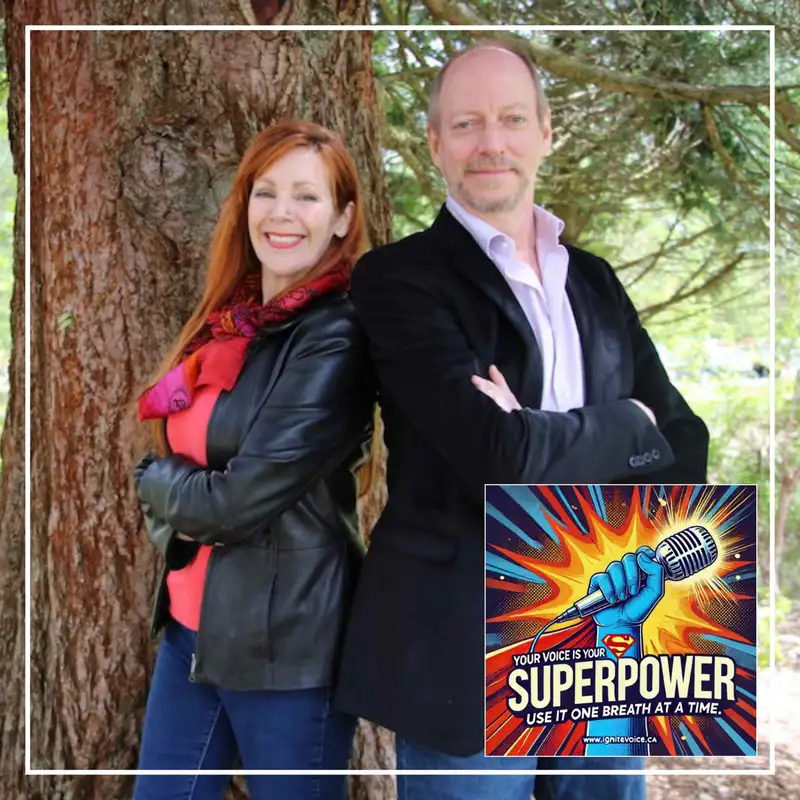
But we have my awesome teachers,
Kathryn Stewart and Kevin Ribble,
who still teach today at BCIT in the
broadcasting program, and we do talk
about how it's actually changed since,
of course the days that I went there.
But they also now have started
their own business with their own
podcast called Ignite My Voice.
It's so weird to think that many
years later I'd still be in touch
with them, and I actually helped
them put together their podcast.
And basically they're helping people
in different companies and individuals
on how to speak better with all the
tools that we've used in broadcasting.
And because they're co-hosts and Neil
and I are co-hosts, it was cool to
talk about the art of co-hosting.
Neil McPhedran: That's right.
I felt like this was the three
of you ganging up on me in
this episode, but it was great.
It was like the three pros and
the fourth guy in the room, but
you guys were very nice to me.
It's a bit of a departure, but this is
very much about skills, as their tagline
for their podcast is "Your voice is your
superpower. Use it, one breath at a time."
I love that as a tagline,
and I really got into that.
There's some super useful.
Insights and nuggets here for all of
the folks listening that host a podcast.
So, Jen, let's get into it.
JenniferLee: I'm really excited
today because this is first time
since Neil and I have been doing this
podcast that we're out in the wild
Neil McPhedran: Well, we did have, we
did have the live episode at PodCon, but
This is the first time we're kind of
in a studio together with real people.
So we've got this
running joke on our show.
Jen, every single episode mentions.
I'm a broadcaster.
JenniferLee: We have Kat and
Kevin, who I known for a long time.
I'm not your oldest student.
Kevin Ribble: You're very close.
Neil McPhedran: Well, may, maybe we,
you could just start with what is
BCIT and what's this program about?
I think that's probably
a good place to start.
Kathryn Stewart: British Columbia.
Kevin Ribble: Institute of technology.
Uhhuh
Kathryn Stewart: And the program
is Radio Arts and Entertainment.
Kevin Ribble: It's a two year diploma.
Kathryn Stewart: And it
has changed over the years,
Neil McPhedran: I would imagine
Kathryn Stewart: It's morphed with
how industry has changed and how the
needs of our students have changed.
Kevin Ribble: We've watch, I mean,
our students generally 25 and under.
Right.
And so they've moved
away from legacy media.
You know, we poll our students.
Kathryn Stewart: Mm-hmm.
Kevin Ribble: And, and most, uh, don't
watch TV or any legacy media at all,
Kathryn Stewart: or listen to the radio.
Kevin Ribble: And so what was
originally a a radio program is now
Kathryn Stewart: storytelling.
Kevin Ribble: Worked into storytelling
across multiple platforms.
We've watched that change in our time.
Kathryn Stewart: And it's, it's using
the concepts that we've been dealing with
over the years, but it's just morphing
into this new world of podcasting.
Kevin Ribble: Mm-hmm.
Kathryn Stewart: And it's been
exciting to watch those changes
and it really reinvents Kevin and
I as we look to the students and we
look to change our outcomes and we
look to inspiring new generations.
So it's really fun.
Neil McPhedran: That's super interesting.
So these students that are coming
through, they're interested in
podcasting, that's a thing they're
kind of walking in the door going,
I wanna learn more about podcasting?
Or just sort of general and podcasting's
sort of one of the channels?
Kevin Ribble: They're storytellers,
I guess is the way to put it, right?
Kathryn Stewart: Yeah.
Content creators,
Kevin Ribble: some of them are, are
interested in, in video only, and they're
really into the production side of video.
They're not necessarily
thinking podcasting.
Kathryn Stewart: Some are storytellers
into performance aspects, They wanna
be the person giving the information,
being behind the mic, being behind
the camera, telling the stories.
Kevin Ribble: Others?
Yep.
They wanna story tell
through a podcasting medium.
Kathryn Stewart: Well, it's
such a great medium, isn't it?
I mean, you can use it on
so many different levels.
For higher education.
For creativity, yeah, for connection.
I mean, that's what we're
doing with our podcast.
It's really about connection, but
he is using all of the skills that
we've had over these years and
targeting it into this one medium.
So it's perfect for higher education.
Neil McPhedran: Yeah, it really is.
So outside of the fact that
you're teaching storytelling and
broadcasting, and that's been your
career, you started a podcast and
you teach in a college setting.
So as college teachers, no
matter what the subject is, what
are you hoping to get out of?
Why did you pick a podcast?
Kathryn Stewart: Well, the podcast
really originally started as a creative
endeavor based on the business.
Aspects that we've put
together ignite my voice.
And it was just an element for us to be
creative and connect with people, which
is really what our business is about,
one of the aspects of our business.
And, uh, it's really
grown, I think, hasn't it?
Kevin Ribble: Yeah.
I mean, our company is a leadership
training and, and we wanted to
show that we could do what we say.
Kathryn Stewart: Well, we hoped
Kevin Ribble: teaching leaders how to
connect and present themselves well.
Um, and maybe another sideline
was for students here.
We came from, um, a legacy media
acting background years ago.
And as our students moved away
from, you know, paying attention,
legacy media, we wanted to show that
we could do something newer too.
Kathryn Stewart: Practice what we preach.
Kevin Ribble: Perform in
a podcast environment.
Neil McPhedran: Mm-hmm.
Kevin Ribble: So part of it
was to show the students,
Hey, we, we can do this right,
Kathryn Stewart: and that it's
something that they can achieve as well.
It's a great medium and it's fun,
and it's not that complicated to do.
Mind you, there's a lot of, you know,
elements to it, but once you learn it,
it's uh, a great medium for reflection.
So, good aspect for our students.
Kevin Ribble: We just started and, and
got Jen involved, but what we realized
is we can merge legacy media, the good
side of, of more traditional media
with the good side of podcasting.
So we do things a a little bit different.
We bring about the professionalism,
the refinement, the editing of
traditional media that isn't always
found in the podcast environment.
And then where legacy media maybe
went wrong a little bit was taking
a risk and having a conversation,
not knowing where it's going.
Yeah, it's pretty risky.
Um, traditional media
would be afraid of that.
And so, you know, you take the two things
that bring them together and that's
what we try to highlight in our podcast.
Kathryn Stewart: And traditional
media would be much more conservative,
where this is much more freeing.
I mean, swearing is,
JenniferLee: well, it's
not governed either.
Kathryn Stewart: Thank goodness.
Yes, yes,
Kevin Ribble: you're right that
there's no policy, there's no federal
government overlooking it or anything.
So we can do whatever we want
JenniferLee: Because people would be
shocked to know, like, because obviously
all three of us worked in radio.
Your favorite R word.
the one thing that I find really
different between and podcasting is
when you're working in radio station,
especially when it comes to something
like the Olympics or whatever, If you're
not the organization hosting, like
you can barely even give a highlight.
When it comes to politics With
the campaigns, it's like you
get a little package that says
what you can and cannot say.
When it comes to doing any type of
bits again, you can't swear you,
you really, you are really locked
down and people don't realize that
Kevin Ribble: those
commissions are licensed.
Right?
JenniferLee: Yep.
Kevin Ribble: By the federal government.
TV or radio or whatever, and they
can have the license removed.
Kathryn Stewart: The RTC.
JenniferLee: Yep.
But in podcasting, we
don't have any of that.
Kathryn Stewart: And so it's much
more freeing when we do an interview.
I mean, we have an idea of
what we wanna talk about, but
we have no written questions.
It's a conversation.
JenniferLee: Always have
an outline and prep Kat.
Kathryn Stewart: Okay.
Thank you.
Kevin Ribble: You have to have a
Always, when we head into a podcast,
we've done the research on the
individual or group of people.
Kathryn Stewart: Yeah.
Kevin Ribble: And we kind of have
an idea where we want to send it.
Right.
How we get there, we're not sure, but
Kathryn Stewart: we never know.
JenniferLee: Yeah.
Well Kevin, you told me to be proud.
Kathryn Stewart: I did.
You did.
JenniferLee: And to know when to stop
talking because like I brought this up
last time, but I remember Kevin came
to class one day and he was so salty
and so he is like, look, stop talking.
I was just listening this morning show
while I was in the pool doing laps and
he is like, they went on for five minutes
and he's like, don't you dare do that.
Kevin Ribble: It was even longer.
It was 50 minutes or something.
I was in the pool for an hour and
they were still doing the same bit.
JenniferLee: That being said,
because podcasts are longer format.
Yeah.
How do you still take that essence?
Because you still need to know
when to stop talking on a podcast.
How do you take that and elongate it?
Kevin Ribble: Well, we're always
thinking that there are four of us
in the room, so there's our guest.
JenniferLee: There are
four of us right now
Kevin Ribble: when we're doing ours,
and we have one guest that the fourth
person is the viewer or listener.
we're always thinking,
okay, are they engaged?
Are they following along?
Are we getting too insular
or going on too long?
Kathryn Stewart: What would interest them?
Kevin Ribble: That's what cuts
us off is being sure we've got
the the listener involved, right?
JenniferLee: Thinking of your
audits, Kevin, in the pool doing laps
Kathryn Stewart: and see, that
was a really good learning
moment, wasn't it, Jen?
JenniferLee: Because it's visual
and that's another thing about
podcasting, which relates to
radio, is creating that story.
Not enough people tells stories.
Theater of the Mind in podcasts
because again, that's really
what brings the listener through.
Kevin Ribble: You gotta come
up with a lot of stories.
Stories grab people's attention.
Stories are a way to see
inside something that you, you
don't really know much about.
It's, it's a way to get
into new knowledge, right?
Stories are very powerful
and post-secondary, I don't
think stories are used enough.
What academics you think of the
dry pro up, their moaning along
this is very opposite to that.
This connection to your
learner in a really personal,
authentic, creative way, right?
Kathryn Stewart: You can see yourself
within that story, and stories are
so powerful, whether it be education
or podcasting, they're the same.
Kevin Ribble: We, we've authored a
couple books about what we do too,
and the book started with story.
We started, what, what stories
can we bring in from our own life?
And we told these little snippets of
stories that pieced together in a book.
But that's how important story is.
Kathryn Stewart: Hmm.
And the stories are what the students
remember and they come back to us.
Neil McPhedran: So, so the
audience is podcasters.
So I think this is really interesting
'cause I think there's a lot of
people who are listening, when you
guys said you don't do your questions
ahead of time, they were like, Ooh.
Oh, I know.
I, I rely on my questions.
Jen veers off.
I try to steer her.
Kathryn Stewart: We have our questions.
In our brain, we know what
our, our, our target is.
Neil McPhedran: So you guys
chat about it in advance.
Yeah.
You do some research on who you're
talking to and I like how you said
you know where you want to take it.
Kathryn Stewart: Yeah.
Neil McPhedran: And so you're,
but you don't know how you're
gonna get there necessarily.
Kathryn Stewart: And we've
been doing it a long time.
And I think the other thing
that most of our guests tell us
when we talk about storytelling,
it's also about story listening.
So we're listening to our guests,
we're listening to what they say.
If you have so many questions, locked
down, you're more worried about what
your next question is going to be.
Neil McPhedran: Yeah, totally.
Kathryn Stewart: Than what
the person is saying to you.
So it actually frees us up.
We have questions articulated in our
minds, but we go with the flow of the
conversation because the conversation can
take you in so many different directions.
And if you're not listening,
you're gonna miss those cues.
You're gonna miss those
really important moments.
Neil McPhedran: Mm-hmm.
JenniferLee: See, that's what I do.
I'm not veering off.
I've learned from the best people.
Neil McPhedran: I've actually learned from
you because you know, we've got Google
Doc and we're in our own houses recording
with someone in Sydney or something like
that, and I'll like type it something
in the Google Doc for Jen to, you know,
you should ask this one next, whatever.
And Jen asks something else and
it's probably better than what
would've been in that Google Doc
and because you're listening.
Yes.
Kathryn Stewart: That's where
Jen's had a bit more experience.
That's right.
And you are learning, right?
Yeah.
And this is a great dynamic because
the two of you can work really well
together and that's why Kevin and
I work so well together because
we've been doing this for so long.
And with that sort of expertise,
we have much more freeing
kind of experience with it.
I mean, both of us have been industry
at least 10 years before coming to BCIT.
So you're looking 40 to
50 years of experience.
Kevin Ribble: Mm-hmm.
And it gives you a faith.
You need that faith because you're
never sure where it's going.
Right, and you gotta be calm.
And just listen, be, be comfortable with
a little bit of, um, silence and space.
It's okay.
Kathryn Stewart: Room to breathe.
Kevin Ribble: I can think
of the topics we've done.
We did a series on Amelia
Earhart, and we didn't know a lot.
We knew a little bit about the story,
but we had somebody deeply engaged in it
who went in directions we never expected,
and, and you have to listen closely.
Mm-hmm.
And have faith you're going to
be able to explore where it's
going, even though you don't have
the, you know, prepared question.
That takes quite a bit of
confidence and calm, right?
Kathryn Stewart: And that's where
part of our performance background
comes in, that breath regulation,
the nervous system regulation.
We've worked on that art for a long
time, so we're able to sit back, listen,
relax, and have faith, as Kevin said.
And that trust is so important.
Kevin Ribble: So, you know, when we
work with leaders or e even students
beginning, uh, we become fascinated
by the neuroscience body integration
that's involved in this whole process.
As you may know is the, is the newer one,
Neil, without broadcasting experience,
So when you have your questions, Neil,
and you're not sure where it's going, you
have a guest that's a bit intimidating.
You don't know if you have control
over over the discussion or whatever.
Think about that moment when you're
just about to go into fight or flight.
When you're just about to panic, right?
Mm-hmm.
We, we teach people to get used to
that moment and to breathe through it.
'Cause if your frontal cortex goes
offline and you start to go into flight,
how do you keep the conversation going?
Neil McPhedran: Yeah.
Kevin Ribble: You're really scared, right?
And you can't think on your feet.
Um, you gotta get used to
that moment and be calm.
And that's probably when
Jen kicks in, right?
JenniferLee: Yeah.
Yeah.
What would you do if you didn't have Jen?
Neil McPhedran: I think that's some
really good advice because there's a huge
portion of our listenership who is in
academia and we talk to some brainiacs.
We talk to some very, very smart people,
multiple PhDs and things like that.
And so some that can be intimidating,
I think to myself sometimes.
So like I, I wanna be academic here.
Kathryn Stewart: Well, that's
where perfectionism comes in
and imposter syndrome comes in.
None of us are perfect.
And it's okay to, you know,
mumble and you, you can edit
this, which is fantastic.
Neil McPhedran: So
JenniferLee: different
Neil McPhedran: than live radio.
Kathryn Stewart: Yeah,
Neil McPhedran: that does,
that does make it easier.
Kathryn Stewart: And, and in imposter
syndrome, that's where, you know, you
have to have your own self-confidence.
We've talked about the nervous
system regulation, all of that helps.
You are.
Absolutely qualified to ask the
questions that you wanna ask.
You're absolutely allowed to not be
the brainiac and ask the questions.
That might sound stupid.
Well, there are no stupid questions,
so there's no stupid questions
in podcasting either podcast.
You can cut them out if you don't like
them, which is we do it all the time.
Neil McPhedran: And if it's a good
answer, I can even re-record the question.
This is super interesting.
I am putting myself in the audience here.
I was listening to what you guys were
saying, and a lot of the people I
think in our audience are, do not have
the experience The three of you have.
They're subject matter experts, or
they may work in the communications
department, so they're probably experts
at communication, but they're not
necessarily experts in front of a mic.
Kathryn Stewart: Right.
And you have to practice.
Neil McPhedran: I think
is our 70th episode.
Kathryn Stewart: And
are you getting better?
Neil McPhedran: Yeah, maybe after 20.
I started feeling comfortable.
Kathryn Stewart: We're at 32, but we
have listened to our own podcast and
we feel like we've got better too.
Mm-hmm.
Mm-hmm.
You know, so it's a process.
Neil McPhedran: Mm-hmm.
JenniferLee: You gotta remember when
we started, we obviously weren't great.
We had issues like where maybe
celebrities call us out on
stuff and we even do that live.
So now I think with podcasting,
the reason that we're good at it
is because we're like, oh, well
Kathryn Stewart: we've
gone through the horse.
JenniferLee: Oh yeah.
Like when you deal with something, going
live and having an issue, especially with
a celebrity guest, trust me, nothing like
recording a podcast is a what in the park
Kathryn Stewart: and it's fun.
And when you're taking on an endeavor
like this, don't you wanna enjoy it?
You know?
Yeah.
Neil McPhedran: That's a really
good lens to put on it as well too.
I have, I've immensely enjoyed
meeting all the people.
Yeah.
Literally from all over
the world that we've,
Kathryn Stewart: and you're learning too.
That's what excites me about podcasting.
The guests that I meet and what they say,
I, I go home and I think about it and
I think, wow, what a great opportunity.
Have talked to that person
and I've learned something.
It's just a microphone.
And a bunch of people listening.
And if you just, as Kevin said, you
just think about the people in front
of you and the one person listening,
you're having a conversation.
There's nothing to be afraid of.
Mm-hmm.
We don't have to be perfect.
JenniferLee: Did I ever give you
the broadcast trick question?
Nope.
I, you guys would tell us this time,
how many people do you think are
listening to you when you're on the air?
Neil McPhedran: Well,
we're not on the air.
JenniferLee: Well, like,
regardless, like of your show.
Like what do you think when
Kathryn Stewart: the show goes there?
Neil McPhedran: Yeah, yeah, yeah.
How many in the, in the hundreds?
Hopefully.
No, that's the wrong answer.
Okay.
It's one.
It's that one person walking their dog.
Yes.
Think it.
Kathryn Stewart: If anyone who is taking
on the role of podcasting just thinks
about that, then it's not an intimidating
Neil McPhedran: Yeah.
Kathryn Stewart: Aspect, right.
Kevin Ribble: But when we're training new
students in podcasting, it's not just one
person and not one person walking a dog.
It's your best friend,
Kathryn Stewart: best friend,
Kevin Ribble: because that's
intimate relationship.
Mm-hmm.
Your mom and you, you've upgraded
the one to one, don't feel judged.
Kathryn Stewart: Yeah.
Kevin Ribble: It's that judgment
that throws you off Totally.
Right.
One and, and your best
friend doesn't judge you.
That's
Neil McPhedran: good.
Kathryn Stewart: Well, hopefully not.
Neil McPhedran: I think if, if you're
used to being a big lecturer, you
probably are, it might be a little
bit easier to step into podcasting,
but if you're on the research side,
that might be a bit more intimidating.
Kevin Ribble: And especially
if you've learned to teach.
Well, Uhhuh, I mean, something
else we do is teach teachers,
right?
Kevin Ribble: The good teacher
will, will connect, right?
Mm-hmm.
Eye to eye one person at a time, and,
and they feel like they're sharing a
story to one of their students at a time,
even if it's a lecture hall full of 200.
Kathryn Stewart: But you may
start it out that way though.
I mean, I think I did started off being
very afraid to be open and vulnerable
so that, you know, I wanted to be
again perfect in front of the students,
make no mistakes, make no mistakes.
I had all the answers, but over the
years I realized that that actually puts
people off that doesn't welcome people.
And the more you can be vulnerable
and share stories just like we are
today, the more people relate to you
and then they come up to you after
the classroom and wanna talk to you.
And if you're sharing stories in the
classroom and you're sharing content.
Again, that's more intimate
and more interesting.
Kevin Ribble: The best professor
has the ability to, to say, I
don't know the answer exactly.
When they're asked a question, I'll,
I'll look it up for you, but, mm-hmm.
You know what I, I don't know.
And that takes quite a bit of
guts to be able to do that in
front of, you know, 200 students
JenniferLee: Kevin used to teach.
I don't know if he still does it,
but like a voice and movement piece.
A lot of people don't realize that
your voice and body are so connected
and it really helps you in performing.
Absolutely.
Because I came from.
Background in theater.
I understood it, but then most of
my class, sorry, were young boys
in their twenties and poor Kevin
had to teach us this like yoga,
breathing voice cause and be serious
about it and like be approachable.
So it's hard because he's doing all
this important stuff and is like,
you gotta breathe and if you're
sound, paint the wall a color and
everyone's like, this is lame, but.
As a teacher, you gotta be
like, no, this is important.
And you did a great job of that.
And I remember people being like, that's
actually one of my favorite causes.
It's
Kathryn Stewart: usually later when
you realize the impact of that class.
Kevin Ribble: Well, you hopefully
make it relatable over a bit
of time and demonstrate it.
Right.
You know, breath is so fascinating.
People can think it's not that critical,
but as soon as you start to show them
and get them to feel stuff, that's when
those young males in the class start
to go, oh, there's something here.
And then you can bring 'em along slowly.
But Cat and I both teach so much about.
The holistic approach to your own
body and the importance of breath and,
Kathryn Stewart: and walls go up
because people are uncomfortable.
Finding a way underneath the wall, around
the wall to help people see their own bias
there, opens up their breath in their body
and we actually move that class to the.
Into the mind and body studio because
we recognize that in the classroom
it wasn't the right environment
to be teaching that material.
So now we do a sort of a separate
mind body connection and then
more of voice work after that.
So we've really changed that.
Class to be more comprehensive than
what I think even you went through Jen,
Kevin Ribble: so it'd be so great
to teach beginning podcasters
this, what's the fastest way to get
your frontal cortex back online?
When you go in that panic moment
when you feel like you don't know
what question to ask, a deep breath
and you start to bring breath into
getting your brain back online.
Um, so I think if you taught some
simple things, you know, to a
beginning podcaster, that would
make them much better faster.
Kathryn Stewart: We have what's
called the leader Regulation
lab now for Ignite, my Voice.
And this is a lab where we actually
put people through the paces.
We take them into exercises that get them
offline so that they can feel that what
happens to their body, and then we show
them exercises to bring them back online
and then put them through case scenarios
again so that they can feel what happens
in their body when they're more effective.
So by training.
To go offline, we train to go online.
And this step-by-step process really
helps people integrate the mind, the
body, the heart, to move into that
charismatic speaking concept that you
can use anywhere behind a microphone,
behind a camera, in a presentation.
It's, uh, a remarkable.
Concept that we've come up with,
and it's only been based on
everything that we've been doing.
Kevin Ribble: Neil, when you started,
would you imagine that this stuff
would all matter when you're just
coming up with your questions?
Neil McPhedran: No, totally.
You don't.
You really don't.
Kathryn Stewart: And I'm
watching you right now.
You're invested.
I can see it in your body.
You've got great eye contact.
You're moving your shoulders,
you're moving your arms, and
a lot of people get stuck,
Neil McPhedran: right?
Kathryn Stewart: Okay,
I'm asking you questions.
And they, they get stuck with their hands.
They get stuck with their arms.
They get stuck with their heads.
They get stuck in a look, but
you are embodying what you're
breathing, what you're feeling.
You're being present.
You're being in the moment.
Neil McPhedran: That's interesting.
I didn't realize that.
I do know that I've, I have a standup desk
and I had moved it down last week and we
did a recording and it felt really weird.
Although we're sitting now, it's fine
'cause it's a different environment.
Mm-hmm.
But in my home sort of studio set up, I
really like standing up when we do our
interviews and I, I didn't kind of put it
all together until you guys just explained
it to me actually, that it's 'cause I'm
moving around, it's, I'm on my feet and
it's the whole body thing or whatever.
Kathryn Stewart: Well,
you've got better posture.
Neil McPhedran: Posture
Kathryn Stewart: and then it opens
up your diaphragmatic breath.
Right.
You can breathe better.
Kevin Ribble: Well, it really.
Freeze your limbs.
They're more relaxed.
You don't feel judged, and
we're focused on the story, then
our whole body comes into it.
Right?
Neil McPhedran: Hmm.
Kevin Ribble: But I bet if we suddenly
put pressure on you and you felt
judged, you would start to freeze.
Neil McPhedran: Yeah.
You know what?
The other thing I was thinking about
when we were talking about was it's been
super beneficial with Jen as a co-host.
I don't think I could have done this on
my own, 'cause I really relied on having.
I didn't realize what
it was, but a breath.
I probably would've had moments early
on that I wouldn't, I would've stumbled
in my interview because I was nervous
about my next question or whatever.
But I had Jen,
Kathryn Stewart: and you're
being in the moment, and when
you're in the moment, you're not
worried about what's coming next,
Neil McPhedran: she'll ask some funny,
crazy question, which isn't funny or
crazy, but I joke with her about it.
But it takes us over here
and I'm like, oh, here we go.
Kathryn Stewart: But that's how you do
JenniferLee: it, even though I'm
prepped, I'm listening to the pieces
of gold, and you're getting really
good at it, and you'll notice.
That, like they already said this.
Or if they, if they go into something and
it's like, well, I wanna be able to jump
on that now and pull it from the bottom
of our list because it doesn't make sense.
Kathryn Stewart: You're
developing a good team dynamic.
Neil McPhedran: I, I
think we have, we mm-hmm.
We get along really well.
Kathryn Stewart: Kevin and I have
been team teaching for a while.
We've been friends since when a long time.
I, I recognize that we're, we're
always together and the students
think maybe we're a couple.
So I said together.
We need to set this story straight
right at the beginning of class.
We are best friend.
We teach together and we
do this business together.
Neil McPhedran: So I think here's
another good takeaway then for our
audience of just, if you're picking a
co-host, uh, you wanna, you wanna have
some rapport, you want to get along
with them, you gotta like them, like
Jen and I knew each right away that
we were gonna be able to get along
JenniferLee: with co-hosting.
Some you're good with and
some you're not good with.
And even in, in.
Podcasting.
I've been very lucky with some of the
cos I have and especially Neil 'cause
we just clicked and it's just easy.
And we work on different business
projects 'cause we own similar companies.
You guys, you're a little bit opposite
though, but anyone that I've had great
rapport with, I didn't really know them.
Like I didn't know Neil.
Kevin Ribble: Mm. It's like gonna a party
and, and you're at a party with a friend
and you don't know anybody else there.
How fast when we meet people we
don't know, do we judge that?
We want to get to know them better.
Kathryn Stewart: It's an intuition
and you gotta trust that intuition.
Neil McPhedran: We've worked together on
a few podcasts actually, and you, I've
seen you coaching, which I don't have the
ability coaching new hosts, and when you
guys were talking about breathing, one
of the things I've seen Jen do is take
someone with their script and Jen would
actually put spots for them to breathe.
Kathryn Stewart: Pencil editing
JenniferLee: comes back to acting.
When you mark your script,
Kathryn Stewart: your beats.
JenniferLee: Yeah, your beats.
Neil McPhedran: That's a very
valuable thing that I think people
jump into podcasting and don't.
Don't recognize.
Mm-hmm.
And I think that's something
that you definitely bring to the
table that that is important.
I mean, I've learned so much today.
This is incredible.
Kathryn Stewart: Well, it's
emotional context Yeah.
In, in your script.
And not rushing through it so that the
listener has a moment to reflect on what
you've just said, which is so important.
And as Kevin said earlier, sometimes the
silent is okay to not be afraid of that.
You know,
Kevin Ribble: so you're bringing up
the script, but beginning podcasters
don't recognize there's a certain
way to write a script for speech, and
you just write it like you're writing
an article or something and then you
try to read that bit of narration for
your podcast and it sounds like crap.
Neil McPhedran: I've done that.
I think it's a great question.
And then as it's coming outta my mouth,
I'm like, oh, this is a little awkward.
Kevin Ribble: Yep.
It's, it's written for the eye.
So there's actually a
way to learn to do that.
Kathryn Stewart: And that's, we teach
and to use our acting skills to help
the feeling, the emotion, own the
words, the energy in the script.
But
JenniferLee: that's why I really like.
Podcasting.
And like I said, the reason
I said my skills are valuable
for podcasting, I don't know.
I just feel like they're, they're
more respected in the podcast space.
Kevin Ribble: I'm part of it too is
people in the radio field generally
are performers, so they don't maybe
respect the, the skills needed
to perform on the podcast world.
People, I don't think, see
themselves as performers right away.
Mm-hmm.
Neil McPhedran: Yes.
Kevin Ribble: So they see the
skills as, wow, that's really good.
Right.
Neil McPhedran: I think it goes back
to what KA was talking about, how
it's easier and more approachable
to get a podcast up and going.
It is,
JenniferLee: and it's more
inclusive, like anyone can do it.
Neil McPhedran: Yeah.
I throw a really good micro on Amazon
and it'll come the next day and
there's all the software that just
feels super approachable and easy.
What we've discussed today
though is very, is a lot far.
There's a lot more to it.
Kathryn Stewart: If you wanna make
a good podcast, there's a lot of
elements to go in there from the
performing to the storytelling,
to the writing, to the production.
Yeah.
This isn't easy.
Kevin Ribble: Yeah.
So as a listener, when, when you hear
a really good podcast, now hopefully
you start to recognize it's multiple
skills involved is a challenge.
Do you feel like you got
Neil McPhedran: a bootcamp today?
I, this is great.
Kathryn Stewart: I wanna know all of
the questions that mark on the list.
Neil McPhedran: Well, she wrote the
question, there's a lot on here.
So which one should we ask?
Kathryn Stewart: Tell us
what you would've asked,
Kevin Ribble: which would be missed You.
Huh?
Neil McPhedran: How does your work in
broadcast education influence how you see?
There you go.
We didn't even need questions.
Great.
Kathryn Stewart: But you came
at it from having a conversation
rather than having an interview.
And those are two different concepts.
Neil McPhedran: Yeah, I've been
thinking about that lately.
I call it an interview and even
like having someone on our show,
I've been kind of changing that up.
Kathryn Stewart: We call it a chat.
Neil McPhedran: A chat,
Kathryn Stewart: yeah.
Neil McPhedran: Yeah.
Kathryn Stewart: Because people
who come on your podcast are
also wanting to get it right.
They're also wanting to be perfect.
They're also worried about being judged.
So once you say interview, they clam
up and they sit very straight and
tight and they'll say, hello, Neil.
Hello Jennifer.
It's nice to meet you.
Thank you for having me on today.
What would you like to talk about?
And they become very stiff.
Neil McPhedran: Yeah.
Kathryn Stewart: If we set the
tone for them and help them be
comfortable, then you're gonna
get a much better conversation.
Kevin Ribble: Sometimes we throw guests
that are coming onto the show off
a bit, because when they're feeling
that stress, sometimes they'll ask us.
Yeah.
Can you give me a hint of the
questions you're gonna ask?
No Matter of.
Can you, can you send me the question?
Yeah.
All the questions in it advance
or something, and we We'll go.
We have no idea.
It's a conversation.
Kathryn Stewart: Yeah.
Kevin Ribble: We have no idea.
We're gonna
Kathryn Stewart: talk, we'll
talk to you about storytelling.
We'll talk to you about
maybe your experience with
storytelling, and that's it.
JenniferLee: That's another thing you
learned from me because I was like, do not
give the guests the questions in advance.
Neil McPhedran: Yeah.
No, we do
Kevin Ribble: not do that.
JenniferLee: No, because I was like,
no, it's, and they'll over prepare,
Kevin Ribble: like Kat says,
that'd be really scared.
They're not giving the
right answer and stuff.
JenniferLee: Then I have
one more question for Neil.
Neil McPhedran: I feel like it's
a bit of a. Therapy session.
So I got one observation going back
to what you were just saying, Kat, and
I think this is applicable probably
for other podcasters listening, right?
They are also wanting to sound smart.
It helps to remind myself that even
if they have two PhDs and I have no
PhD, they're wanting to sound just as
smart as I'm trying to sound smart.
Kevin Ribble: Not that they're
trying to look smart, Neil.
They're terrified.
They're going to look stupid.
Neil McPhedran: Yeah,
Kathryn Stewart: exactly.
Kevin Ribble: And everybody
in the room is the same thing.
Everybody's terrified
they're gonna look stupid.
Neil McPhedran: Yeah.
Kathryn Stewart: Everybody, right?
JenniferLee: Well, I'm not, but the
final thing, well, this question for you
is we actually did our very first like
actual live podcast, uh, with Matt, I
Abraham's back in Chicago on a state.
Yeah.
And uh, obviously we're not
live today, but we're first
time like in person mm-hmm.
With people.
What do you, do you feel a
difference and do you like it?
Or do you hate it?
Would you rather go back
online than the virtual square?
Neil McPhedran: Uh, I like this.
I'm a people person, so I've, I
have, I have fed off of the two
of you and sitting beside you.
We're sharing a mic.
Obviously there's no camera here, so
people don't know that we're sharing
a mic here, so I have fed off of it.
Yeah.
JenniferLee: Did you like
the live format on the stage?
Would I
Neil McPhedran: love that?
JenniferLee: Well, we're doing it again
regardless if you liked it or not, but
Kevin Ribble: one of the, our goals
in our podcast is to bring out the
humanity and be a bit of a challenge
to the AI and answer to everything.
And I like that you brought up the energy.
'cause there's something about
shared humanity that you can't fake.
It just comes out when
people get together.
Right?
Neil McPhedran: That's where
I feel we have hope that we're
not gonna be replaced by ai.
I think this is how
podcasting is gonna survive.
AI more live in front of
an audience, more live.
Together in a studio where you're
recording like that because it's
just like something about the human
interactivity in your in person, right?
The energy, you can
JenniferLee: feel it as much as
virtual obviously serves us because
Neil McPhedran: we talk to people all,
JenniferLee: all around the world.
But obviously I like this better.
I feel like it's given us a
different vibe, uh, about being
scared and we can end on this.
Is that.
I got the best piece of advice.
It was only my second radio job.
And you have to man this massive
board and talk and be entertaining.
So I was shadowing before I went on
my first one and he was like, look it.
He's like, you're not a brain surgeon.
If you screw up, no one's gonna die.
Kathryn Stewart: Exactly.
JenniferLee: And I was like, that's
what I think about anytime now I
do any live or regular podcast.
Kathryn Stewart: It's also in our books.
The fear of death is actually
freeing 'cause that is the
worst thing that can happen.
JenniferLee: Yeah, you're not gonna
kill someone if you turn the wrong radio
Kathryn Stewart: button on.
So, so once you, you're
free of that, it's more fun.
Neil McPhedran: Well this was great.
Thank you.
I learned so much and uh, and I
didn't think that was going to
be what was going to happen here.
Kathryn Stewart: That's the
best part about podcasting.
Right.
Never know where it is gonna go.
Neil McPhedran: This was great.
Thank you guys so much.
Thank
JenniferLee: you.
You're welcome.
It was
Kathryn Stewart: fun.
Oh, that was great.
Neil McPhedran: What a good episode.
I got a lot outta that eye.
Learned a lot.
I hope everyone else did too
JenniferLee: and I'm glad that I suggest
'em to you guys 'cause I wasn't going to
at first because it's not our traditional,
Neil McPhedran: I just love this using
your voice as your superpower mantra.
I think there's so much that we talk
about from I. Distribution and video
and clips and what hosting platform
you're using and so on and so forth.
But there's just so much about interviews.
JenniferLee: No hosts
helping each other out.
Neil McPhedran: Yeah.
Co-hosts helping, helping each other out.
H how to use your voice.
How to make content.
JenniferLee: Yeah, like how to
Neil McPhedran: make content.
JenniferLee: It's valuable is like
everyone wants to keep talking,
but you really need to know.
When to stop talking and really
know how to have that balance
between you and your co-host.
Neil McPhedran: Yes.
So
JenniferLee: was that helpful?
Me jumping
Neil McPhedran: in?
That was helpful, I think.
I think that was helpful.
I think this is case in point of what
this episode was about, so I think
that's a really good jumping off.
Point.
Jen, why don't you read us out unless
you have another good point to make.
JenniferLee: I was gonna say, and I
feel like I put you through a little
mini bootcamp, do you feel like
you're a better presenter now after
that to go forward with continuing
studies and, and keep interviewing all
these awesome higher ed pod experts?
Neil McPhedran: Yes, and not
only did I learn a lot from this
episode, I've just learned so much
over the last three to four years.
So it's great.
JenniferLee: Sounds good.
Well, thank you so much for tuning
into the Continuing Studies podcast, a
podcast for higher education podcasters.
We hope you found this episode
informative and inspiring.
If you enjoyed the show, we encourage
you to follow and subscribe to our
podcast on your preferred platform.
So you'll never miss an episode.
But if you found this episode particularly
valuable, please consider sharing it
with your friends and colleagues who.
Also might be interested in
a higher education podcast.
We'd also invite you to join your peers on
higher ed pods.com, where you can connect
with other podcasters in higher education
and learn from others in the field.
Thank you for being part of our community.
We look forward to continuing to bring
you valuable insights and conversations
around higher education podcast.
See you in the next episode.
Creators and Guests