MIT's One Billion Learners: Where Podcasting Fits In
Mary Ellen Wiltrout: we were pitching
ideas on how MIT Learn could attract
more people, and some of that is just
offering different types of content.
Being able to have content that's
shorter videos and, things like
podcasting where you could watch or
listen to one episode and that would
be, the experience you came for and the
experience you wanted to get from it.
I think another part is MIT
in general seems probably
inaccessible to a lot of people.
So I think having people explain more
about their stories, about who they
are and how they got here, or what
they know and how they know it, I
think that would help with getting
to the point where um, they realize,
you know, MIT people are just people.
They do incredible things,
but everyone is just a human.
Trying to expose that, the podcast
space is really the right place to
show that and really get into some
of those conversations that you would
never get in into in a classroom.
Neil McPhedran: welcome to Continuing
Studies, a podcast for higher
education podcasters who want to
learn, connect, and get inspired.
I'm Neil McPhedran, founder
of HigherEdPods.com and
Podium Podcast Company
Jennifer Lee: And I'm Jennifer
Leigh, the founder of JPod Creations.
If you're podcasting in
higher ed, you're not alone.
There's a fast-growing
community out there, and we're
here to help you tap into it.
And please email us with your ideas
uh, if you wanna be on our show or
you know somebody we should interview.
We met so many fantastic people
at the Higher Ed PodCon, so please
um, our email is in the show notes
Neil McPhedran: Okay, Jenn.
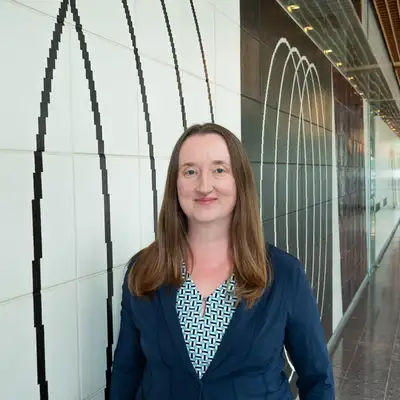
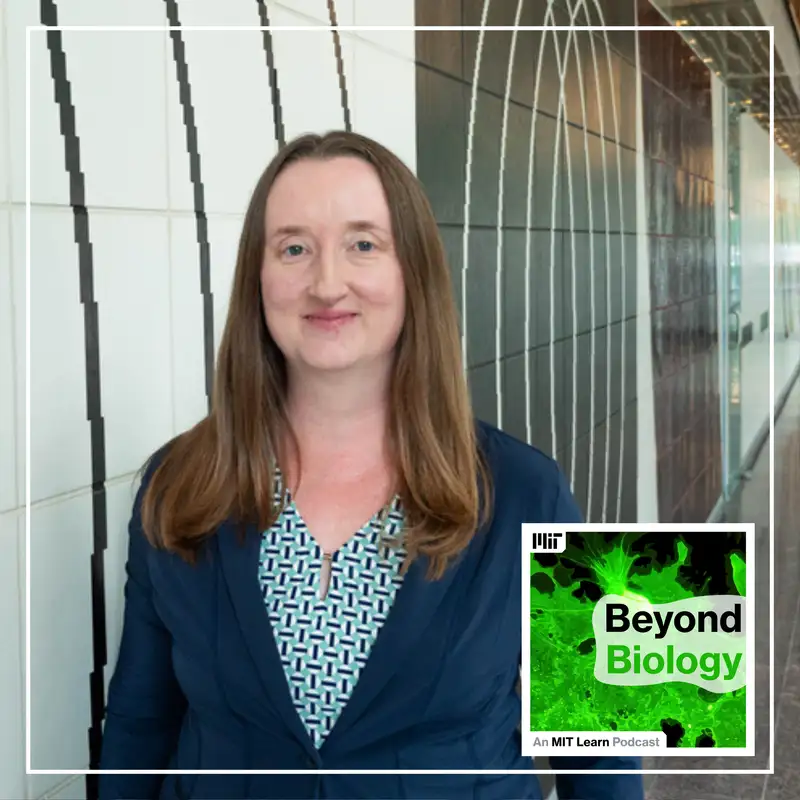
So today we have on the
podcast Mary Ellen Wiltrout.
She is senior lecturer at MIT, also
academic director for science at MIT
Delta, we're gonna get into that,
academic lead Universal Biology program.
And she's also host of the Beyond Biology
podcast, which we're also gonna get into.
this is gonna be a really
interesting conversation.
We were introduced to Mary Ellen through
Brett, her colleague at MIT, who we had
on the podcast a number of episodes ago.
Go back and check out that episode.
That's great.
And then Brett was at PodCon with
us, and he was like, "You gotta
get Mary Ellen on the podcast."
Jennifer Lee: Yeah.
And I'm really excited because
the whole time, and we'll
get into it, they was there.
He was telling us like, he's "They
are called Delta Force, and you
need to interview somebody from
Delta Force." So Let's get started.
Neil McPhedran: Welcome, Mary Ellen.
It's so great to have you here on
the Continuing Studies podcast.
Mary Ellen Wiltrout:
Thank you for having me
Neil McPhedran: So you
have a PhD in biology.
You teach, you lead online
and blended learning for the
department, and you host a podcast.
And we're gonna get into
that a little bit more
Mary Ellen Wiltrout: Mm-hmm.
Neil McPhedran: But how did
a biologist scientist end up
shaping how MIT reaches learners?
Mary Ellen Wiltrout: Yeah.
I think I've jumped into the
space initially by having
an interest in education.
So my career path has never been
traditional or someone did it before
me, and I just followed that path.
It's been more take a step
and then see what comes next.
And so I did follow a path of science
and getting a PhD in science, and
I had this interest in education
throughout that time and especially
solidified that during my PhD.
So after finishing um, my doctoral
work at MIT, then I went into
a teaching position at Harvard.
The transition then to online really
came with, in that position at Harvard,
teaching molecular biology, MIT and
Harvard started a nonprofit, and that
nonprofit, the focus was with edX.org,
the focus was online education.
And so as, reaching that point of being
in education in those days uh, trying to
figure out what is the future and where
should I go, that is um, you know, a
step where it was like, okay, I should
figure out how to get involved in online
education and what's happening here.
And at that time, I was invited to work
with and talk to the people at MIT that
were putting together the introductory
to biology online course, the first
MOOC in biology that MIT offered.
And so I came back for those conversations
with Eric Lander, and with those
conversations, then it just snowballed
into me becoming more involved and then
figuring out how could I come back to MIT.
I figured that out with uh, my mentors
that, you know, a lot of people I already
knew here, and coming back and um, them,
finding a role for me and developing a
role in which it wasn't just going to
be that one course for online learning
and what we would share with the
world, but we would commit to this and
being a leader in this space in online
education for the Department of Biology.
the funny thing is people weren't
sure about what the future would be.
Uh, It's hard to say that now knowing
where we are, but in the beginning,
people were like, "We'll give it a try
for a few years and see where this goes."
And so that's where I transitioned
from, science to then education
to then online learning.
Jennifer Lee: That's what I love
about podcasting, which is so unique
from other mediums like radio and
other broadcasters, is the fact that
you can really highlight expertise.
And people who wouldn't necessarily
you think be on a microphone can be
on a microphone and be so compelling.
Before thinking that you were
gonna be a podcast star, why
did you get into biology?
Because that is what really
makes you successful today
when you are doing a podcast.
Mary Ellen Wiltrout: Yeah, so my interest
in biology really, I mean, started
in high school when I was taking AP
biology, and I had a teacher who just
taught it in a way that felt compelling.
I felt, like, "Oh, yeah, I know
biology's tied to medicine. You know,
Maybe I wanna go that route." And I was
interested in that class and that teacher.
Um, And then, you know, it
really shows the importance of
a teacher in like, deciding.
And I liked physics too, but I felt
like, okay, I wanna take the next step
to undergrad and focus on biology.
And then I ended up just
continuing that path.
just the fact that when you're
learning science and especially
biology, it's easy to relate whatever
you're doing back to real life.
It's not just you know, learning
science for the sake of excitement about
science, but I studied hemoglobin in my
undergrad research, so that's everyone.
Everyone has hemoglobin in their
blood, and it's uh, traveling
around carrying our oxygen.
And really having those early teachers
and mentors who were like, "Okay,"
first year of undergrad um, "if you
wanna work in my lab, let me know,"
after we took that course on hemoglobin,
and so that's how I got into research.
And then having people saying, "You
should apply to MIT and give it a try."
I never thought I would get into
MIT, but just people pushing
you to get to the next step
Jennifer Lee: I think what you're
saying is so important in this day and
age is be an expert in what you do.
Do something that you love.
If being a creator later on, because
that's what you are now, a creator uh,
either it be online learning or a podcast
or anything like that, you can do it.
But I think sometimes, and this has come
up in a few podcasts, is a lot of people
think that being a creator is just "I
have to be a TikTok star. I have to put
on makeup. I have to do a tutorial on
this." But not enough people go in for
their passion and realize that can lead
them to being a creator in the future
Mary Ellen Wiltrout: Yeah, I think
even when I was younger, I wouldn't
say I was a creative person.
I wouldn't think "Oh yeah, I could
definitely do more in that space or
be making videos one day." But like,
you know, people may be thinking now,
but keeping an open mind and really
then there's opportunities now, and I
think everyone can see more so now the
importance of communicating all type of
work, sciences, engineering, humanities,
just, beyond what may be thought of
as entertainment and video before.
So everyone could be contributing
and sharing their, what they
have for others to learn from.
Neil McPhedran: We had your
colleague Brett on a few episodes
ago, and uh, so if you're listening
to this, go back and listen to,
Jennifer Lee: We loved Brett
Neil McPhedran: B- Brett was great.
But he mentioned, I think he mentions
in there Team Delta, and that
you're part of Team Delta, which
Mary Ellen Wiltrout: Right
Neil McPhedran: known as
the Digital Learning Lab.
But what's MIT Delta?
Mary Ellen Wiltrout: Yeah.
So the Digital Learning Lab, it was the
initial creation, and that was through
a group of people who were putting
together these online courses, these
MOOCs, the massive open online courses.
And they were people
who were in departments.
They have this background in teaching
and in the PhDs and the sciences
or engineering or humanities,
wherever they may be coming from.
that group then, it has evolved
in this past year to DELTA.
what it stands for doesn't matter so much.
It's about having a catchy
name for the sake of the name.
And so we renamed the group for
Disciplinary Experts in Learning
Technology and Applications.
But really, it's about creating a new
direction for this group, and that's
how we got into this podcasting space.
And we all have a lot of experience
with creating these online courses,
but then what should we be doing now?
what would help get to this goal of
one billion learners and getting people
to enter and recognize MIT Learn?
And so that's why we had this transition
in this past year of figuring out
new directions for our work to go
and figuring out what people were
excited about and how to pursue those.
Jennifer Lee: actually Brett told me
that he has a different name for you.
I don't know if you've heard it before,
Mary Ellen Wiltrout: Oh of course.
Jennifer Lee: but really… he's
really trying to get you guys to be
known, even at the podcast conference
we saw him at as the Delta Force
Mary Ellen Wiltrout: Oh I like that
he's telling outsiders that too now.
Yeah, I don't care.
Some other people have said
that immediately with, by having
the name too, but if it helps
people remember us, that's fine.
Yeah.
Jennifer Lee: It makes you
remember you so clearly.
I knew I was excited because I
was like, "Oh, I'm interviewing
the Delta Force today." So I
think you guys should keep it.
Mary Ellen Wiltrout: We
should lean in, yeah.
Jennifer Lee: lean in.
With the one billion learners, can
you explain a little bit what your
initiative and goal around that is?
Mary Ellen Wiltrout: Yeah.
So at MIT, there's an Office of Open
Learning, and Open Learning has been
this evolution of early initiatives that
Brett was part of OpenCourseWare that
he has spoken about in the past episode.
So MIT, roughly 25 years ago,
started MIT OpenCourseWare, that
has evolved into other projects and
initiatives like the MOOC projects
we just mentioned and more now.
So the Office of Open Learning is a
place for a lot of these projects and
initiatives to be housed under one place.
This office then over the last year or so,
because we had a lot of these sub-brands
and sub places to find our content, it's
trying to bring in all of the materials
in one place, and that place is MIT Learn.
So it's learn.mit.edu.
And in this one place and through
this office with new leadership one
of our major goals is to reach one
billion learners with our MIT content.
that may seem ridiculous, but I think
a lot of us believe we can do it.
So that's why we're going down this
road and trying to figure out ways
that in the past, from the start
with MIT OpenCourseWare, it's really
about creating online materials
that are similar or identical to the
MIT course and really putting those
online and into a digital format.
it's an interactive experience
where people complete courses
that are very similar to what
you would do in an MIT course.
But now, trying to get to one billion,
we need to be able to reach broader
audiences and reach people in, ways
they're interested in learning.
Not everyone will want to take a
course and especially maybe invest
in the time that it would take to
complete something like an MIT course.
Jennifer Lee: Do we know
what number we're at?
Mary Ellen Wiltrout: I think right
now we're focused on getting everyone
in the same place and then figuring
out at some point how we're going to
count this number, but I think like
subgroups all have different counts that
they've been tracking over the years.
And myself, I have a video
on YouTube that's nearly 4
million views, so that's like,
to give that context, like in depending
on how you count, you could easily be
in the hundreds of millions because
if you take individual videos.
But what counts uh, in the end,
we'll see as time goes on and how
this official number gets there.
But I think really focusing on
MIT Learn and, you know, being
able to get the traffic all into
one place and then counting the
same way uh, will help in that
Neil McPhedran: It's amazing.
I, I, I commend you,
you and your team there.
A billion, that's a, that's
a big, that's a big number.
How does podcasting end up
as one of those answers?
Like, how does, how does listening or
watching a podcast fit into learning?
And maybe like how do you look at
it differently than taking a course?
Or do you, or are they similar?
Mary Ellen Wiltrout: Yeah.
A lot of people probably
use podcasting to learn.
There's podcasting for entertainment,
but I think a lot of people are listening
to something they're interested in some
way, and it might not be their expertise.
It might be because they're commuting
and they want to use time that way.
Obviously the podcast space is very
crowded, so it's not okay, nobody
else is doing this, so we should.
There's a lot of people doing it,
but if you think about our collection
of materials across MIT Learn, it's
just one area where I felt there was
opportunity to do something different.
There are podcasts at MIT, but if we
go back to Delta becoming Delta, we had
this time period where we were pitching
ideas on how MIT Learn could attract
more people, and some of that is just
offering different types of content.
Being able to have content that's
shorter videos and, things like
podcasting where you could watch or
listen to one episode and that would
be, the experience you came for and the
experience you wanted to get from it.
I think another part is MIT
in general seems probably
inaccessible to a lot of people.
So I think having people explain more
about their stories, about who they
are and how they got here, or what
they know and how they know it, I
think that would help with getting
to the point where um, they realize,
you know, MIT people are just people.
They do incredible things,
but everyone is just a human.
Trying to expose that, the podcast
space is really the right place to
show that and really get into some
of those conversations that you would
never get in into in a classroom.
Jennifer Lee: but you mean
MIT people are just like us?
Mary Ellen Wiltrout: Yeah.
We are.
Maybe
Jennifer Lee: let's talk
Mary Ellen Wiltrout: everyone would
agree with that statement, but
Jennifer Lee: And I think it's
important, like all joking
aside, that you're just like us.
I think that's one thing that I like
about podcasting too, is the fact
that there are no barriers and all the
information is out there for the public.
So anybody can go and learn from these
professionals like yourself, from these
really prestigious schools that maybe they
wouldn't necessarily be able to go to.
but it opens the barrier, right?
And the wall comes down, and we're
able to learn from each other
Mary Ellen Wiltrout: Yeah.
We're providing opportunity for education
and really MIT, it's part of the mission
to share knowledge with the world.
We really, try to live that with sharing
our educational materials and sharing
it now in different forms as well If we
spark curiosity, then that's success.
If we get people excited about learning
and if they come away with a new idea,
a new way of thinking, that's, ideal.
That's great.
or if they just realize oh, know,
every day people are, do have
relatable issues and personalities
and things that come up even for an
MIT professor and how they think about
their life and what they're doing too.
So I think just trying to realize,
hopefully if there are young people
listening to anything that we're
producing, then they're realizing
they could become anything.
They could become something in
science or engineering or any
discipline we're talking about too
Neil McPhedran: and you're
building what you're calling the
MIT Learn Podcast Network rather
Mary Ellen Wiltrout: Mm-hmm.
Neil McPhedran: One-off shows.
So
Mary Ellen Wiltrout: Right
Neil McPhedran: How does
a new show get green-lit?
do people just sort of, like,
do other faculty approach you?
How does that all work?
How, How do you get
into the network there?
Mary Ellen Wiltrout: Hopefully one day
we have that problem where so many people
are requesting to be part of the network,
but right now it's some of our colleagues
have a lot of ideas about podcasting,
but that's not really the goal.
So we had within the Delta team, we had
three hosts in mind and that we started
with, and that's the direction we went.
And between the three of us, we can
cover a lot of topic areas within the
MIT curriculum or, discipline space.
So that was ideal to have a variety
of hosts and shows in different areas.
right now the network is really just
the people in MIT Open Learning and
people who were either interested in
podcasting, had an idea that would
fit well with the other ideas that
already were in play or existing.
And then trying to get this
concept where we're not trying
to individually get a following.
we can have that happen, but we also
wanna promote each other when what
we're doing, and there may be crosstalk.
And some people are interested
in MIT in general, and no matter
what the discipline may be.
Some are more interested in some subjects
or the other and just really find a way to
highlight and organize ourselves at least.
And, there are a lot of other
podcasts at MIT, and we'll see if it
expands beyond that, but right now
focusing on our own, office for now.
Jennifer Lee: I want more
members of the Delta Force.
You need to have like the Delta Force Five
Mary Ellen Wiltrout: I think they're all
really busy with other areas, like I said.
Um, So there's shorts, so we have
the Pulse that are out there,
so they're on MIT Open Learning
social media, but also MIT Learn.
And those are like the vertical
shorts, that sort of style.
And then we have games that
will be out in the near future.
And then we also have the category um,
that we're calling Open Seminar, and other
colleagues are working on Open Seminar
in which there's an expert talking about
a topic at a more accessible level.
It's not matching, you know, okay,
here's what the MIT lecture would
be on this, but maybe it's not even
something they teach in the classrooms.
Um, And it's a subject that they
just, you know, they like, they're
interested in, they have some
expertise in and they're sharing.
But more importantly, it's not
just a webinar, but there's a
group listening to Open Seminar and
participating in the conversation,
so there is a dialogue in that format
Jennifer Lee: And talk about being
busy To add more things on, you have a
podcast as well, and it's called Beyond
Biology, which actually really fascinates
me especially your titles right now
are, like, Unlocking Brain Plasticity.
I'm like, "Okay, that sounds cool." How
Parasites Are More Common Than You Think.
How did you decide to
create one specifically?
Because as you mentioned, they're are a
lot of work, and they take time to grow.
Mary Ellen Wiltrout: Right.
Really, part of this direction is
biology is very related to health
and medicine, so I wanted to expose
some of that application part,
like the everyday life part of why
people should understand biology.
And so the people that I've, been speaking
to so far, the guests, I'm trying to not
only loop in what is interesting about the
science, but really what is interesting
about your story and how you relate to the
science of this health topic or disease.
Everyone usually knows somebody with
one of these disease categories, cancer,
heart disease you know, in this case,
we have been talking about pathogens
with people, and that coming up in
the news, the parasite topic really
understanding what are parasites and
how do they interact with our everyday
life, and trying to get that across in
a way where they can learn a little bit
of the science behind it, but not that
it's too technical that you wouldn't
be able to follow the conversation,
I hope, that we ended up having.
Jennifer Lee: You mentioned about
tainted lettuce in that episode
Mary Ellen Wiltrout: that one for some
reason parasites creep people out, so I
think there is a layer of uh, you know,
not every episode may be for everyone.
We may make you think uh, too
much about what you're interacting
with on a day-to-day level
It's not just eating, it's everything
you do in your day-to-day life,
everything you touch, everything.
Jennifer Lee: Really each day
is a win when you go to bed
and you're like, "I survived."
People don't think about that
Mary Ellen Wiltrout: But that's
also the cool thing about science.
Our immune system is very powerful, and if
we appreciate that more and understanding
how it works, that's also pretty cool
Neil McPhedran: I really like
that personal connection layer
that you've added to your podcast.
I guess that goes
Mary Ellen Wiltrout: Thank you
Neil McPhedran: in our conversation
of that connecting with the audience
in a different way than just taking a
course and learning about pathogens.
Let's switch just a little bit to
measurement, I would presume that
if from a course design and I guess
learner engagement, there's you're
making data informed decisions.
So on the podcast side, w-
what are you looking at?
What are the, are you measuring
on the podcast side of things?
Mary Ellen Wiltrout: Yeah, so far
we have access to, basic information
downloads, and the nice thing is having
the network set up, then we can see across
all of the different shows how things
are going and trying to look at that.
But at MIT, we've always had this
problem where the numbers just
are, like, scratching the surface
of what may come of impact, right?
We've dealt with this for years where
there's been these online courses,
but the more powerful thing is really
hearing a story from somebody you know
and-- or that you meet in real life,
and then they explain what they did with
the thing that you put out there and
how that changed their path in life.
So I think we came into this already
understanding that just listening could
impact anyone in what they're doing, how
they're thinking, or what they may do.
But if nothing else, if it's just for
entertainment and people are using their
entertainment time for an educational
purpose, that's great as well.
Jennifer Lee: that's the thing is
like I think sometimes too people
get so stuck up on like the numbers.
"Oh, only 1,000 people are
listening," or whatever.
But like that's 1,000
people you're helping.
Who can say that, right?
That's the thing is it's … And it
sounds like you're getting feedback
from people that they're listening, that
it's helped them, anything like that.
Mary Ellen Wiltrout: So we don't
know how that will end up circling
back to us at this early stage.
it's been only a few months
of releasing episodes.
And so we'll see how, it goes.
But we're pretty excited, and, people
we know give us feedback, and we're
excited to, as we get better at doing
this and podcasting and being the host
and putting together the shows, hopefully
we are getting better each episode on
being able to interview people as well
Jennifer Lee: Do you have a
favorite story of someone that
has given you feedback yet?
Mary Ellen Wiltrout: I wouldn't say I
have a… I think it's just surprising
that people, like one person told me I
have a good radio voice, where I would
Jennifer Lee: You do
Mary Ellen Wiltrout: I never
expected that going into this.
And I was like, "Okay, weird." So it's
uh, something that, you know, old enough
now that I'm not self-conscious about
things, so it's good to hear feedback
that I wasn't anticipating, and I just
expected like, okay, like everyone
hates hearing their voice, so This
is normal, and this is how like, you
know, I've been recording other people
in video for years, and everyone's
like, "Oh, I don't wanna watch myself.
I don't wanna look at myself."
So I know that's the reaction,
no matter even if you're the most
famous professor here at MIT.
So I don't have a lot of those worries
going into it, so that was weird.
Jennifer Lee: But something you said
earlier too was like, we're all human.
We all have bad days.
And I think sometimes too we look at
especially MIT and professors there,
and we're like, "Oh wow, they've
made it. They have no worries in
the world." But that's not true, and
that's what I love about your podcast
'cause you're able to also know that
like you said, we're just real people
Mary Ellen Wiltrout:
People have self-doubt.
People are not as confident as you may
guess, and I think just bringing up some
of those stories and, you know, even
just saying early on people don't know
that was where they planned to be in
their career and those sort of things.
Um, you know, Too many younger people
are worried about having the path
figured out before they get there.
Neil McPhedran: I think that was,
that's sort of a great way to sort of
end off this great conversation and
the amazing work that you're doing.
And thank you so much for uh, coming on
Mary Ellen Wiltrout: Thank for having me.
Neil McPhedran: Well, Jen,
another great conversation.
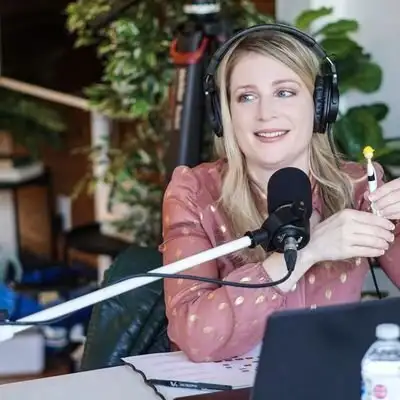
I loved uh, Mary Ellen's
uh, podcast studio there.
Like, You could see what was going
on there and an inside view into
one of the MIT podcast studios.
Jennifer Lee: She looked
very professional.
And we know I love a good podcast studio
Neil McPhedran: You do.
Don't all.
Jennifer Lee: We do.
We do.
Neil McPhedran: So one, one of the things
that struck me with our conversation
there was this one billion learners.
That's a big, hairy, lofty goal, and
you can see how they haven't necessarily
figured out um, how they're gonna
get there uh, or, or how they even
add up that number um, as we, as we
chatted about, but it's this North
Star that they're all moving towards.
And it and as a result, they're doing,
really cool things in podcasting
Jennifer Lee: I love the fact how
serious they are about it too.
A lot of people are like, "Oh,
one billion, like you're never
gonna get there." But they're
like very serious about it.
And like they said, a lot of their
videos already get four million views.
they still have a long way to go, but
at least they have some cred behind it.
So I really love the fact that they are
so focused on this, and that d- they
wanna really just inspire and help people.
And something else that came out
through their goal is the fact
that they wanna show everybody
everyone at MIT is just like them.
We're all real people wanting
to learn from each other
Neil McPhedran: this connection
that podcasting affords, affords us.
So whether that's using podcasting
uh, as part of your syllabus like, it
just it, it was a, it just creates a
different connection than a traditional
um, uh, lecture or, or sort of other more
traditional learning mechanisms uh, do
Jennifer Lee: 100%.
Well, That has been another episode
of our Continuing Studies podcast, a
podcast for higher education podcasters.
We hope you found this episode
informative and inspiring.
If you enjoyed the show, we encourage
you to follow and subscribe to our
podcast on your preferred platform,
so you'll never miss an episode.
But if you found this episode
particularly valuable, please consider
sharing it with your friends and
colleagues who also might be interested
in higher education podcasts.
We also invite you to join your peers on
HigherEdPods.com, where you can connect
with other podcasters in higher education
and learn from others in the field.
Thank you for being part of our community.
We look forward to continuing to bring
you valuable insights and conversations
around higher education podcasts.
See you in the next episode
Creators and Guests