Opening Doors for Academic Voices
Will Brehm: We also realized that a lot
of academic podcasts were professors or
academics sort of leading the charge.
And we sort of said, well, what if
we actually put graduate students
or students at the forefront?
And so that's what we did with Flux.
There were some really good
content that came out of that.
And I think really pushed the limits of
what we can think of as sort of acceptable
and legitimate academic outputs.
It's not just a written
journal article anymore.
We can actually say podcasts
should be valued to the same extent
because they take as much work, if
not more work to make them well.
There is this sort of recognition
that, well, maybe there's like
non-traditional, which is kind of
pejorative if you think about it.
Like, yeah, why?
Why isn't a podcast
traditional, but whatever.
Films, audio artworks, exhibitions,
these things have value and merit
when it comes to knowledge and ideas.
And the institution of higher education
needs to figure out how to count them
and value them in similar ways, I think
it does a disservice to the academic
world to limit what we think of as
knowledge, as only being in textual
form and a particular textual form that
has certain markers, long, complicated
sentences with a lot of jargon, right?
Like that's not what we should be
only valuing in the academic world.
Neil McPhedran: Welcome to Continuing
Studies, a podcast for higher
education podcasters who want to
learn, connect, and get inspired.
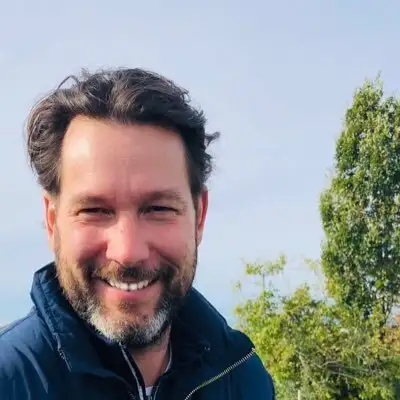
I'm Neil McPhedran, founder of Higher
ed pods.com and Podium Podcast Company.
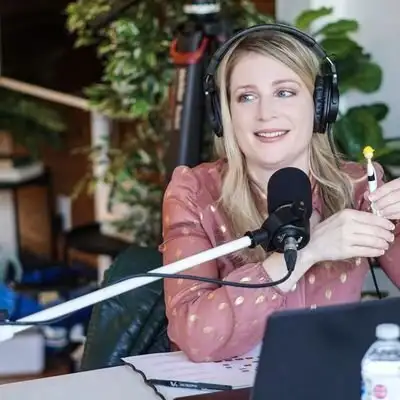
Jennifer-Lee: I'm Jennifer
Lee, founder of JPod Creations.
If you're podcasting in
higher ed, you're not alone.
There's a fast growing
community out there, and we're
here to help you tap into it.
Neil McPhedran: That's right, Jen.
We want to hear from you.
We've got an email in our show notes.
Email us, tell us about your ideas.
Give us some suggestions for
people that should be on the show.
I gotta say, Jen, one of the things
I love about this is almost every
single time we bring someone on the
show, they give us one, two ideas
of more people to get on the show.
Jennifer-Lee: Yeah, I love it.
We always get to find out about people
that we would never be able to find.
It's about networking.
Neil McPhedran: That's right.
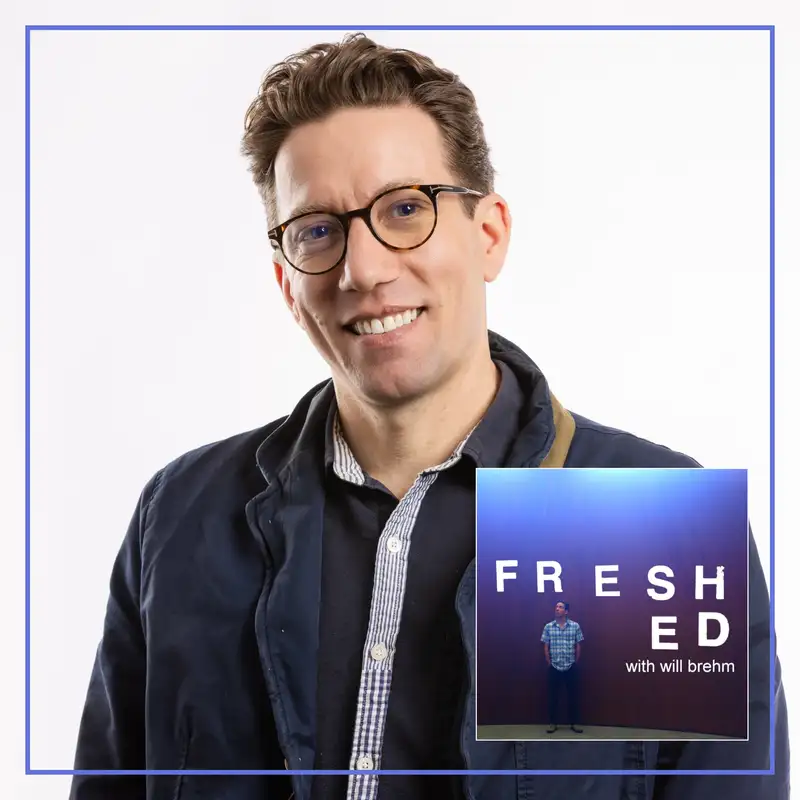
So Jen, in this episode we
are speaking with Will Brehm.
Jennifer-Lee: In Australia.
Neil McPhedran: In Australia.
That's right.
He is an associate professor in
comparative and international education
at the University of Canberra, where
I have two nephews and one niece
that lives, but that's a whole aside.
He is also adjunct researcher at Waseda
Institute for Advanced Study at the
Waseda University, which is in Tokyo.
Sorry if I mispronounced
the name of that university.
And he is honorary adjunct professor
at the Royal University of Phnom Penh.
Wow.
You're thinking there's an Australian
voice coming, but it's not.
Actually, it's an American voice coming
Jennifer-Lee: And he's just
such a fascinating guy.
We learned a lot from him.
Neil McPhedran: So will is the
creator, host, and board member
of Fresh Ed, which is a weekly
podcast that makes complex ideas and
educational research easily understood.
Actually, I think Fresh Ed is,
and we're gonna get into, this
is way more than a podcast.
It's turned into more of a network, but
he's also built an audience for academic
and higher ed podcasts to access.
Anyway, let's get into it because
it's a really great conversation.
Hello, Will.
Thanks for joining us on this
episode of continuing studies.
So, Fresh Ed describes itself as a weekly
podcast that makes complex ideas into
educational research evenly understood.
So you're 10 years in, over 400 episodes,
you've interviewed 700 plus scholars
and you've got a million downloads.
Congratulations on all that.
That's,
Jennifer-Lee: Wow.
Neil McPhedran: T hat's quite amazing.
So what does that mission
actually mean to you in practice?
And has that evolved over time
or is that where you started?
Will Brehm: Good question.
Thanks for inviting me.
It's really wonderful to be here
and talk to like-minded podcasters.
It's kind of crazy that this podcast
exists and I, I love everything about it.
I think that that tagline has helped us
keep the focus on what we wanted to do,
because in podcasting, as you evolve
your show, everyone has a different idea
of what you should do, and you could
actually have the mission creep and move
into the different areas pretty quickly.
It was really valuable for
us to always say, no, no, no.
This is what we're trying to do.
Even if we're trying to experiment in
many different ways, and we have over
10 years, we've always sort of kept
the core of what we're trying to do.
We want to just talk about academic ideas,
which we thought would make them more
easily understood, because we've all read
academic papers that are esoteric, filled
with jargon, long, complex sentences.
I mean, I've written those as well.
But there's something about being in
dialogue with academics that allows you
to un unpack the ideas in a little bit of
a different way, make academic ideas sort
of more accessible to a broader audience.
Jennifer-Lee: it's great that
you're using a medium that is
friendly to many different people.
And I just love the titles of your
podcast 'cause I really understand them
right when I'm looking, like "Unpacking
the Learning Crisis" and "Racialization
Education Inequality", like they're
easy, they're clickable titles.
"The Culture Trap."
Will Brehm: Yeah.
I try and not emphasize clickability
because I think there can be problems
in just trying to drive clicks, but
I think you're right about having
things, being concise and to the point
and digestible is something that.
Academics, you know, maybe it's a
caricature, but probably for good
reason, we're not so good at doing that.
I think the defense from an academic's
point of view would be around, you know,
some of these ideas are really hard and it
takes time to sort of learn how to write
about them in a way that is accessible.
But I think the podcast sort of
circumvents that because by putting
someone in front of a microphone
and saying, let's just talk to
each other as if we're having a
cup of tea, that changes things.
People can actually say things in ways.
That might not get past peer review,
and then it becomes a little bit easier.
Jennifer-Lee: Well, things
can also get misconstrued.
Anytime you're writing anything, either
it be paper or text message or whatever.
A lot of the times English language
can definitely come off wrong,
and so sometimes it is easier to
understand somebody's inflection
and how they feel about the subject
matter than it is reading it as well.
Will Brehm: Totally, totally.
There's an absolute limit between what
texts can do and what the voice can do.
And we had a student that we worked
with who did this whole podcast on
what is the sonic possibilities of
podcasting in the academic space.
And he had this little line around
like the power of silence is actually
profound when you speak and in
the sonic world, but what would
that actually look like in text?
Like blank pages, but just
wouldn't have the same power that
silence does when we're speaking.
Neil McPhedran: That seems so
simple, but when you put it that
way, that's very thought provoking.
Actually, you're right.
Silence can be uncomfortable
too, but uh, I'm always amazed
how people can use silence
strategically in their communication.
I've always admired that.
Why don't we take a step back here,
how did Fresh Ed start and what
was the original impulse behind it?
Will Brehm: Yeah, I had recently
finished my PhD and I was about to
move to Tokyo, Japan to start a post
doctorate at the University of Tokyo,
and I never had been to Japan before.
It was a daunting idea.
At the time I was actually living
in Australia, in Melbourne.
My partner said to me, why don't
you start a podcast to sort of
give yourself an excuse to reach
out to people and talk to people?
And I had no idea what I was doing.
I basically recorded episodes in an
apartment that was about 25 square meters.
And so it was kind of
insane to be recording.
Neil McPhedran: Classic Tokyo apartment.
Will Brehm: Classic Tokyo apartment.
My partner, she would be like
sitting on the bed behind me.
I would be at the desk at the foot of
the bed and I'd be interviewing people
and I had no idea what I was doing.
And if you listen to some of those
first episodes, they're pretty terrible.
Jennifer-Lee: I feel like nobody
knows what they're doing though
when they first start a podcast.
Will Brehm: Yeah.
It's funny for me, I
had no training ground.
All I had was a childhood of listening to
the National Public Radio in the States.
And so the person that I always had
in mind was Terry Gross, who is the
host of a show called Fresh Air.
And so I, I literally stole the name.
I was like, I want to be the Terry Gross
of academic podcasting love, and therefore
I'm gonna call my podcast Fresh Ed.
Right.
Like, I mean, it was not
subtle in any way in my mind.
Like I knew exactly what
I was trying to emulate.
Neil McPhedran: I love hearing origin
stories and where they are now.
So speaking of evolution, Fresh
Ed started as an interview show,
that's still a component of it, but
it's really grown into something.
It's kind of a network now, if you will,
with, I think it's five distinct shows.
So, uh, maybe take us through that a bit.
That's a really interesting
journey that you've taken there.
Will Brehm: Sure.
Yeah.
And it really has been a journey.
I mean, now we definitely, a network, an
umbrella, something like that is how to
think about Fresh Ed 'cause there's all
these different podcasts under there.
The one I do is the interview show.
We still do that.
I love doing it.
It's a, a big part of my own career now,
so I'm absolutely gonna keep doing that.
But by doing that interview show
in English, based on who I knew
and the people that I wanted to
speak to, we quickly realized
that this was rather limiting.
It was my perspective, my language,
my interests were being highlighted.
And so particularly with the language,
we realized there's so many other
language groups, of course that are
doing academic work and we're limited
by only focusing in on English.
And so at first we sort of thought, oh,
maybe we could do like live translation,
like the UN does, but then you know,
there's one, there's a cost to doing that.
And then two, there's a technical
side to it, like how do you
actually record and do it?
And this is before all these fancy website
apps that have now made it a lot easier.
And so, we realized that doing
that probably isn't gonna work.
Then we thought we would just
do translation of transcripts.
And we did that for a while , but
then we started realizing like,
well, that's actually still just
privileging the English language.
We're doing the audio in English, and
then the text in different languages.
So, we eventually settled on,
we actually need to just have
non-English speaking podcasts.
Which presents a whole bunch of
issues around bringing the right
team together, how do we do it,
and creating sort of new podcasts.
But we ended up doing it in, first we
did it in Portuguese with a podcast
called Eduquê, and we worked in
partnership with a Brazilian organization.
And then we created a Spanish
podcast called Aula Divergente,
and that was with some colleagues
at Fresh Ed and then we brought in
a few other people to work on it.
And what was interesting is we sort
of experimented with the form as
well through these two podcasts.
So the Portuguese podcast,
there was two hosts.
What we ended up thinking like the
podcast was supposed to be like the
academic plus the practitioner as hosts.
And so they sort of played a caricature
of these two different roles.
And then anyone they brought
in, they sort of asked questions
from these two different angles.
And so that was sort of a slight
variation of what I was normally doing.
With Aula Divergente, we decided to
make it a series based podcast, so
over multiple episodes, they would
sort of look at a single topic.
So one of them was the constitutional
reform in Chile Another one was migration
out of Venezuela across Latin America.
And so over multiple episodes,
they sort of put together
different shows around that topic.
And then, we also realized at some
point that there's a limit in the
form of just doing interviews.
Like there needs to be, you know, to live
up to the sonic possibilities of what
sound can do and what podcasting can do.
I'm sorry to say, but all three of
us are like in the business of doing
interviews, which are kind of the
simplest way of doing a podcast, even
though it's probably the dominant way.
Jennifer-Lee: Most people coming from
broadcasting are not good interviewers.
Will Brehm: True.
Jennifer-Lee: But everyone wants
to do it because it's the sexy
one that you see all the time.
Will Brehm: You see it all the time.
I've learned that a good interview
is sort of an art form, but
it's the lowest hanging fruit.
It's so easy to get into it.
All you need is a, you know, your cell
phone basically, and you can all of
a sudden do interviews with people.
Jennifer-Lee: Do not
record on your cell phone.
You're making me cry right now.
Stop it.
Neil McPhedran: I don't
think he's saying that,
Will Brehm: But the cell phone has
created a level of accessibility
that I think we can't deny,
and that's a good thing, right?
And so, I actually think
it sort of democratizes the
ability to make a podcast.
And I think there is value in that.
We see that probably happening
with what is there, 3.5 million
podcasts in the world these days?
Most of them, no one really listens to,
but it's great that they exist, right?
There's so much niche content out there
now that I think that even if the sound
quality isn't so good, I'm still a
big fan of more people doing podcasts.
And, and so we were doing it and
we were learning a lot and having
a good time, but I was just getting
into like sound art basically.
And it's like sound can do
so much more than just what
I was doing with interviews.
And so we then decided like,
well, why don't we explore that?
Like what can we, like, can we make an
academic podcast that is sort of using
sound to maybe its fullest ability, or at
least using the affordances of sound to
a greater extent than just an interview.
And so we created what we call
Flux, which is a podcast on
narrative based podcasting.
So storytelling through sound.
Jennifer-Lee: Love it.
Neil McPhedran: So, and then now you're
working on The Thinking Ear, which
I think opens this up even further.
Will Brehm: That's right.
That's right.
Neil McPhedran: It's essentially
an audio journal where researchers
can submit their own episodes.
So, this is really fascinating.
So tell us a little how, how that worked.
Will Brehm: So after we did Flux
and we started really working
with narrative based podcasts,
telling stories through sound.
And the other thing we did there
is we also realized that a lot of
academic podcasts were professors or
academics sort of leading the charge.
And we sort of said, well, what if
we actually put graduate students
or students at the forefront?
And so that's what we did with Flux.
I loved it.
We've, you know, we're nominated for some
awards and it, there were some really
good content that came out of that.
And I think really pushed the limits of
what we can think of as sort of acceptable
and legitimate academic outputs.
It's not just a written
journal article anymore.
We can actually say podcasts
should be valued to the same extent
because they take as much work, if
not more work to make them well.
But then we started realizing
like, hmm, everything we're doing
is basically from us, right?
It's like we are, we're building the
team, we're doing it, which I loved,
and it ensured a certain quality.
But we also started realizing that as
we were just sort of saying so many
other people wanted to make podcasts,
and we just simply couldn't work with
everybody that wanted to work with us.
So we got the idea of like, well, what
if we had an audio journal where people
could submit ideas or finish pieces to us,
and we would supposedly somehow quality
control this like peer review and then
put it out on a platform of Fresh Ed
that would ensure that they would reach
a far larger audience than if this team
of academics just made their own podcast
that would have no audience or would
upload it to YouTube, which often happens.
Like you can find these graveyards
of academic podcasts on YouTube
that have like two or three listens.
They must have spent a ton of money
making these things because they
got a grant to fund it, but then
they just don't get the audience.
And to me that is such a sad reality.
Like you want people to listen to
these, these creations that take so much
time, so much passion goes into them.
The audio journal in our mind is trying
to start that a lot harder said than done.
Opens up issues of like, people
simply don't have, like academics
don't have the skills to do this.
They don't necessarily need to.
So there's all sorts of issues that
have come out of doing it, but I still
think the idea at its core is a good
one and sort of opens up the possibility
for more academics to have outlets
to do podcasting in legitimate ways.
Jennifer-Lee: But I guarantee you
they're like, I created a podcast.
Everyone should come listen.
But nobody knows they created a
podcast 'cause they don't do anything
Will Brehm: totally
Jennifer-Lee: about it.
So I like the fact that you
bring the podcasters to you.
Will Brehm: The key for us is
that, like I've seen a lot of
research grants get written that
include a budget line to create a
YouTube video or create a podcast.
Because, academics, I think there's a
recognition and funders recognize that
just putting out this knowledge in
a journal article or in a book isn't
actually gonna have a wide dissemination.
And so there's this assumption
that then if you make sort of like
something on YouTube and that's
enough to get public dissemination.
But as Jen is like rightly saying,
just because you put something on
there doesn't mean anyone is gonna
Neil McPhedran: That's right.
Will Brehm: See it.
The other way is if you take channels
that already have a built-in audience,
Neil McPhedran: yes.
Will Brehm: And we will give you access
to that audience, but you have to sort of
give us the content that's high quality.
I think there's issues there around
how do you ensure the quality?
What does that look like?
Are we simply replicating
the academic peer review?
And there's all sorts
of problems with that.
That needs to be worked out, I admit that.
But I do think there's something
about saying to an academic, Hey,
do that grant, make that podcast.
Bring the people together.
You need to make that podcast.
But we can be the platform, we can be the
audio journal as an outlet to guarantee
that there's gonna be this audience that
you probably wouldn't get otherwise.
Right?
Without spending a ton of money
on marketing, which they're
probably aren't gonna do.
Neil McPhedran: Yeah.
You've got a built in audience.
Yeah.
You've been doing this for 10 years,
you've been building your audience.
Will Brehm: Exactly.
Neil McPhedran: And you can go to an
academic who has no audience but has
the research and is gonna do the work.
Exactly.
And now they've got a place to put it.
Will Brehm: Exactly.
And then we, we sort of follow the
ideas around the Creative Commons.
So the idea is that we would play
the episode on our platform, but the
academic or you know, whoever else
co-owns that episode, they can play
it anywhere else they'd like to play.
Yeah,
Neil McPhedran: I like that.
That's good.
Jennifer-Lee: How do you do all this?
Because obviously this takes a lot of.
People power and it's not easy work,
but you don't have ads, you have
no paywalls, and you actually say
you're free forever on your website.
How do you do all this?
Will Brehm: This was also really an
interesting sort of evolving conversation
that we've had over many years.
Originally there was no funding.
It was just me doing everything,
and then we got some small little
grants to do one-off things like
transcription or whatever it was.
And then we ended up getting
some really good funding from
the Open Society Foundations.
And that's, that basically allowed us
to really sort of experiment and branch
out and do things because we didn't have
to worry about running ads or whatever.
And in fact, a lot of our appeal
to the Open Society Foundations
was that we were open access,
that we didn't have advertising.
And so that actually quickly
became to us a red line.
We do not want to advertise like
e-cigarettes, which seems to be
like the company that always comes
in, like wants to advertise on
Fresh Ed for whatever reason.
And so we just sort of have a hard no,
Neil McPhedran: that's funny
Will Brehm: on that.
So it's actually quite funny.
There's also been things where book
publishers of like academic books or
even books that you would find in like a
school would reach out to us and say, we
want to use some of your audio, get the
transcript and put it into, into the book.
And of course, these are books that are
being then sold onto like school systems
and they're saying, oh, we'll give
you a small amount of money to use it.
And it's really nice to have the
Creative Commons because you say,
oh, well you can use it for free.
But your product then has to
be Creative Commons as well.
And that quickly, you know, the publishers
are like, well, no, no, no, we would
never make our books open access.
And I say, oh, well then, sorry,
you can't use the content.
So it's, it's been a funny
journey in that sense.
Like our ethos was really clear
and then we created these red lines
and we just haven't crossed them.
So no advertising from
for-profit companies.
We have advertised other things
like different events that might
be coming up, but we are not sort
of doing JUUL or Better Help.
Neil McPhedran: So that's more like
featuring other academic events or
things like that, that are kinda
worthy, that wouldn't, your listenership
wouldn't go like, oh, that's an ad.
Will Brehm: Exactly.
And then we have recently started
a membership campaign, and my
understanding of the podcast sector is
that this is rather common these days.
Advertising has gone way down
in commercial podcasting.
Neil McPhedran: Yeah.
Will Brehm: And so podcasters are sort
of looking for other sources of money.
And so drawing on sort of that
Patreon model is becoming more common
and we're doing the same thing.
And we're bringing in some money.
We still have some grants, you know,
some key donors that give us money.
Neil McPhedran: Great.
Will Brehm: And last year was the first
year where we actually were completely
sustainable, which was really great.
Neil McPhedran: Oh, good, congratulations.
Will Brehm: Bringing in the amount of
money that we need to produce the show.
It has meant we reduced sort of
how much we make, but we don't
need to open it up to advertising.
Neil McPhedran: When we chatted
previously, you are based in
Australia, but you mentioned the
Nitro framework, I think that might be
unique to Australia, but from what I
understand what you were explaining,
it's sort of recognizes creative and
scholarly audio as research output.
Will Brehm: Yes.
Neil McPhedran: I'm curious about that.
Will Brehm: Yeah, so it's, it Nitro stands
for non-traditional research output.
Mm-hmm.
And academics to different extents
and different systems are measured
by their outputs, and so these often.
Are connected to how many papers you
put out in a year or how many books.
And often they're sort of ranked like,
you know, having four journal articles
in Q1 journals is seen as better than
having one book, which to me is insane
because a book takes so long to to write.
But anyway, there are these certain
metrics there is this sort of recognition
that, well, maybe there's like.
Non-traditional, which is kind of
pejorative if you think about it.
And I do think there's certain I
similarities in places like the
UK as well, where where they're
beginning to recognize that films,
audio, artworks, exhibitions; these
things have value and merit when
it comes to knowledge and ideas.
And the institution of higher education
needs to figure out how to count
them and value them in similar ways.
I'm all for it.
I think it does a disservice to the
academic world to limit what we think of
as knowledge, as only being in textual
form and a particular textual form that
has certain markers, long, complicated
sentences with a lot of jargon, right?
Like that's not what we should be
only valuing in the academic world.
Jennifer-Lee: No, it
opens it up so much more.
But you remember too, our
audience is constantly changing,
like how they're doing it.
Phones, touch screens, like the
fact that like you're able to read
books on a Kindle or a Kobo, like.
It's just changing, but it's always
gonna have traditional roots.
Maybe the way that we talk to the
audience or talk to our niche is
a bit different, but at the end
of the day, we're not really doing
anything different than radio was.
Will Brehm: Hmm.
Jennifer-Lee: Same thing with textbooks.
So fired up today.
There's a lot of tradition and when
people are like, oh, I don't wanna go
this route, and it's like, it's not scary.
We're not doing anything different.
We're just changing the vessel.
Will Brehm: I totally agree.
I mean, there's a long history that
podcasting is sort of building off of.
What's actually different with podcasting.
Maybe it's just the RSS feed, right?
Maybe it's just the technical thing that
allows something to get pushed to cell
phones, and if that's the only difference,
that's really just a technical issue.
The medium is more or
less exactly the same.
And I would sort of talk about
traditions of orality, and you
know where I'm from, there's 60,000
years of oral history traditions.
I follow someone named Walter Ong
who sort of talks about second
orality, and I think that's how I
would position radio and podcasting.
These aren't sort of going back
to traditional oral cultures.
What they're doing is they're sort of
being built on top of literate cultures.
To do a good interview, I'm sure
you wrote down a lot of questions
and you did a lot of reading.
Neil McPhedran: Mm-hmm.
Will Brehm: And so you had to be very
literate to get into the world of sound.
And the same with storytelling and
the Flux episodes that we created.
Those are all written first.
Neil McPhedran: Yeah.
Will Brehm: Right.
Neil McPhedran: Those
would be a lot of work.
Will Brehm: It's, it's a lot of
work to get the writing correct.
And then you transition into how
do you use sound in a creative
way to help you tell that story.
But it's absolutely built on
a written, literate culture.
So that's why it's second orality.
It comes out of that literate culture.
Neil McPhedran: I like that.
I hadn't thought about it
that way, but you're right.
I guess like the original oral
storytelling where it was passed
along in an oral, non-written
manner that would've been different
versus what you just described.
So 10 years of doing this, what do you
know now that you might have wished
you'd known when you first hit record
back in your Japanese apartment?
Will Brehm: Yeah, gosh.
One of the things I think I realized is
persistence is kind of half the battle.
You just kind of keep going with it.
You get better at it, right.
I feel like through doing, you
know, 400 plus interviews, I have
really gained this appreciation
of what a, a good interview is.
And I sort of feel like Sisyphus
pushing the ball up the mountain
and never getting there.
I want to do the perfect interview
and I'll never be able to do it,
but I love the pursuit of trying.
Right?
Like I think it was Camu who
said, you have to sort of
recognize that Sisyphus was happy.
Even though he was sort of doomed
to eternity to be pushing up this
rock that I'll never get to the top.
I kind of feel like that I absolutely
love and feel privileged that I get
the ability to chat with people and
try and do a really good interview,
even though I listen back and it's
always a bit cringey, you know?
But somehow I just keep going.
So, I think persistence is what
I would tell myself, you know?
I'm on this journey to learn a ton,
not just about the content of what
I'm speaking to the person about, but
the actual form of, of interviewing
and podcasting or broadcasting.
Jennifer-Lee: You are listening.
Good on.
Yeah.
But that's the best part of
learning is the cringe factor.
Will Brehm: Mm-hmm.
Jennifer-Lee: And that's how
I learned to be a broadcaster.
You'd get the clips off the radio
and you'd listen back all the
time, and that's how you learn.
And most people don't
wanna listen to themselves.
But that's the biggest key, and I tell
people to listen to their podcast as
well, because how can you get better
if you don't know what you're doing.
Will Brehm: Exactly.
It took a long time for me to be able
to listen to my voice, but now I'm so
used to it and, and I listen to the
rough cut on the bus ride to work.
I'll put on my, my earbuds and like
listen in, and then I take notes of what
needs to sort of change as I'm going in.
And now I'm totally used to
it and I love being sort of
self-critical what I've been saying.
Neil McPhedran: That's great.
what still needs to change
for podcasting to get a proper
seat at the table In academia
Will Brehm: I feel like the more
you talk to people, the better.
I've been on a bit of a mission to
speak at different universities.
One of the things that I found amazing
is I sometimes talk to grad students
about podcasting and about how it's
actually should be valued and legitimate.
And you know, if you feel like
you need to express yourself in
this medium, then by all means you
should feel comfortable doing it.
And some of them come up
to me and just are like.
Thank you, I felt like I
never had permission to do it.
Neil McPhedran: Mm.
Will Brehm: You still have to be
writing and sort of in the academic
conventions, but those conventions should
and do need to change a little bit.
So other ways of doing it, if there's
academics listening to this, is get into
the conversations in your university
about the policy of promotion and making
sure you can actually say, yes, I, I'm
allowed to put forward my non-traditional
research outputs, whatever they may look
like, and they should be valued the same.
And if you can get like one little line
in a policy that says that, that opens
up the possibility to actually, you know,
hang your hat on that and say, look,
I'm, I'm doing what the policy says.
We need to value it.
That then will take a bit of a culture
shift within the academic space
where, you know, it's not just policy
that determines promotions, it's
humans reading people's applications.
And so, I think we probably have a long
way to go with that, but you know, little
by little, your podcast, my podcast,
you've made this massive collection
of, of academic podcasts online.
Neil McPhedran: Yeah.
Will Brehm: All of those people
are doing the work, right?
If we do that more and hopefully
do it collectively, we can
start seeing some change.
Neil McPhedran: I really
like that insight.
It's not trying to convince you're
coming at it from a subtle change in
the policy or addition to the policy.
It's a very interesting way to do it
because then once it's there in writing,
you've got something to point to now
Will Brehm: That's right
Neil McPhedran: As well too.
And you can bring others along
who can then see that that's
also the policy as well too.
So that's a really good
Will Brehm: mm-hmm.
Neil McPhedran: Insight.
If we could get.
That disseminating throughout
institutions around the world then
Will Brehm: huge.
Neil McPhedran: That could be a big
way that we could make this change.
And I think the other point you may
will about inertia and just keep going.
Mm. It's funny 'cause you know, Jen and I
work with a number of different podcasts.
I hear myself saying to new podcasters
like this is not a viral medium.
And Jen and I, I think, have come to this
realization three years into this podcast,
that's really what we've been doing.
Like we're not making any money off this.
And we've done this beginning as a labor
of love in a way to sort of connect people
but, we feel like we've turned this corner
where we've actually gained traction.
Mm-hmm.
And we don't have a huge audience,
but we've got a decent size audience.
And Jen, maybe you tell your
story about you went, you went
to the London Podcast show.
Jennifer-Lee: Neil tasked me
while I was in London last year
to find someone to be on our show.
They don't have a huge
amount of higher ed podcasts.
Will Brehm: Mm-hmm.
Jennifer-Lee: But they do have
one from London City University
and they have a podcast class, so
they have a little booth there.
There was a guy and he's like, I know
who you are, and I'm like, no, you don't.
And he's like, yeah, I do.
I listened to your podcast.
I was like, no, you don't.
He actually had to pull the podcast
up on the app and like prove it to me.
Will Brehm: I love it.
I mean, what's great is to see
conferences like that that are
Neil McPhedran: Yeah.
Will Brehm: Bringing people together.
And I think the more we do that,
the more it just becomes normal.
Right?
The reality is that it's already
normal for most people, right?
I see every day people listening to, you
know what, whatever they're listening to.
I don't think a lot of people are like
listening to music because they're
not like dancing down the street.
They're probably listening to podcasts, I
always wonder what they're listening to.
But it just shows you that like so
many people are using this medium.
I think the last figures I saw, it's
like 600 million people are listening
to podcasts on a regular basis.
That's enormous.
So it's normalized in many ways.
The question is how do we get the
institutions where we work to sort
of recognize that it's normal and
okay and valuable and legitimate.
Jennifer-Lee: But it's just getting
it to be recognized everywhere.
People don't realize,
Will Brehm: yeah.
Jennifer-Lee: The power of it
until they get involved in it.
Will Brehm: We organized the live podcast
in 2019 at an academic conference.
And the conference said no.
They were like, that's
not an academic thing.
So then what we decided to do this
is when we had like good funding,
we were like, okay, we're just gonna
rent our own place next to the hotel.
And so, we booked a place with the
equipment and I interviewed somebody live.
And it was packed, so many people came and
people still talk about it to this day.
They're like, oh, that
was such a great thing.
And now I, I haven't gone back to
the conference in a long time, but
I don't know if they have done this
yet, but I would imagine it's more
acceptable six years later, you know?
Neil McPhedran: Yeah, I'd imagine.
Will Brehm: I hope so.
Neil McPhedran: So this has been great.
I really enjoyed hearing about your
journey, and it's been great to chat with
you just about podcasting, academia, and
the opportunity we have moving forward.
Thanks for joining us today.
Will Brehm: Thanks so much for having me,
Neil McPhedran: Jen, once again, we
learned so much from a fellow higher
education podcaster this time from
someone on the other side of the world.
Jennifer-Lee: I love that.
I love the fact that we
get to travel for free.
Neil McPhedran: That's kind
of one way to put it, I guess,
Jennifer-Lee: and we get to learn.
Neil McPhedran: I do.
I do think though, that it's a really
good reminder that there's this
huge world of podcasting out there.
I think one of the things that struck
me was beyond just English speakers.
Of course we know there's a whole world
of podcasting out there, especially in
academia because it's very international,
but I really like how Fresh Ed and Will is
trying tackle other languages as well too.
Jennifer-Lee: Yeah.
You know, there are so many great
podcasts, obviously in Canada and the
US but it's nice to showcase others.
Neil McPhedran: He's been
doing this for a long time.
It's been quite the journey that
he's been on, and I love where he
is sort of come out the other end or
where he is right now and he's built
this audience along the way, right?
And so now it's about opening up
that audience to other voices out
there to give an opportunity to
access this audience that he's
built really at the end of the day.
So, anyway, great conversation, but why
don't you just read us out there Jen?
Jennifer-Lee: Thank you for tuning
into the Continuing Studies podcast, a
podcast for higher education podcasters.
We hope you found this
episode informative and.
Inspiring.
If you enjoyed the show, we encourage
you to follow and subscribe to our
podcast on your preferred platform,
so you'll never miss an episode.
But if you found this episode
particularly valuable, please consider
sharing it with your friends and
colleagues who also might be interested
in higher education podcasts.
We also invite you to join your peers on
higher ed pods.com, where you can connect
with other podcasters in higher education
and learn from others in the field.
Thank you for being part of our community.
We look forward to continuing to bring
you valuable insights and conversations
around higher education podcasts.
See you in the next episode.
Creators and Guests