Podcasting Black Excellence in Higher Ed
Dr. Aisha El-Amin: And so, what
I hope for all of us is that
our podcasts make people better.
They make people feel more affirmed.
They make people feel more knowledgeable,
and that's the power that we
use with the words that we have.
Neil McPhedran: Welcome to Continuing
Studies, a podcast for higher education
podcasters to learn and get inspired.
I'm Neil McPhedran, founder of Podium
Podcast Company, and Higher Ed Pods.
Jennifer-Lee: And I'm Jennifer-Lee,
founder of JPod Creations.
Podcasting is broadcasting.
We want you to know you're not alone.
In fact, there are many of you
higher ed podcasters out there, and
we can all learn from each other.
Neil McPhedran: That's right, Jen.
And on that, we're gonna try something
a little bit different today.
We're gonna throw in each episode
a question out to the audience, and
hopefully we can hear from some of you.
So this is how we can
learn from each other.
And so you can submit
your questions as well.
But Jen, we're gonna start off
with one that you and I had a
conversation about with a podcast
that we are helping to launch.
And we had a conversation around
do you launch with one episode,
do you launch with two episodes,
do you launch with three episodes?
What's the answer?
What do we think?
Jennifer-Lee: I don't know,
because there's always so many
difference in opinions out there.
And usually a lot of people say
three, but now it's kind of changing.
So we want your feedback because
podcasting as we're learning
is not a one size fits all.
Neil McPhedran: I'm kind of in the launch
with one and then move into your cadence.
I think, Jen, you're in the camp
of launch with more than one.
Jennifer-Lee: Yeah, I
think maybe not three now.
And, and again, I think
it's podcast dependent.
I think launching with two, especially
if you're not gonna have another
episode for a little bit, like say
you're gonna do it biweekly or monthly
or wherever, I think it's important to
have two because people will get more
of a taste of what you're all about.
Neil McPhedran: What you're saying
is if you're being introduced to
this brand new podcast, having more
than one, like obviously you have a
trailer there, but having more than
one episode out of the gates, it
gives you, oh, kinda like the Netflix.
You start watching a show and it
moves into the next episode and
you just kind of keep watching.
So that's your thought
on that front, right?
Jennifer-Lee: Yeah.
Because if you get excited about a
podcast, like for example, I, this
podcast was established and I didn't
find out about it till later, but I
listened to the kill list and I feel
like if I only listen to one episode, I
probably wouldn't have kept listening.
Neil McPhedran: There you go.
Okay, well, let's throw it out there.
Both Jen and I have our email
addresses in the show notes.
Send us a note.
We like to hear from people.
If you have a question, you want us to
throw it to the audience, send it our way.
We would love to hear from you
and your experience on this.
Do you launch with one episode?
Do you launch with two episodes?
More than two episodes?
What do we think?
What have we seen?
Love to hear it.
Jennifer-Lee: Yeah, and feel free
to reach out to us on LinkedIn.
I've been contacted by a lot of
higher education podcasters recently
that I've never met, or they're
just finding us and it's nice to
all be connected to each other.
Neil McPhedran: Yes, do please.
That's great.
Okay, so Jen, today we've
got a great episode.
We are interviewing Dr. Aisha El-Amin,
and she is the executive Associate
Vice Prevost of Student Success and
Belonging at the University of Illinois
Chicago, which is where we hosted the
PodCon, PodCon number one, right, Jen?
Jennifer-Lee: Yeah.
And she did the intro.
We're very grateful for her
and everyone at the institution
for allowing us to be there.
Neil McPhedran: That's right.
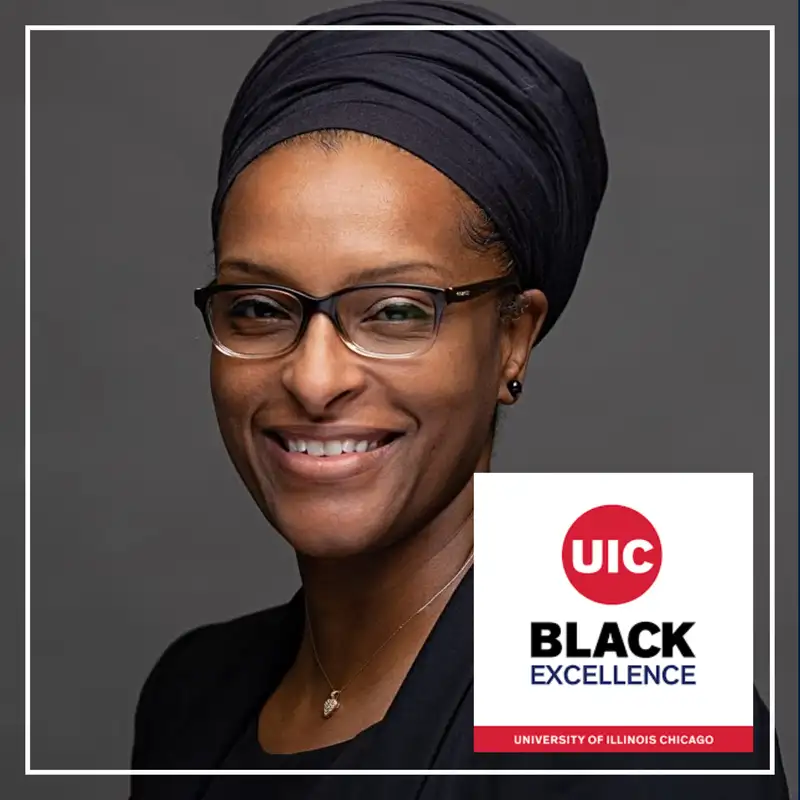
Now Aisha is also the host of, and
this is what we get into a bunch in
this episode, of the Black Excellence
Podcast, which features the powerful
and inspiring stories of University
of Illinois, Chicago black students,
faculty, staff, alumni, and friends.
So I won't keep going.
We'll just save it all for the interview.
Why don't we just jump into it?
Jennifer-Lee: Let's jump in.
Neil McPhedran: Welcome, Aisha.
It's great to have you joining
us here on this episode of the
Continuing Studies podcast.
Dr. Aisha El-Amin: Well, thank you Neil,
and Jen and Katherine for having me.
I certainly appreciate being
in community with you all and
having some conversations.
Neil McPhedran: Yeah, we met you at
a Higher Ed PodCon and you are, as we
introduced you off the top vice provost
at the University of Illinois, Chicago,
where you hosted the PodCon and, and you
gave just a wonderful opening remarks to
the audience, and I know that was really
well received, so thank you for that.
And thank you for hosting what is
the first of, we thought quite a
successful event, and it was lovely
having you attend as well too.
Dr. Aisha El-Amin: No, I absolutely agree.
It was great to be in a space with
so many higher ed podcasters, right?
You kind of feel like when you're talking
into the microphone that you're talking
into a void, you know, you don't know
how it's being received and it's not
like, you know, live and you've got
an audience and you can see reactions.
And so to be in community with other
folks doing that is really good.
And I'm the Executive Associate
Vice Provost of Student
Success and Belonging at UIC.
I've had such a great, I think I've
been here 21 years in different roles.
Neil McPhedran: Wow.
Congrats.
Dr. Aisha El-Amin: Yeah, so I got my
PhD here and I kind of never left.
That's the story, right?
You know, it's like, okay, why
leave a good space, right, so.
Neil McPhedran: Well maybe
that's a good jumping off point.
Like maybe you could just sort of explain
for us your role, because I think that's
interesting how your podcast, which we're
gonna get into, plays into that role.
Dr. Aisha El-Amin: Absolutely.
So my role really does oversee the
Student Success enterprise at UIC, and
that includes seven different units.
We have the CHANCE program.
We have Latino American Recruitment
and Educational Services Program,
Native American Support Program,
our Asian American Student Academic
Program, our African American Academic
Network, our Academic Center for
Excellence, and our TRIO program.
And all of these spaces are spaces where
students can go and get the supports that
they need and have those barriers removed.
We have about 36,000 students.
And so we wanna make sure that each of
those students have a space where they can
go to talk to an advisor, to get coaching,
to find out where there's mental health
resources available to answer a question
around housing insecurity or food needs.
So these are spaces that do that.
Also offer tutoring, academic
support, high impact practices.
And so that is part of the work that I do.
The funny part of this story is.
I started the podcast when I was Associate
Vice Chancellor for Diversity and
Belonging in the Office of Diversity.
I started it because what I heard
from students and the, the podcast
is UIC's Black Excellence Podcast.
I started it because what I heard from
students was that they really needed to
see and hear more of how it looked to be
a black student at UIC and to succeed.
And one thing that kind of pushed me
to do it was a student was graduating
and said, it's really funny.
I had this series that I started where
I was highlighting faculty members and
their scholarship and giving out free
books to their works to students, right?
So that they can kind of
have some interdisciplinary
understandings of different spaces.
And a student came up to me after
and said, it's funny, I didn't know
we had black professors at UIC.
Neil McPhedran: Oh wow.
Dr. Aisha El-Amin: And I said, what?
Like where?
Where have you been?
Like, they're all over, right?
And so what I realized is that there
could actually be a student that went
through and did not get that connection.
And so that's what made me start
the Black Excellence Podcast.
And of course, I get the best
ideas at the very last minute.
And so it was December of 2021 when
I had this idea and I said, we're
doing it for Black History Month.
We're doing it every day, 28 days.
I'm gonna have somebody else highlight it.
And so we did it.
It was a huge success and we continued it.
We did it for the next
year as, as monthly.
And then we went to quarterly one year
with all of the things that were going on.
And in between that time I switched
into this role and this was an
inaugural role, so they, it, it was
not before, so there was a lot of work
to do and now we're back to monthly.
We have won awards for it.
And it really, you know, it's
really just them giving advice, them
telling about their career paths.
Them also saying, I had a
child when I was in school.
And this is how I navigated that.
I did have housing insecurity and this
is how that made me go into social work.
And so hearing those stories
and knowing that, you know, all
the paths are not straight, but
they can lead to great things.
So that, that's a little
intro into what started me.
Jennifer-Lee: And
they're very honest here.
Like I was recently listening to the
Ashley Blackwell one and she was, my mom
was doing her education while I was in
the womb, and then she's like, I'm now
doing my masters while having children.
And she also admitted too that she,
at one point she dropped a program and
she didn't wanna tell the person that
was like, you need to do this program.
And she's like, I was too scared
to be, I'm actually out of it.
And she said it was great.
He was all of a sudden
like, oh, that's fine.
Let's pivot.
And I was like, that's so relatable
to everybody, because I think a lot of
times they're like someone that believes
in us so much, and then we don't wanna
tell them that we think we failed.
They're like, no, let's help you.
Let's go for another one.
So I thought it was great.
So I could see why it
spawned after 28 days.
Maybe you guys could have
kept going every day after.
Neil McPhedran: Wow.
Jennifer-Lee: Oh no.
We could not have, I was
Dr. Aisha El-Amin: already a saying.
I was like, what did I do?
Jennifer-Lee: 28 days is a commitment.
Dr. Aisha El-Amin: It is, you
know, because when I came up
with it, then I talked to my
partner in strategic marketing.
I'm like, okay, we gotta partner on this.
And so we just kind of got together.
Alumni give us some good folks.
In no way was it me alone doing it.
It was so many different partners,
and I know the work that you all do.
None of this could be done
without partnerships, right?
In the collective understanding of, okay,
this is your part, this is your section.
If you could do this.
I even had my husband who
does podcasts as well.
Because we had no one that did
podcasts at the university, so
I was like, I need an intro.
I need an editor.
So he is like, okay, pro bono, I got you.
Now we have a whole podcast team.
We have several podcasts that have
launched recently as a university, so
it was really kind of on the cutting
edge of that space for our university.
Jennifer-Lee: So when you say podcast
teams, are there different roles that
people have within the university
that are actual, like positions or is
this also like side things in addition
to other jobs that they're doing?
Dr. Aisha El-Amin: This is a
great question, Jen, because
for me it's in addition, right?
And it's additive and this,
I think it's affirming.
I think it's, you know, it, it does a
lot of things, but my partner, Grace
in strategic marketing communications,
this is what she focuses on.
This is her job.
And so I, I just saw one is, this is
UIC as a new podcast that it's come
out, then they announced another.
So she is building on those and also
seeing where are the other spaces across
the university that people are already
doing this on their own so that they can
get the supports, you know, in doing so.
Because once she started editing
and she's giving me people to,
to interview, I'm like, oh, this
is how I should be doing it.
Neil McPhedran: That's great.
Your story, where you started it and
then you reached out to your husband
is not dissimilar to other stories
we've heard from three, four years
ago, which is what you're talking
about, where there was less of a push
on a lot of campuses with podcasting.
You know, we're seeing that changing now.
At Think Fast Talk Smart with Matt
Abrahams, which he's five years in now.
When he first started that he had
both of his sons helping him edit that
back then, and then the communications
department at the Graduate School of
Business at Stanford helped him out.
So I think that that's a
regular path where you sort
of reach for other resources.
So that's great.
But partnering with the
marketing and communications
department makes a lot of sense.
They've got the skill sets and they
can help someone in a role such as
yourselves, because I would imagine
there isn't someone in your direct
department who would be able to
help you do this normally, right.
So.
Dr. Aisha El-Amin: No, and I think
because you all did so much work in
getting folks together for the conference,
you really intimately understand
what it is to kind of the history.
You are making me think as you talk
that there needs to be kind of a
history article to mark the time, right?
Because when you are trailblazing and
when you're amongst the first, you have
to cobble together some things, right?
You have to figure out, okay,
my son and my husband over
here, we get this person right?
And 10 years from now, people won't
know that it didn't look the same.
It's kind of like with my
daughters, they're like, what do
you mean you had be on the phone
with a cord and stay in the room.
Like, what are you talking about?
So that will be the world of podcasts.
They're like, what do you mean you
were at a whole university and there
wasn't like a team of folks who did this
work in editing and everything, right?
And so I think it's, it's a
good piece of history there.
Neil McPhedran: Yeah.
Jennifer-Lee: Well, and that's the thing
is because podcasting is still so young,
and because I come from a traditional
background in radio and stuff, which has
been around for so long, it's interesting
because even now with Neil and I have
businesses where we help different
podcasts and universities are part of
that, there's not really people that
have a background in podcasting yet.
You're starting to find one
or two of those people that
have been in it for six years.
But like students can be like a
normal career where people are
like, oh yeah, I've worked on a
podcast for like six, eight years.
So it will be really neat.
And like a lot of students who are
in communications or broadcasting,
they'll probably start lending
their talents too, I guess.
Dr. Aisha El-Amin: It is really funny.
I have a friend, you know, I'll shout
her out Tenia Harris, who just opened
a bookstore Beyond the Literature
in Homewood, Illinois, and she put a
podcast studio in the back of the store.
And when I say she's got it
laid out, she just did a grand
opening this past weekend.
Like the best top of the line microphones,
the cameras, the setting with the
fireplace, and like all of the things.
So, so I think in line with what we're
talking about, the world is shifting,
leaning in towards that, right?
Where we see radio is different
now 'cause you know, when I, I
was growing up with radio, you had
to turn it on and listen to it.
Now it's like, I'll listen to AHA
radio, I'll listen to, you know,
like it's all of these spaces.
And so we have to use the spaces that
we have to pivot and respond in ways
that make sense to our current times.
And so bookstores, having podcast studios
or you know, like all of the things,
newspapers have podcasts now, right?
I just listened to NPR this morning
and they were saying how audio
podcast is shifting to video podcasts.
And part of that shift, uh,
Netflix is teaming up with Spotify.
Jennifer-Lee: Yeah.
They have podcasts on Netflix.
Disney Plus has podcasts
already on it too.
It's like rewatching the podcast
with the celebs of those TV series.
There's so many different avenues,
which is really neat to see.
And so, but now you have a
new podcast space to go into.
You think that maybe you'll be
using your friend's podcast space
for video podcasts in the future?
Dr. Aisha El-Amin: Well, it, it's,
it's opened up a lot of thought for me.
I'm like, okay, this might look different.
This might be really cool
to try something different.
And I think that's also when I do
hear and meet different podcasters,
I think there's something that's
pretty amazing about 'em, right?
To be able to get on and talk to
folks, have dialogue that will bring
the level of awareness, the level
of knowledge, the inspiration, all
the things that these spaces do.
I think it's pretty amazing, right?
And I guess some people who
I want on the podcast like,
yeah, I don't really do that.
I'm like, do what?
Talk.
Like it's not, it's not a thing.
Neil McPhedran: So you, I mean, you
sit in the administration office.
I'm speaking metaphorically there.
But you know, we've chatted with a
lot of, Jen and I have been doing
this for a little over two years now.
So we're up into our 60th episode.
So we've chatted a lot with different
higher education podcasters.
We haven't chatted with a lot of folks
like yourself who are actually, who sit
in that administration office, which I
think is a really interesting opportunity.
Maybe you could speak a little bit to
that of other administrators out there
that are sort of thinking about using
the podcast channel as part of, you know,
the voice from your office, if you will.
I just think it's such a powerful
opportunity for folks such as yourself.
Dr. Aisha El-Amin: I, I agree
with you, and this is something
that I have thought about.
I have, and most folks in that
administrative roles, leadership roles
they have open office hours or open
door policies because they wanna make
sure that folks have an opportunity
to talk to them and hear from them.
What I have found is that people don't
very often take advantage of that,
and so I think there's a space for
administrators to talk and inspire
and inform in a way that someone
may not click on that email, right?
And so even a weekly team podcast, right?
I got 63 members of my team, right?
Like if, if I wanted to tell them all
something, could I do a segment on, okay,
here's what's going on in higher ed.
Here's how it's impacting us.
Here are the things that, you
know, some inspirational quotes,
like what does that look like?
As opposed to, here's an email,
or let me at our all staff
meetings say these things, right?
And so people, the ability for
people to pop into a podcast when
it's convenient for them, when
they can listen, I think there's
something pretty special about that.
And it meets people where they are.
And especially in a space where we talk
about meeting students where they are.
How do we as leaders and administrators
meet our teams where they are, meet
our students where they are, when
oftentimes we are multiple levels
away from touchpoints with the daily
lives of those students, right?
So I think there's a lot of utility in
podcasting for administrators as well.
Neil McPhedran: Yeah.
I've got two sons that are in
university, and one of them
just started in first year.
And he's taking calculus as a prerequisite
to a program he wants to get into.
And he didn't get a very good
mark on his first calculus exam.
And so I'm encouraging him to
go see his professor about it.
And he's like, well, what do I talk about?
Just talk about what you just told me.
I tried to study and this is what it is.
Like, what am I doing wrong?
At the very least, you're gonna
get face time with your professor.
You're in a room of
multiple hundreds of people.
He's gonna recognize you and you'll
have a bit of a connection point there.
But as an administrator, you're
that many more rungs removed.
And I think your point about meeting
them where the students are, it
also speaks to the fact that the
written word is less and less read.
And I think that we've got this younger
generation now that is more used to
alternate forms of media, and I think
this is the challenge of academia,
that academia is based on this.
I went to a talk at a symposium
at NYU a couple of weeks ago about
this, but just basically about the
currency of academia is really the
written word, it's publish or perish.
Um, not only is there a level here
of, as an administrator, how can you
connect more with the students and
have more sort of connection points.
But there's also, I think, a challenge we
have in academia that it, it, there's so
much of a focus on the written word, but
there's less uptake on that written word.
Dr. Aisha El-Amin: Yeah.
And don't add AI into it.
Neil McPhedran: Oh, right.
Yeah.
Dr. Aisha El-Amin: So what
is the written word, right?
And whose word is it?
Yeah, that's a whole other layer and
challenge and complexity and dynamic
that, uh, spaces that do have such a huge
value placed on the written word, how
do we adjust to that shift, you know?
My nephew, he's in Delaware at school,
and he said, first he started hating
this professor because he, no computers,
no phones allowed in this classroom.
But you need to bring a notebook and a pen
and all papers are due, handwritten, whew.
Lots of time in class to write
your paper, but he said, I want
you to think, I want you to write.
I don't want you to depend on anyone else.
I don't want nobody
else spell checking you.
I don't want nobody else
giving you thoughts.
I want you to be able to do the work.
And he hated it at first, but now
he's at the point where this is
the best class I've ever taken.
It has stretched me in a way
that I didn't know I had, right?
Because there's muscles that we,
if we don't use, we lose them.
So handwriting used to
actually be a class, right?
Like and writing things down and what
that process and that thought looks
like as opposed to asking ChatGPT
to give you a summary of something.
Jennifer-Lee: Yeah, I just feel like
written word and communication skills
is something lacking so much and it's
something that we need to change.
And university and podcasting is
great because more people wanna do it.
It is kind of strengthening
that communication skills.
And they're saying podcasting is
helping with this, that a lot of
students don't know how to communicate
with their teachers and that that's
affecting when they're going for a
job and they can't communicate with
their manager and anything like that.
So I think it's very important.
Dr. Aisha El-Amin: No, it's, I was
telling my daughters, I have three
daughters all in their twenties,
all in school at different levels of
schooling and I'm like, where you going?
Oh, so and so's out.
I'm about to, you know,
we're about to go here.
And I'm like, I remember when the
person had to get out of the car,
come to the doorbell, ring the
doorbell, they would usually speak
to everyone and then, you know, but
now, you know, I think technology and
it helps us not have to communicate.
And so again, with that
muscle, if you don't use it,
how do you know how to do it?
We know that, you know, practicing
something and doing something
allows us to perfect it, and
we are in a time of loneliness.
And the time that we're most
connected, the level of loneliness
is the highest it's been.
And so that tells you something
like, we need to find points
of connections in varying ways.
What do they say?
If you wanna hide
something, put it in a book.
Unfortunately that is ringing
more and more true today.
And so how do we get the same
information to the folks that
we know would benefit from it?
And so podcasting is
definitely one of those spaces.
Jennifer-Lee: Yeah.
And everyone that you have on your
podcast is such a great communicator
and a natural communicator.
Like it's such a relaxed
environment, like I said, authentic.
So I think more of us have to learn
how to do that and to show our stories.
Because that will help us communicate
in the future too, and, and
realize that we are all human.
Dr. Aisha El-Amin: You know
what's interesting too?
And, and I, I tell all podcaster,
you know, participants this in the
beginning, I, I say, you know, it's
a conversation with me and I want
you to share anything that you feel
comfortable with sharing, but knowing
that your story will resonate with
someone and will allow them to continue
their educational journey in ways that
maybe they didn't think were possible.
And so if you bring your full,
authentic self, that possibility
is drastically increased.
What I found initially is that people,
when I would push the record button
there would be a different posture
and then I would stop the record
and they get a lot more relaxed.
And you know, Grace, who edits for
me now and is phenomenal and our
strategic marketing communications,
she said, I wanna change this a bit.
When they come in, have the recording on,
when they leave, have the recording on.
And so don't have it,
okay, ready, set, go.
Instead, it's just the
flow all throughout.
And I think that also helps people
just to feel like I'm talking and
not to feel like I'm performing.
So I think that, that tweak for
me did help my participants feel
a little bit like, okay, I can
be a little bit more relaxed.
Neil McPhedran: I like, yeah, I
think that's a really great tip.
And back to the video thing, this is
where I think that video isn't always
the solution either, because I think
just to your point about hitting that
record button, there's a certain level
of I'm performing now and it's hard
to have just a natural conversation.
I think video complicates that
even more, that I'm gonna now be
self-conscious about how I'm looking.
Dr. Aisha El-Amin: Yeah, no, it is true.
It's true.
And, you know, when you can just hop
on a podcast and not have to do your
makeup, you know, it's a different kind
of calm that you come with in the space
and the ability to, to just talk, right?
Neil McPhedran: Yeah, you're right.
Have you found that through your
podcast, you know, beyond the great
conversations and sort of the output, I
guess, of the podcast itself, which is
connecting with the community, have you
found your role of having the podcast
has opened up doors as well for people
with different conversations that you
might not have had the opportunity
to if you hadn't had the podcast.
Dr. Aisha El-Amin: You know, I do.
It's very interesting because I
oftentimes welcome groups of students,
you know, orientation, some of our
president awards program scholars, you
know, just kind of doing the welcome.
I had a student that came
up to me after the welcome.
And said, I knew I knew your voice.
I just looked, looked it up.
And I was like, what?
They said, I listen to your podcast.
I was like, what?
And they said, yeah, I was trying
to decide on where I was going
to college, and my counselor
sent me a link to your podcast.
And I listened to them
and I was like, what?
And so just that interaction and
knowing like actually, there was two
people that listened to me, you know?
That means it's the counselor thought
enough to give it to a student to
help in their decision making process.
And so I think those things,
you don't know the rippling
effect it may or may not have.
And so it's always a pleasing moment
to know that you had an impact, right?
I don't look at helping someone make
a decision on where they will go to
college as a small impact, right?
That is a huge moment in
transition and decision.
So yeah, that was pretty cool.
Jennifer-Lee: That's great.
Yeah.
Again, a lot of times when I talk to
people and they're like so focused
on how many lessons they're getting,
and I'm like, you don't realize who
you're impacting, and that's the
really cool thing about podcasts.
You touched a little bit, upon it at
the beginning because you were talking
about like it's mainly alumni that
are on your podcast, but how do you
find the guests to be on your podcast?
Dr. Aisha El-Amin: Well,
really good question.
That first 28 days, crazy, but
I also graduated from UIC and so
I started calling folks that I
know that had graduated and were
out there to, to get started.
And so I'm a researcher too, right?
And so part of my, my research for my
dissertation, I use a snowball method.
And the snowball method is
essentially you get the people,
there's a first ring of people.
And so those are the folks that I
knew, and then I asked them, can you
refer some folks that you know as well.
And so I always ask folks that I
do have, have as participants, can
you tell me anyone else who you
think could be beneficial to the
community and then join the podcast.
And so they also give me folks and I have
a wonderful assistant who keeps track of
all of these things and sends out invites
with links and answers questions for them.
And also, you know, we will Google
popular or famous black alum from
UIC and we'll reach out to them.
And surprisingly, they respond
and they wanna tell their stories.
I think that's the other
piece that I did not expect.
That people appreciate having
a space to tell their story.
They appreciate being able to have an
infectious space where they can inspire,
they can be truth tellers, they can
give advice, they can be looked at
as you, you kind of made it, right?
Like we don't, we get the
diploma, we start the job.
Then it's like, wow, someone has asked me
to come back and talk about my journey.
So I've gotten a lot of gratitude
from folks just happy that
they could share their story.
And so the people on both sides of the
microphone need connection and inspiration
and a space to be affirmed, I think.
And I was just looking at the
people on the, on the receiving end.
And not people who were
talking and in dialogue.
Neil McPhedran: What a win-win example,
and I love how you put that all together
of not only the listening audience
that is receiving all the benefit of
those stories that are being shared,
but the opportunity for a proud UIC
alumni to be able to tell their story.
And we kind of forget that they're
all out there and they would really
like to have that opportunity because
even if they haven't set foot back
on that campus in years and years,
it's still part of their makeup.
It's still part of who they are.
So yeah, that's a great lesson
to share with the audience too.
Plus you're, like the snowball effect.
That's a really good one.
I'm gonna use that one.
That's a good way to think about it
and to keep the ball rolling as far as
your next guest, that, that leads to
the next one, that leads to that next
relationship, and so on and so forth.
It must just be also a great reason to be
reaching out to some of these folks at the
institution overall, would beyond sort of
a financial ask, is just another way to
reach out to some of these alumni as well.
Dr. Aisha El-Amin: No, I think that's a,
that's also a really good point, Neil.
We know that we reach out
to alumn for money, right?
So it's nice to have these
different spaces, right?
Where they can be value added beyond
the money that they can give, right?
And so, that also makes them wanna
give, if we're being honest, you know,
they feel more of a connectivity.
They have been remembered as part
of that community that was memorable
enough to come back and share.
And so I think it's a set up an
recipe for success on all ends.
Jennifer-Lee: I agree.
Neil McPhedran: I was gonna ask if
your advice for another person out
there who is an administrator or
university, if your advice would be to
launch a podcast with 28 straight days.
Dr. Aisha El-Amin: If you are insane like
me, absolutely, because it's exhilarating
to me to do something new and go all in.
One thing about me, I'm a all in
kind of person, so if I focus on
something, I'm like up to midnight,
I'm putting all that I have in it.
And so for me, that was
the only way to do it.
What it meant for us is that we needed
to start immediately in December.
So I did not take the
Christmas holiday break.
I did not do that.
I, I actually did recording
over that timeframe.
Because one, I needed enough time
to get it out so that they can edit.
Two, I didn't wanna mess
around with people's schedules
and not being available.
Most people are off during
the same period of time.
And will give you 30 minutes, right?
And so I really got most of my things
done before we got back for the new year.
That's how, I just knocked them out.
And so that also gave the team enough
time to advertise it, enough time
to edit it, enough time to do all
the things that needed to be done.
So I had to be light and speed.
Jennifer-Lee: Maybe not 28 days, but for
someone thinking, hey, I'm gonna start
a university podcast, what would be
your best piece of advice to give them?
Dr. Aisha El-Amin: That storytelling
is one of the best ways to both
inspire and to inform, and that every
perspective has a matching receiver.
It's like going back to my old
phone analogy, every phone had a
receiver at one time, and so you
couldn't hang it up without that.
And so there is someone out there with
a phone and there's a lot of receivers
out there that need a phone to connect
into so that they can make the decisions,
have the information, and feel like
there's other people who understand
where they are and who they are.
And so if you are
thinking about it, do it.
It is as simple as doing it, and
it doesn't have to be 28 days.
It doesn't have to be every week.
It is also, what is your rhythm?
I think, you know, and that
can also change because life
changes sometimes as well.
And so it's all okay.
And so, you know, I would say just
dive in and find your community.
You have other higher ed
podcasters out here, so reach
out, you know, with questions.
Lean in on the community of folks
that have been learning this.
I think it's a very open community, very
willing to give and talk to you and, you
know, pour into you and applaud you and
all the things you need to get started.
Neil McPhedran: Very much so.
Yeah.
That was great.
Jennifer-Lee: Loved it.
That was great and we
appreciate you so much.
Did you have like a secret broadcasting
career that I don't know about?
You're just so good.
Dr. Aisha El-Amin: I love it.
I'll accept that.
I did not, but my background, you
know, I used to be in the military,
so I got out of high school.
I was a homeless teen at a point
because of abuse in my family,
and I found myself at a crossroads
where I was working a Blockbuster
video and I, I wanted something
better and I needed a place to live.
I had never left the city.
It was, you know, and so I went
into the military to meet my basic
needs, and I stayed in for five
years as a military police officer.
I got out, I became a teacher because
I did the DARE program, drug abuse
resistance education as a police officer
'cause I was a military police officer.
And across the Department of Defense
schools throughout Europe, because I
was stationed there for four years.
And I decided I really wanna teach.
Like that's what I really wanna do.
And I got out and got a, a Master's
in teaching and learning and I
taught fourth grade for a while.
And then I said someone who's
making policies for this
school does not teach here.
Like I gotta understand policy.
And so I came to UIC as a veteran for
free on a VA grant and I, I got my PhD
in policy studies of urban education and
that is what led me to higher education.
Jennifer-Lee: That is so cool.
I think you have the best background
of anybody that we've interviewed.
I think it leads to why your pockets is
so successful, because that's something
that I learned through listening podcasts.
It's like just because you
start one way doesn't need to
mean you're gonna end that way.
Dr. Aisha El-Amin: Absolutely.
Absolutely.
And I always share my story, right,
with my students, with my staff, with
my folks, because it is absolutely true.
I went to a vocational high school and I
was told that I was not college material.
Um, and I believed it.
Uh, and honestly, words and, and this
is really in alignment with podcasts.
I, I do believe that words make people.
When I went to the military, the only way
I could get ranked is if I went to school.
And so I started going
to college to get ranked.
And I had other words whispered
to me, you're brilliant.
How did you think of that?
And those words told
me I could keep going.
And so what I hope for all of us is
that our podcasts make people better.
They make people feel more affirmed.
They make people feel more knowledgeable.
That's the power that we use
with the words that we have.
Jennifer-Lee: That was like
a perfect way to end it.
We appreciate you being on the podcast.
Neil McPhedran: What a great way to,
Dr. Aisha El-Amin: Yeah.
I appreciate you as well.
Thank you.
Jennifer-Lee: Thank you.
Neil McPhedran: Yeah, that was great.
Thank you so much.
I really enjoyed chatting with Aisha.
That was great to dig in and hear all
about her experience with her podcast.
Jennifer-Lee: And her army career.
She's just very amazing.
Neil McPhedran: Yeah, totally.
Okay, so it's just to
circle back off the top.
Send us your questions, but also give
us what you think about launching
with one episode or two episodes or
three episodes, like what would you
recommend and what have you experienced?
Jennifer-Lee: Yeah.
Please contact us.
Neil McPhedran: Well, Jen,
why don't you read us out?
Jennifer-Lee: Thank you for tuning
into the Continuing Studies podcast and
podcast for higher education podcasters.
We hope you found this episode
informative and inspiring.
If you enjoyed the show, we encourage
you to follow and subscribe to our
podcast on your preferred platform.
So you'll never miss an episode, but
if you found this episode particularly
valuable, please consider sharing
it with your friends and colleagues
who also might be interested
in higher education podcasts.
We also invite you to join your peers on
HigherEdPods.com, where you can connect
with other podcasters in higher education
and learn from others in the field.
Thank you for being part of our community.
We look forward to continuing to bring
you valuable insights and conversations
around higher education podcasts.
See you in the next episode.
Creators and Guests