Rethinking Scholarship Through the Power of Podcast Storytelling
Barry Lam: So like my dream is that
like it is part of a local university's
mission, that they are going to make
stuff, and put it out there for public
consumption on the local public television
channels, that is about the kind of
knowledge being produced there, in a
way that captures the spirit of not just
the university, but public broadcasting,
which is that there are certain things
that don't make money, but contribute
to a greater good in the culture.
Neil McPhedran: Welcome
to Continuing Studies.
A podcast for higher education
podcasters to learn and get inspired.
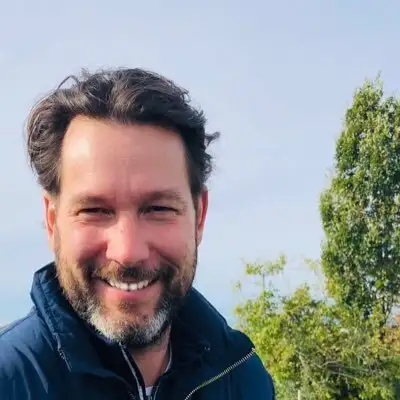
I'm Neil McPhedran from Higher
Ed Pods and Podium Podcast.
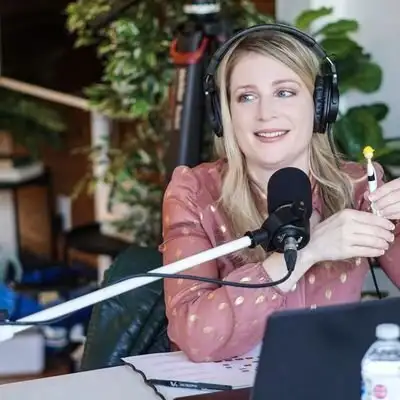
Jennifer-Lee: And I'm Jennifer-Lee,
owner of JPod Creations.
Podcasting is broadcasting.
And we want you to know that you're
not alone in this podcasting space,
and we can all learn from each other.
Neil McPhedran: Yes, that's right, Jen.
If you listened to our previous episode,
we're starting a new little segment
here where we're trying to get some
dialogue going with our listeners.
Last time we were asking about
launching and whether you wanna
launch with one or two episodes.
And in this episode, what we'd like
to know is if anyone out there who
has been podcasting audio only for
the last one or two years and is about
to start to layer on video, there's
a lot of conversation about it.
But we'd love to hear from you.
If you are in that boat, send us
a note and tell us about, uh, your
journey, and we'll talk about it
on one of our upcoming episodes.
Jennifer-Lee: Very
excited to hear from you.
Neil McPhedran: Yes.
So in this episode, Jen,
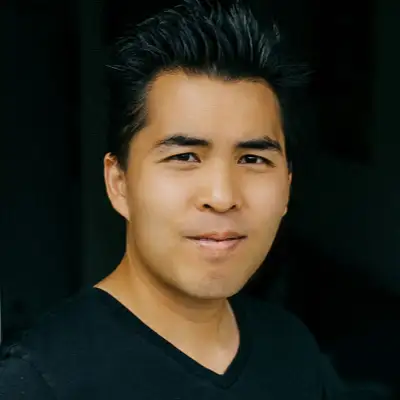
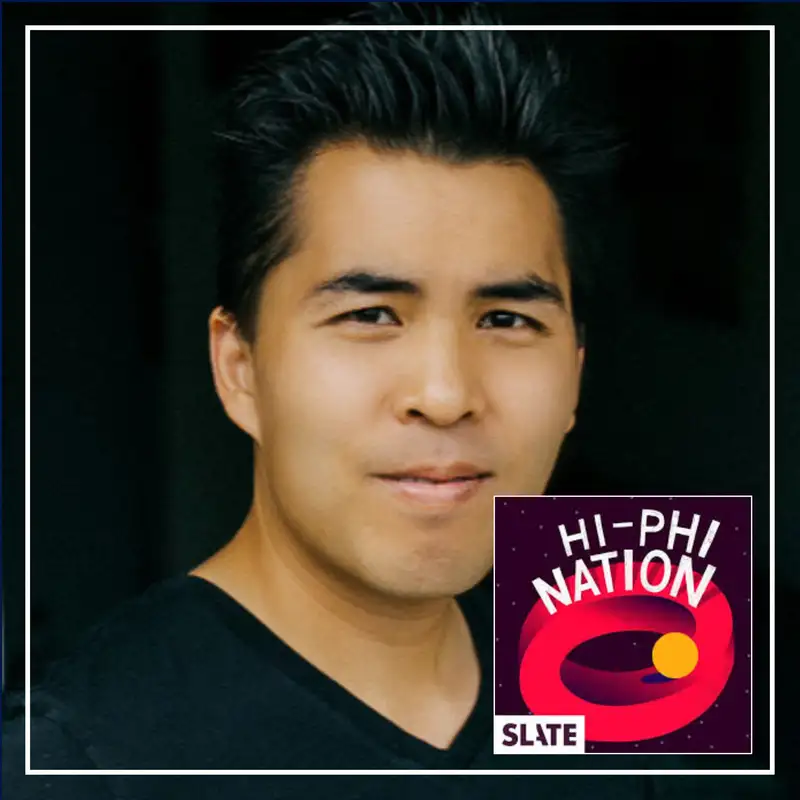
we speak with Barry Lam.
Barry is professor of philosophy
at the University of California
Riverside, and he is creator,
host of the acclaimed narrative
philosophy podcast, Hi-Phi Nation.
It is an excellent podcast.
I recommend you all give it a listen.
We'll obviously put a
link in the show notes.
So I met Barry in New York a few
weeks back, and Barry was one of
the panelists at this symposium that
I attended that was titled Podcast
Intellectuals: Producing Original
Scholarship with Audio, and it was
hosted at the Arthur L. Carter Journalism
Institute at New York University.
So Barry actually took
part in two of the panels.
One was titled, How Do Scholars
Make Podcasts, which was very
interesting, we get into that.
And the other session he sat in on
had a really provocative title called
Can Podcasts Save the University?
And there was sort of a sub
context to it from itself.
Super interesting.
And I learned so much from Barry.
So I went up to him after
and I said, Barry, you gotta
come on Continuing Studies.
So that's what we're doing today.
So in this conversation following today
we chat with Barry about his journey
from traditional academic scholarship
into the world of podcasting, sort
of, and specifically how Hi-Phi
Nation bridges that philosophical
research and narrative audio.
Really interesting.
And then how that fits into his
scholarly mission and his academia
and his academic approach as well too.
So, and then we have a little bit
of a larger conversation about
the broader implications for
academia and the podcasting itself.
So really interesting
conversation with Barry.
Jennifer-Lee: Very interesting.
So let's get started.
Neil McPhedran: Let's go.
Barry, it's so great to have
you join us here on this
episode of Continuing Studies.
Barry Lam: I'm so happy to be here.
Excited to talk to you both.
Neil McPhedran: Great.
So Barry, you were part of two
really fascinating panels at the
Podcast Intellectual Symposium
at NYU a few weeks back.
One of them, really the final one of
the day, really caught my attention,
has actually really gotten me
thinking over the last bunch of weeks.
The title was Can Podcast
Save the University?
So we're gonna dig into that, but
I'd also love to get into your
experience creating Hi-Phi Nation,
which is just an amazing podcast.
And as aside, before I met you
or was introduced to you, I was a
listener of it and quite enjoyed it.
So maybe let's start with Hi-Phi Nation.
What first drew you to podcasting as a
medium for philosophical storytelling?
Barry Lam: Happy to hear
that you're a listener.
There's gonna be a new season
coming out in the new year.
I've been really busy with the academic
side in a way that I wasn't for the
previous, whatever it was, six seasons.
So looking forward to
putting it out there.
I was in my first sabbatical after
tenure, and this was 2015, and I just
felt like 2014, 2015 was kind of like,
I wanna say the rise of the academic
adjacent documentary kind of podcast.
So sort of precursors to my show,
which were very big shows, some of
which are still on, some of which
aren't, were like NPRs Invisibilia,
which was kind of like the show that
married narrative storytelling with
essentially research psychology,
both cognitive and social psychology.
And of course even predating that was
Stephen Dubner's Freakonomics, which
was one of the very first things to
take very technical economics research
by scholars in the academy and pair
it with ordinary journalism, right?
The kind of things that
are going on in the world.
Economics was a great field for that.
And I just wanted to, you know,
first sabbatical after tenure,
it was like, where are these
other papers you could publish?
And I just didn't wanna work on them.
I couldn't find myself motivated
to work on them anymore.
And there was this medium, and of
course there are the artsier types.
You know, Radio Lab has always been
a show that paired storytelling
with scientific research.
Sometimes even the hard
sciences, you know, cosmology,
biology, things like that.
I wanted to learn how to do
that, and I wanted to learn how
to do that just by doing it.
And so that's exactly what I did.
You know, I literally Googled
Ira Glass, how do you make a
episode of This American Life?
And he actually gave a interview where
he talks about the technicalities.
He says, I buy this microphone.
It's an Audio-Technica 8035.
They use like a marantz recorder,
and then he says, well, this is
how I prep for the interview.
And then after the interview I
transcribe by hand the whole thing.
And as I transcribe each interview
by hand, then I highlight, or like
I pull out different things that
I think are great quotes, and then
when I take all the quotes together,
I can kind of foresee the story and
then I can start writing around it.
I just did that.
I just did that.
I, you know, I did that
for the very first story.
Which I, at that time, I called
it the pilot episode and it
took me two months to make it.
It took me four months total.
It took me about two months
to collect the interviews.
And then it took me another two
months to learn how to make that, and
then that's, you can still hear it,
it's episodes two and three of the
first season, Soldier Philosophers,
and that's how it all got started.
Jennifer-Lee: That's so cool.
Just a quick question on that,
because you talked about having to
actually pick out the clips yourself.
Now, with AI, obviously they have tools
that do it for you, but do you think
being such a great storyteller and
listening to these prominent people
that do Serial and other things like
that, do you think AI can top that
or do you think it picks the clips
that you would predominantly go with?
Barry Lam: The one thing that AI has
greatly improved in my own workflow
has just been like, I don't have
to transcribe anything anymore.
You know, in the beginning I had
to transcribe everything by hand,
and then I had research students do
that, and now it's instantaneous.
The hardest part of the job is
organizing all of that into a coherent
story and then writing the narrative.
That's what takes the longest, right?
It takes like 80 hours total for
about a 45 minute episode to make
that, and I, I've tried, right?
I've actually decided to use
the LLMs as a kind of editor.
Like write me an intro.
And the thing is, it's trained on my
stuff so I can actually tell it to
write, 'cause I've been around long
enough that I say write it, the intro
in the style of a Barry Lam Hi-Phi
Nation episode and it's got, whatever
it is, 60 whatever episodes to go on.
So it's got my voice down okay.
And I have noticed it's helpful for me
to ask it, to do it in the styles of
all these other people that have their
very own distinctive kind of voices.
But I would never use that
because it's kind of like
doing an impersonation, right?
It's kind of like if I were going to
do a cover of a song and then I, I,
I could sing it the way I would sing
it, or I could impersonate whoever.
In podcasting, it would
sound like that too, right?
There are people with distinctive
voices and the AI can impersonate
them, or it can be completely boring.
But the act of giving AI the
thing to do, no, I don't think
it could, that could pull it off.
Neil McPhedran: I think
that's really interesting.
You are coming from an academic position,
so there's some rigor, some academic
rigor, versus just non-academic podcasts
that maybe can grab more from the
AI or be more loosened and whatnot.
It's still about the academia, you know,
that's still a really important component
and you're a professor and academic,
so I think that's probably why you're
still putting that much work into it.
Barry Lam: Yeah, I
think that's half of it.
So the show is, hopefully, doesn't
come across as it's done by an
academic 'cause I try not to, right?
Neil McPhedran: No, it does not.
Barry Lam: So it, it's actually
modeled after just what you
would call classic public radio
kind of documentary type audio.
And what I bring to it is, you're
absolutely right about that.
A ordinary reporter who doesn't have
a PhD in philosophy would not be
framing things the way that I would.
You know, I've actually done pieces for
Radio Lab and they actually cut out 90%.
They're like, oh, you know, our
listeners aren't gonna be interested
in the ins and outs of labor policy
or labor ethics or whatever it is.
But I'm interested in that and my
listeners are, but that's just because
when you're an academic, you kind of
like nerding out just a little bit
more than a journalist would, right?
And that shows.
I think that's only half of it though.
I think, you know, like there
are so many different ways to
tell a story, for instance.
So every episode of Hi-Phi Nation's got
like half philosophy, half storytelling,
and the storytelling is like something
happened in the world to somebody.
And that person experienced
a series of events, right?
And there were stakes involved.
There were losses, or
there were gains, right?
And the way you tell that is different
depending on your angle, right?
Like the tabloidy version
and what the angle would be.
You could have the economics
version of that, right?
You could have the social
psychologist angle on that.
All of these things have different
angles to which affects the structuring
of the way you do your story.
I'm not an AI disaster kind of person,
but I'm pessimistic about its ability
to do better than any of us right
now, but, which is not to say that
it can't do better than beginners.
I was a beginner.
But I think after you had some
experience, you kind of don't
rely on it because it just doesn't
produce something that's usable.
Jennifer-Lee: Yeah, and I think the
important thing is that it's not
necessarily fact checking as well,
and we're just taking it as gospel.
You can't do that because it's
gonna be misinformation out there.
And did you ever feel that you were
like taking a risk by prioritizing
podcasting over like more traditional
academic heavy research publishing?
Barry Lam: Yeah.
You know, it's interesting that you
talk about it in terms of taking a risk.
My thought at the time was that I
was half out the door in academia.
I realized as I was making the pilot and
doing that work, that really what was
going on was I was really burned out.
I couldn't even tell you today what
side of academia I was burned out on.
Was it like the teaching of the
same kinds of things over and over,
for at that point 10 years, maybe.
I'm not sure I changed things up.
Was it like the peer review
journal publication thing?
So because I was feeling so burned
out, I thought to myself that I'll
just do something else and not care
what my academic peers think about it.
And so when I advise people today in
the academic space, they think of it
as risky because they really wanna
rise in the ranks of the academic
prestige hierarchy, and so forth.
Insofar as that is your goal,
it is kind of risky, I think.
It is risking it because the incentives
involved in producing something like
Hi-Phi Nation are very different than
the incentives in academia, and I don't
mean that just by monetary incentives
or career incentives, like your
concrete goal is to be entertaining.
When you make Hi-Phi Nation, your
concrete goal in academia is to make
sure that two peer experts don't think
that it is unworthy of publication.
And those are two very different
kinds of goals when you're
producing a thing, right?
For instance, the whole academic thing
requires you to be acculturated into
citation practices of your discipline.
If you don't cite the right people or
enough people, it's just something wrong
with the thing that you're producing.
So the fact checking thing
I think is important.
Very important.
And that's, the incentives are
kind of different there too, right?
So in storytelling, everything you do
has to tell some part of the story and
not some other part of the story, right?
And people get on journalists all the
time for getting it wrong, and I do too.
For getting it like wrong
or misleading, right?
And so forth.
So I think academics do it better
then they do when it comes to the
facts and like representing the views
of a certain scientist or a certain
economist or, or academic correctly, or
a certain historical figure correctly,
I think we do better than that.
But the medium itself incentivizes,
not that, but the most
entertaining structure or bit.
Neil McPhedran: Yeah.
Barry Lam: And so because those are
sort of at odds, it is risky, right?
So that's why when you hear things
made by myself or like Jill Lepore,
it sounds completely different than
the thing that Malcolm Gladwell makes.
Neil McPhedran: Yeah.
Well, I think that's a good segue
into digging more deeply into
podcasting as scholarship then.
During the podcast intellectuals
discussion, there was this recurring
theme about how academia still treats
the written monograph, and you kind
of touched on it a bit there in your
previous answer, but treats the written
monograph as the currency of scholarship.
I think that was the term that one of
your fellow panelists utilized there.
Why do you think that is?
And then more so, how does
podcasting challenge that a bit?
Barry Lam: There's so
many reasons why that is.
The simplest reason is that it's just,
that's how academies were founded.
They were founded on written
texts and archiving, right?
The medieval university
is what I'm thinking of.
It's what academics are
trained to be good at.
People recreate the conditions
of their own success.
The people who write the best papers
are the people who are in the humanities
and social science departments.
The people who were bad at that
did not succeed enough to go on
through and get PhDs and so forth.
That's one.
And then there are the material
reasons, which is that the thing that
academics are supposed to produce are
supposed to be archivable in libraries.
That's the audience for the monograph.
Like some of it is your peers who buy it,
but you know that's probably gonna be,
if you're lucky, a couple hundred, right?
Mostly all of these books from academic
presses are sold to libraries for
future research purposes, and these
are all good things, but it means
that the priority in the evaluation
of whether an academic is doing a good
job is the production of something
that's in print and that's archived.
Neil McPhedran: You were actually
quite open with the group that was
there that day and you shared with
us, and hopefully you're okay sharing
on this podcast as well too, that
a Hi-Phi Nation actually played a
role in your hiring at UC Riverside.
What did that process reveal about
how universities might be starting to
rethink what counts as scholarship?
Barry Lam: I do actually think
that universities are rethinking
what counts as scholarship.
It's just, it's slow and
it's not like systematic.
It's not coming from, you
know, any big, huge trends.
So I'll talk about my story
first and then generalize.
So I started the show, first season
came out 2017, the beginning of
2017, you know, so I spent 2015, 2016
working on it, that first season.
And then I got basically a fellowship,
a grant for essentially my whole
salary paid for a year to make the
first season of the show at Duke.
It was one of these Mellon grants
for faculty from liberal arts
colleges who were doing non-standard
projects, which is what I was.
So it was just an amazing opportunity
and I set myself a goal that said,
you know, here's what I'm gonna do.
I'm gonna make one season of
this, and we'll see where it goes.
And then after I made that
first season, I couldn't stop.
I said, I have to try to
make another second season.
I try to make a third and so forth.
And I was able to get
grant funding for it.
And I was able to get a network interested
in it, and it just looked like that's what
I was going to be doing for my career.
And also that was the time where
podcasting was receiving an
inundation of venture capital.
So it's different now.
And so it looked like there
might be boom times ahead.
And then I just made whatever it was,
five seasons, or four, five seasons,
but I had to go back to the job.
I took half leaves, but three outta the
four years, I was able to do it full time.
When I got back to the job, it
was not only back to being a
full professor, it was COVID.
Neil McPhedran: Oh, wow.
Barry Lam: And I had to be chair.
There you go.
So like academics will understand
that, because it was my turn.
And it was like, okay.
And then it was just not a foreseeable
way for me to continue making the show.
I was at Vassar College in
Poughkeepsie, New York, and that
was where I got started, and that's
where I got tenure and, and so forth.
And so essentially right before
I saw it coming, I put out to the
various departments in the field,
which contained people in it who were
public scholarship curious or public
scholarship experienced or something,
that I was looking for a position that
would allow me to do this work, at least
have it count as part of what it is
to be an academic in that department.
Because at Vassar what it means to be
at that institution is to teach five
courses a year and serve the college.
And you know, research is part of
it and monographs and all that.
But even that is not as important
because it's a liberal arts
college for elite kids, you know.
It was like, could I sustain this work?
And I got a couple of bites.
And then COVID hit and then
everything was put on hiatus.
'Cause you guys all remember
that nobody had any money.
That was a big crisis after the crisis
of 2008ish and nine-ish, and now
we're in another crisis, obviously
we're in a never ending crisis.
So that was all suspended and put
on hiatus until, I don't know, 22.
Something like that.
End of 21.
In which case Riverside called
and said, we're still interested.
'Cause at that point I had
already given a job talk there.
They said, oh, we have this new dean who
might very well be interested in you too.
Turns out that dean, his name is
Darrell Williams, in, in that time,
I got enough prominence as like an
academic who makes narrative podcast to
start giving seminars, and one regular
seminar I'd given was at the National
Humanities Center twice a year, once
for graduate students, once for faculty.
And I did that for
whatever, three, four years.
My dean, before he became my dean at
UCR, was at the University of Maryland.
He was a public historian who
got like a huge grant to do
narrative stuff like monographs
and websites and things like that.
And as part of that, he took a podcasting
seminar and I was the keynote speaker.
So he actually already knew me as
like some kind of weird outlier.
And it turns out that that's what he was
interested in being like the dean for it.
And so what happened was I came back out,
I gave another talk, I met with a dean and
I told them like this whole big vision of
having an alternative set of work, right?
That like humanists more generally,
'cause he's the dean of the School
of Humanities, do that is public
facing rather than peer facing.
That is the audience for
it is not other experts.
The mediums are as diverse
as the audiences are.
So they could be video, they could
be audio, they could be print, but
different kind of print and that
kind of stuff ought to count in some
way in the merit review, the hiring
process, the merit review process,
the promotion process, and so forth.
And he agreed.
And so he actually went back to the
department and said, why don't you revise
your tenure and promotion guidelines
so the kind of work that Barry does
is included in that, and it's not,
obviously, it doesn't mention me by name.
So that other departments can
follow and your own department for
other people within the department.
And we do have a couple of other
people in the department that
do things kind of like this.
And so my whole hiring here was
kind of like this little project
of just like a few people, right?
And so now it is part of my
job that I can make a season
of this show and have it count.
How much does it count?
It's very bureaucratic.
So other places it's kind of qualitative.
It's like one journal article
counts for three book reviews
and, you know, it's like that.
So they literally have to like write
out, okay, we'll say one episode is
kind of like half a journal article
and then something like that.
So it's like that here.
Jennifer-Lee: Yeah.
I'm just amazed at like everything
that you're doing and then like
paving the way for everybody.
So what do you make of this whole idea of
like journal of podcasting or some like
formal accreditation body for scholars?
Barry Lam: It's absolutely hilarious
to me, and that's absolutely hilarious
that you're asking me because I am
one of the most rebellious against
the bureaucratization of the
evaluation of quality and quantity.
And academia has just moved in a
direction that it's like more of
that rather than less of that.
And I absolutely despise it, right?
And I'm at an institution where it's
built in, where it's kinda like, well,
let's say that the monograph counts for
three of the, you know, it's like that.
So the idea to me that you would
like, oh, you know what's great?
People are doing this and like there's a
few people doing it that have gotten jobs
and they're trying to make it so that
it accounts that other people can do it.
Let's bring that back into a journal
and then count an article in it,
and then there are a sets of experts
at it that can evaluate each other.
I understand why people are doing
that because the internal incentives
in academia have not changed, right?
It still needs to be the case that someone
needs a letter of recommendation from
a bunch of peers, and the peers better
impress the dean and some committee that
they are like the leaders of that area.
It's still, you know, it's still on that
model and so obviously when some, an
outlier comes in, they wanna generalize
and they're gonna try to institutionalize
it, but, you know, suffice it to say
they're gonna, they're gonna mess it up.
Neil McPhedran: So, instead of trying
to figure out how podcasting fits
into the existing system, it's like
we gotta blow it up instead of trying
to force it in to the OG system, we
gotta kind of rethink the whole thing.
So I guess what then lends me to ask
you, how can institutions and academia
support podcast based scholarship without
losing what makes podcasting so distinct?
Like it's creativity, it's accessibility.
You kind of touched a little on it
about what you are doing where it's
more wider audience facing versus
academia, your fellow peers facing,
but I guess sort of baked within your
pushback to the journal of podcasting.
Sort of curious, like what are
other ways to look at it then?
Barry Lam: Well, so there are really
light touch recommendations and then
there are heavy handed recommendations.
So like the light touch things are, if you
have faculty, staff, postdocs who wanna
do this as part of their time, right?
So some part of their time has always
been the research, but the output of
that has been, you know, a dissertation
with a bunch of citations and all that.
If this is just one of the kinds of
outputs that somebody can produce and that
will be, you know, like people in dance do
performance recitals as like their output.
They don't necessarily have to have
a dissertation that's archived,
although some dance programs do.
You literally have to write the
dissertation and archive it.
And so if you just include as part of your
outputs, right, audio series, then I mean
you're gonna need more than just that.
'Cause we all know that podcasting
is just audio, it's like print.
There's genres of it.
Documentary series is completely different
than you and a bunch of grad school
friends just gabbing about something.
And that's different from like
an interview series, and that's
different from oral history
collection, stuff like that.
So there needs to be genre
conventions and there needs to be,
you know, counting it as output.
There is going to have to be some
institutionalization, there need to
be people that do some evaluation
outside of the university because
it's still the case that letters of
recommendation are one of the currencies
for hiring and promotion and so forth.
Committees need that kind of thing.
If universities don't just treat
it as a hobby, that's not part of
somebody's job, that just means
counting what they're doing in it.
That's the lightest touch, and
I think people are prepared
to kind of accept that.
The much heavier handed kind of stuff
involves funding, as we all know, right?
Some of these things are expensive,
it's gotten cheaper, like the
actual technical aspects of podcast
production are cheaper than they were.
So like hosting is not that
expensive anymore, and you have all
these things that we're using now.
We don't have to pay for professionals
to go with professional mics and record
people for interviews and all that stuff.
But if you really wanted to embark on
a research project that like requires
you to do substantive archival audio,
go out to different places to interview
people who are not available in this
kind of context and put it all together.
Then that's going to require
some kind of funding.
I don't know how much
universities will do that.
Like they're willing to hire
researchers for other things.
I don't know why they wouldn't try
to hire audio expert versions of that
to help faculty actually produce the
kind of thing that they're producing.
Universities can really help
supplement, I don't wanna say
takeover, but supplement the kind
of decline of public broadcasting.
Jennifer-Lee: I am from media and
traditional media and we're seeing
such a big shift in public media here.
It's changing.
So I was just telling people that
regardless if you're in higher
ed space, or you're a business or
whatever, you kind of gotta create
your own kind of media company and
your own platform for broadcast.
'Cause gone are the days that you're gonna
be on the news unless you pay to play.
It's like before, you would submit
your press release, maybe you would
get in on the news or whatever, and
it's like you don't have that now.
I had a client of mine say that I want
to be able to say when I can broadcast,
and I said, that's what a podcast is.
Barry Lam: Yeah.
No, that's right.
That's absolutely right and that, that's
exactly what I'm talking about, Jen.
I actually think that universities
are in a better position than a
lot of other institutions to do it.
Number one, we're already nonprofit
mission driven as opposed to like, like
Goldman Sachs is not gonna step up.
Like Goldman Sachs,
I'm sure has a podcast.
And Goldman Sachs has all
the money in the world, but,
Jennifer-Lee: And I think they actually,
someone from Goldman Sachs put money
or hosted one of the university
podcasts we talked to actually.
Barry Lam: Right.
But as an institution, it's not, it's
not aligned with the kind of things
like, at the end of the day, what Goldman
Sachs is going to put money into is
what they've always put money into.
There's gonna be some
like political shows.
Neil McPhedran: Making more money.
Barry Lam: Yeah.
Making more money.
A lot of the stuff that we do in
the academic space is not all that
different from a lot of the kind of
things that have been done in public
broadcasting in the 20th and the
early part of the 21st century, right?
And if anything, we're the sources,
whereas they are like there are filmmakers
and so forth, video makers and all that.
But we're like the source material, right?
Jennifer-Lee: But I think the other
problem is, which you touched upon
and we kind of dealt with this at
university, is when they make these
podcasts, whatever their idea is, is to
interview entrepreneurs or to do scholarly
stuff and like go into like different
areas, is they don't understand how it
helps other things in your university
like website, SEO, and all that.
Like they don't realize there's
so much gold behind that podcast
you created for five years.
They're just so focused on the
numbers and even that skewed wrong.
They look at the numbers being like,
oh, well we only get a thousand.
And it's like, well that's
better than nothing.
There's like a thousand people in a room,
and so they're quick when the budgets come
up and they're like, oh no, something's
happened and we gotta cut the budget.
They're like, let's
get rid of the podcast.
Barry Lam: You know, another
thing that happens is when things
get too institutional, like,
so when I left Vassar, I hate
to pick up my old institution.
They were great.
I'm going back to visit, but you
know, because I was doing this and
there were a couple other faculty
inspired to do this, the college
decided to do their own version of it.
But when you go through the communications
office, like when you go through all
the formal, you know, PR people, it's
gonna come out sounding like a PR thing.
And, but when faculty do it, it sounds,
it's independent, it's scholarly, right?
It's not a representation
of the university.
So like my dream is that like it is
part of a local university's mission
that they are going to make stuff and
put it out there for public consumption
on the local public television channels
that is about the kind of knowledge
being produced there, maybe nationally
if it's a national leader in something.
In a way that captures the spirit
of not just the university, but
public broadcasting, which is that
there are certain things that don't
make money, but contribute to a
greater good, right, in the culture.
And there's an audience for it.
They're just not consumers.
They may donate, but a lot of them don't.
Neil McPhedran: Right.
Well, this has been such a great
conversation and I think we could
just keep sort of digging in
multiple layers and obviously that
symposium dug a bit deeper into that.
But before we wrap, I'd just
like to hear a bit what's next
for you and for Hi-Phi Nation?
So, you mentioned off the top that
there's a upcoming season, but what's
next for Hi-Phi Nation and what are
some of the themes or directions that
you might be thinking about exploring?
Barry Lam: Sure.
So I actually have collected all of
the, within business we call tape.
It's just a matter of putting
the episodes together.
I have a couple of episodes put together.
This next season, I'm gonna return
to the anthology aspect of the show.
So philosophy touches on all kinds of
areas in life, not just one kind of theme.
I've done theme-based seasons, so
there's gonna be a lot about the
connection between philosophy and various
kinds of aspects in science, right?
So there's gonna be an episode about
the early COVID vaccine actually.
During the rollout of the COVID
vaccine, I don't know if either of
you remember, but there was a time
where it spoiled so quickly that if
you open like a vial and you couldn't
vaccinate, uh, they threw it away.
But nobody knows the story
of how that got solved.
So I actually discovered that
the story of how it was solved
was actually really fascinating.
So there's an episode about that.
There's gonna be episodes about people
who are doing tissue engineering
to try to promote human longevity.
So, you know, basically let's grow
Neil's like a set of brain cells that his
own brain won't grow and they're like,
what'll happen if we actually put it in?
Will it help like that brain
rejuvenate in such a way?
Things like that.
Neil McPhedran: Wow.
Yeah, those are some
really interesting topics.
Barry Lam: Oh, totally.
A lot of the bio stuff is just
absolutely fascinating to me.
Neil McPhedran: Yeah.
Well, Barry, we'll end with one
question here for the audience.
What advice would you give to scholars
or departments who want start a podcast
but aren't really sure how to align
it with their research, or, I guess in
this case, we got into tenure goals?
Barry Lam: Yeah, yeah.
You know what I say to graduate
students, what I say to everybody.
Just start and do it and think about
whether you wanna do it later, which
is the funny thing to say, but really
like if you're dithering about, it's
because you're scared and you think
it's risky and you're risk averse.
One of the things I always say to
people doing nothing is also risky.
I think the biggest problem with
all of higher education is that
within the last 15 years everything
has been about seeing everything
else as an investment and a return.
Students see it as an
investment or a return.
People who are faculty are they like, is
this thing a good investment on a return?
And I think it's just part of this kind
of really noxious set of concepts that
we've gotten from the financialization
of the American economy that we have made
everything about incentives and returns,
and I could speak in that language, right?
I could also say, while doing
nothing is risky in the following
way, the returns will be completely
predictable, but always low, right?
I mean, the whole thing
about how the students should
think about their education.
Is it a good or not good investment?
What has completely gotten lost
in all of this is, are you setting
yourself up for a good life adventure?
And there was a period where
college students thought about that
a lot more than about the return.
And maybe because on the other end they
were a little bit more secure about
where their economic position was.
But I don't think that's it.
Jennifer-Lee: Because as students
too, it's like it's not an instant
return if you don't go out after
university and say you become a lawyer.
But if you don't go and do the
steps to be a lawyer and work at
a firm, you're not gonna see a
return anyways on that law degree.
Barry Lam: Yeah, yeah, yeah.
That's right.
Neil McPhedran: Well, that's great.
Really appreciate your time today, Barry.
That was really interesting to dig into
both your experience with Hi-Phi Nation,
but also the academic world of podcasting
and what's happening there and there's
lots of things moving and shaking and
it'll be interesting to see how things
transpire over the coming years for sure.
And good luck with your next season.
Barry Lam: Thank you.
And good luck to you too here on
your show, Continuing Studies.
Um, looking forward to hearing
the episode and more episodes.
Neil McPhedran: Great.
Thank you.
Jennifer-Lee: Sounds great.
Thank you.
Barry Lam: Jen, another
awesome conversation.
I really enjoyed that discussion
with Barry, not only about his
podcasting journey and his critically
acclaimed podcast, Hi-Phi Nation,
but also just really appreciated
how he was quite transparent about
his academic career as well too,
and how podcasting fits into that.
Jennifer-Lee: Yeah, I'm just really
glad that you were able to meet
with him and get him on our podcast.
So it was, yeah, great
conversation as always.
And just a reminder, if you wanna chat
with Neil and I answer a question which
we had at the beginning, which is have
you been doing a podcast with audio for
a long time and are thinking about, or
are currently transitioning into video?
We would love to chat with you
here on Continuing Studies podcast.
Neil McPhedran: Drop us a line,
drop us a line on LinkedIn, or
Jennifer-Lee: Slide in our DMs.
That's what the young people are saying.
Neil McPhedran: Slide into our DMs.
Jennifer-Lee: Slide into our DMs.
Okay.
On that note, this is when
Neil and I tried to be cool.
Neil McPhedran: Kat, our
producer, is shaking her head at
us right now, but that's fine.
Jennifer-Lee: That's fine.
Thank you for tuning into the
Continuing Studies podcast, a podcast
for higher Education podcasters.
We hope you found this episode
informative and inspiring.
If you enjoyed the show, we encourage
you to follow and subscribe to our
podcast on your preferred platform,
so you'll never miss an episode.
But if you found this episode
particularly valuable, please consider
sharing it with your friends and
colleagues who also might be interested
in higher education podcasts.
We also invite you to join your peers on
HigherEdPods.com, where you can connect
with other podcasters in higher education
and learn from others in the field.
Thank you for being part of our community.
We look forward to continuing to bring
you valuable insights and conversations
around higher education podcasts.
See you in the next episode.
Creators and Guests