"University 3.0 and the Podcast Revolution: Who Owns Knowledge Now?"
Podcasting disrupts then this
educational stance because that's
what podcasting is actually.
Even here, we talk about, we collectively
learn, we share our experiences
without a sort of formal, larger
institution, which might say, well,
I am the institution that actually
holds that patronizes, that knowledge.
And that, of course is what I'm
talking about in this abstract.
And just the first sentences, I got
a bit giddy with the first sentences
because I was quite controversial with.
"The lecture is dead. The ivory towers
cracking, the paper argues that the
podcast revolution is not a side
trend. It is a front line of a cultural
insurgency against academic monopolies."
And of course I wanted to challenge
us because we, there is still this
belief that knowledge is centered
to what we do in universities.
But podcasting has actually shown that
knowledge is, of course, we really
are firmly in the knowledge economy.
We are firmly in the knowledge society.
Everyone can podcast.
Everyone can create that sort of learning
space for themselves or for others.
And that then means universities
will need to change.
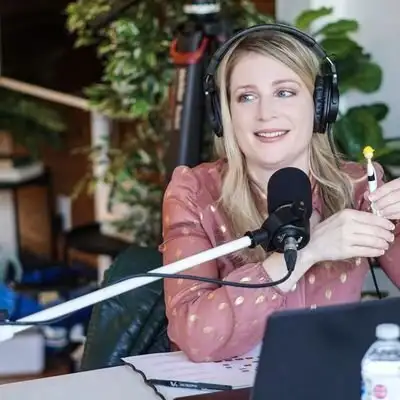
Welcome to Continuing Studies, a podcast
for higher education podcasters who want
to learn, connect, and get inspired.
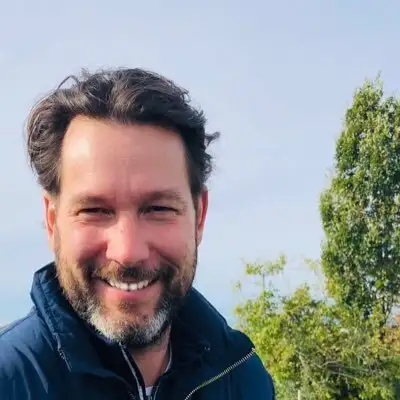
I'm Neil McPhedran, founder of Higher
ed pods.com and Podium Podcast Company.
And I'm Jennifer Lee,
founder of J Pod Creations.
If you're podcasting in
higher ed, you're not alone.
There's a fast growing
community out there, and we're
here to help you tap into it.
That's right, Jen.
And along the lines of Community
Higher Ed Pod Con, which is
happening in July in Cleveland.
We've talked about it a bunch.
We're gonna keep talking about
it.. Just a reminder that
early bird registration is open.
Submissions for speakers are coming in.
It's great.
We actually have about 40
submissions already, which is quite.
What?!
Yeah I know it's amazing.
We also have openings for sponsors,
so if you know of anyone who you think
might be a good sponsor, let us know.
We are very cognizant of costs with
budgets being tighter in academia and
universities right now, so the more
we can offset the cost for the show.
The better for participants.
Lots of fun things.
I keep seeing emails coming
through, so I'm very excited when
we can share things soon with you.
And please, if you wanna be on our
show with Neil and I or know someone
we should interview, email us your
ideas, our emails in the show notes.
That's right.
Okay, Jen.
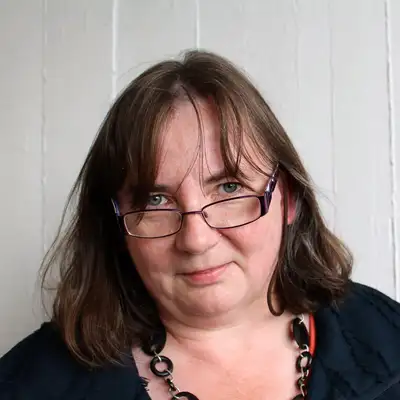
In this episode, we're talking to
Corolla Boem professor of Creative and
Cultural Industries, and the C3 Research
Center Chair at Staffordshire University.
Jen, I came across Carola's
abstract she had submitted for the
upcoming EPOD conference, and I
just knew we had to have her on.
We're gonna talk a little bit about EPOD.
We've talked about it before in the past,
but we're gonna dig into it a little
bit more, which is upcoming in June.
So it gives you time to go, if that's
an opportunity, but you have to
register for Higher Ed Pod Con first
before you think about going to EPOD.
Just, right Jen?
Yes.
Come to us first and
then go to EPOD and then
That's right.
But EPOD's also awesome.
We're gonna talk about
that a little bit with her.
And it's in the UK, which
That's right.
That's right.
But her abstract was super interesting.
It's quite, I guess somewhat provocative
from an academia perspective and
how podcasting isn't just a medium,
but as she says, a vehicle for
dismantling academic hierarchies.
So let's get into it.
I'm still stuck on provocative
and academia together.
It just doesn't feel like it fits.
It does now.
It does now; let's get into it.
Welcome Carola.
It's uh, so nice to have you here
on the Continuing Studies podcast.
I'm so delighted to be here.
Actually, I've been listening to your
podcast for quite some time, so here I am.
I love that.
It's so funny because I forget that
we're so worldly and like anytime I
talk to people from around the world,
I'm like, you listen to our podcast.
Jen went to the London Podcast Show in
'25 and she texted me from the show.
She goes, I met two people here that
really listen to our podcast and I,
I didn't believe them.
I made them pull it up on their phone
because that's the power of podcasting.
You don't know who you're touching,
you know.
It's also, 'cause of course we all have
our stats and we look at our stats and we
see, oh, two and three from here and, you
realize that the community that you might
be talking to is not just in one place.
It might be completely dispersed.
And then as we talked before we came
on, there might be podcasts which are
very localized and it's so different.
The podcast is not a podcast.
They're all fabulously different.
And anyone can listen.
It doesn't matter even if the
content is local, if someone still
wanted to listen, they can listen.
It just might not relate to them.
And I dunno if you get
that on your podcast.
So I have had once or twice we are
talking about EPOD, our conference
about learning and podcasting
or education and podcasting.
But we are talking about it and somebody
says, actually I don't podcast anymore
'cause everyone is doing it now.
And I just say, yeah, isn't it great?
It annoys me so much when people
are like, oh, I don't wanna do a
podcast because everyone's doing it.
And I'm like.
It's actually not saturated.
It's something we talk about at any
of the conferences I go to, and it's,
if you actually look at podcasts out
there in different areas, a lot of
them can't get past three episodes.
I know Pod Fade is eight.
I feel like it's lower than eight.
It is a very difficult medium.
It takes a lot of work and you
gotta be passionate about it.
So I always tell people, I said,
there's so much room, you just
have to be willing to do it.
Yeah, yeah.
I'm one of the fluffy individuals who
say three episodes, that's brilliant.
You've got three episodes.
So it's just to have a voice, to
not have that more traditional
structures that represent gatekeeping.
And of course that's also what my
research is about in terms of how have
we changed, how we culturally engage.
We are moving much more towards
co-creation and there's a sort of model.
I go really wild with these models.
I know we're gonna talk about the
university 3.0 concept, but it is a
concept that wasn't coined by myself.
It was coined by an Italian cultural
professor called Culture 3.0.
And in a nutshell, 1.0 is patronage, if
you think our Socratic concerts or things
like that, but also the BBT prompts.
So most through history, so patronage.
The key criteria of 2.0
is IP and copyright.
So think music industry and film industry.
And those are valids.
It's a very particular type of, as a
society, engaging in arts and culture.
And then 3.0 comes along and it's
co-creation, being more immersive.
You can't quite tell all the audience
is who the artist is, when an artwork
starts, when an artwork stops.
And with it comes this really desire of
people, us humans, to really be active
participants in cultural production.
And I think podcasting leads into
that because you can move from one
moment being a passive audience member
to the next moment, being an active
content producer, having a voice and
contributing creatively to this ecosystem.
You said it so perfectly and that
is why you are the professor of
creative and cultural industries
and director of C3 research center.
But uh, really what is a professor
of creative and cultural industries?
That's a pretty cool title.
Gosh, well, we do have a center
for creative industries and
creative communities, and I
was one of the co-founders.
I'm not the director
of that center anymore.
So after five, six years I've
given it's two sort of emerging
leadership that that is coming up in.
In terms of the center.
Of course, for me, the gosh, there is
a longer trajectory, so I came actually
from music technology, so I studied
both music and electrical engineering.
I wanted to become a sound engineer, music
technology, and these kinds of things.
And I was then involved in research
in relation to MP3, which of course
is the technology that also drove the
first decades of podcasting as such.
And then I sort of widened the research
area, talking about how do we facilitate
in interdisciplinarity in higher education
using music technology as a case study.
Because of course, music technology
and sound production and music
production is one of those disciplines
that emerged relatively new compared
to some of the older disciplines.
And of course new universities
were arranging them around that.
And then my sort of research looked
even further and talked about
the role of arts in universities.
How do universities become more permeable
when they have arts provision, when they
have music provision, when they have
theater, art and design, comic arts.
We have at the University of
Staffordshire, one of the first cartoon
and comic arts degrees in the UK.
And you know, we need those people to
be trained to, to help us all have much
more creative cities and creative lives.
So I really believe in the power
of arts and the creative sectors.
And of course podcasting
is a big part of that.
So my research then leans at the
moment into how do we do this?
It's policy oriented.
How can we create more impact?
How does policy need to change in order
for our of arts interventions, cultural
interventions, cultural production,
like podcasting to be as effective as
it can be in those places where we need
them to, to help those communities to,
to live better than they did before.
And especially, you know, in our
times where it's really challenging,
where sometimes there are divides.
Where we have centralized
types of nations.
Us here in the UK I'm sitting
here and of course it's a very
London centric country still.
We're making headway and, and
dispersing the wealth much more
into the other parts of the UK.
That's also challenging, but again
having them technologies like
podcasting where the entry barrier
is so much lower than it used to be.
It gives the opportunity for creatives to
really culturally produce for their places
much more than they ever did before.
I love it that, thank you so much for
that insight into your background..
So let's jump into why I reached
out to you originally, which was.
I saw you had posted on LinkedIn your
abstract submission for this upcoming
EPOD conference, which is going into
it's third year, and your abstract is
titled 'University 3.0 and the Podcast
Revolution: Who Owns Knowledge Now?'
Maybe let's just start just
top winding a little bit here.
What EPOD is, what the
EPOD conferences again at?
We, we have in past episodes,
talked about it a little bit.
Conference is going into its third year.
It's this upcoming June at
the University of Leeds.
Maybe you could just give us a quick
little reminder for the audience,
what the EPOD conference is about
and what makes it a bit different.
Yes, so it's a conference, educational
podcasting, or any kind of intersections
between education and podcasting.
That's what we're catering for.
We started in 2024.
That was our first conference
at Morley College in London.
And it was very well received, and we
wanted to also create space for the
scholarly community around podcasting in
higher education, specifically to have
a space where we could debate, present,
and then also write about what we do in
the context of podcasting in education.
And so we always had in mind and we
negotiated with Routledge a book series,
and that's part of the conference.
So it's a nice sort of annual
rhythm that we get into now.
So we hold the conference, we debate some
of those things within the conferences.
Then those papers, those abstracts
will morph into full submissions,
which we then review and decide on
a book that comes out a year later.
And so, we are now in our third conference
and now we are into the second book.
It's gonna be published this year.
And it's, it, it has been quite a
journey, but it's been a fabulous journey.
And again, it's surprising that
we say how diverse podcasting is
you know, you're really experience
it at a conference like that.
So we immediately had an international
audience, although it was relatively
small, we call ourselves a boutique
conference still, that we had something
like 18 nations represented, you
know, and that, that created a really
intimate, uh, lovely connectivity between
participants that we then saw on the
second year, and we see now with the
abstracts are returning in the third year.
So we're really looking forward to that.
And of course, it was two years in London.
Which of course has its own benefits
and advantages of people wanting
to get there, but we really wanted
it to also move around the country.
And so we're really proud that it now
moves north to the University of Leeds.
Again, fabulous connection.
So it's very easy to get to with,
with flights and with trains.
Leeds, of course, if you haven't been.
Leeds is a brilliant northern
city with a lot of music culture.
It's very famous for British
music culture as well.
And that's where we're
going to be in in June.
And the theme of it is beyond the
classroom, power of podcasts in shaping
the future of learning and media.
And of course, that's what I
reacted to in my abstract of this
notion of how does podcasting
intersect with higher education?
Especially in the UK where our
university systems are really struggling.
You know, we had for the last six or
seven years the most redundancies in
the most number of universities that
we've had for gosh, for several decades.
And of course, the system isn't
quite working as well as it should.
And of course, with various external
political decisions, whether that's
Brexit, you know, as it put universities
in a really difficult situation.
There is the question of are we fit for,
for purpose in our contemporary lives?
Um, are there other ways of learning
that don't sit in formal institutions?
And of course in that sense, now
I'm actually quite passionate
about universities, but I'm also
passionate about podcasting.
And how it can disrupt some of the
structures that somehow in the sector
we believe we need universities and.
But actually when you talk to academics,
you kind of think quite a few of
those structures are keeping us from
being agile enough, being permeable
as higher education institutions,
reaching out, being more impactful
into the places that we are part of.
And again, podcasting allows that
kind of higher education context to be
reflected upon because it's so easy to
create a learning environment through
a podcasting that sits, you know, very
well outside, it could sit also inside.
But it can also sits outside of sort
of formal structures like universities.
Well, I just, I love your abstract
and I love the whole concept of EPOD.
I can't believe we talked to somebody
a few years ago when you guys had
just said your first one and then
you were gonna do your second one,
and then now you're on your third.
But I just love what you were talking
about, some of the stuff in your abstract
of like obviously the gatekeepers and
things like that and, and not fully
wanting to lean into podcasting.
I think that's something that we're
seeing not just in the education side,
but in the broadcasting side is that I
think all these legacies, like obviously
higher ed has been around for a long
time, same with traditional broadcasting.
They don't wanna necessarily give up
control, even though they don't realize
that this new medium is actually giving
more information to a wider audience.
Absolutely.
Absolutely.
And of course it is about
where knowledge is positioned.
So universities historically, of course,
understood themselves as knowledge
being central to their business,
to their activities, to everything.
And that's what I call university 1.0.
And I've still experienced that.
So when I came into academia,
I was teaching acoustics, uh,
you know, at Glasgow University,
the beginning of the web.
The yes, the web was already
established, but the acceptance
that the beginning to be for her
to be mainstreamed had just begun.
So that means that the only
sources of information was me
as a lecturer or the library.
That was 1.0.
And that, of course, is the typical
ways of delivering knowledge from
those who have it to those who
don't are large class lectures.
Then University 2.0, and this is my
conceptualization, to understand how
this, this phenomena of higher education
actually works in a knowledge economy.
2.0 is of course where
disciplines expanded.
They also become fragmented.
So we know so much now, so that
academics or universities where
curating different kinds of degrees.
Let's take a bit of engineering, and
let's take a bit of music production
and put that together and then
sound, call it sound engineering.
Or let's poke a bit of computer
science and a bit of music performance,
and then call it music informatics.
You see the number of degrees
and academics curating from all
sorts of areas, various degrees
where you have depth to it.
But with that comes also marketization
and these became products.
And of course we know that in our
American sphere, both in America as
well as the UK, is very famous for
using that as a product and seeing
packaging up knowledge as a product.
So knowledge is still central.
And then 3.0 explodes this and
says, actually, hang on, we are
living in a knowledge economy,
knowledge is all around us.
When I go into a classroom now,
I can't say I know everything.
Everyone has their mobile phones and
within seconds they can, they can
call up what dithering is in digital
audio, I don't need to tell them that.
So you need to change how you teach.
And it becomes more permeable and
becomes about how do we curate an
environment and learning environment where
everyone brings in their knowledge and
learning is put into that environment.
So you curate that learning.
Learners come from different levels.
They all learn from each other,
but it's, it's something different.
You have to decentralize knowledge and of
course coming back to podcasting disrupts
then this educational stance because
that's what podcasting is actually.
Even here, we talk about, we collectively
learn, we share our experiences
without a sort of formal, larger
institution, which might say, well,
I am the institution that actually
holds that patronizes, that knowledge.
And that, of course is what I'm
talking about in this abstract.
And just the first sentences, I got
a bit giddy with the first sentences
because I was quite controversial with.
"The lecture is dead. The ivory towers
cracking, the paper argues that the
podcast revolution is not a side
trend. It is a front line of a cultural
insurgency against academic monopolies."
And of course I wanted to challenge
us because we, there is still this
belief that knowledge is centered
to what we do in universities, but
podcasting has actually shown that
knowledge is, of course, we really
are firmly in the knowledge economy.
We are firmly in the knowledge society.
Everyone can podcast.
Everyone can create that sort of learning
space for themselves or for others.
And that then means universities will
need to change and podcasting gives
them also that incentive to understand
that they can't hold knowledge as
central positioned as they used to.
And that's hopefully what I'm gonna
talk about at the conference and spark
a debate and there might be quite a lot
of pushback and we'll see how it goes.
That's great.
You've, you just touched on this a
little bit, but I just wanna sort of
unpack it a bit more, but there's a
clear challenge in your abstract to these
current structures of power and academia.
We've actually touched on it a bit
in our recent episodes too, and this
is, it's really interesting actually.
And you talked about, and you write
about how podcasting bypasses gatekeepers
and collapses, this sort of traditional
lecture hall structure maybe if you
dig into that a little bit more for us.
For those in unfamiliar with that framing,
what kinds of academic gatekeeping are
you referring to and how is podcasting
creating entirely new pathways for
knowledge creation and dissemination?
Yeah, so now of course
there are different systems.
UK system is a bit different
than the US system.
So for instance one of the gatekeeping
contexts that I would say that
we experienced in the UK is the
cultures around quality assurance.
So we of course, have to specify what
is in a course, what is being assessed,
and at the moment we change it we will
have to go through various rigorous
processes on, on, on signing that off.
And that quite often then is relatively
slow compared to how fast the world moves.
And that's of course, if you talk to
academics, certainly in the UK, you
know, if they want to be innovative
and they want to change some curriculum
content quite fast, it's quite often
that the cultures around ensuring
quality are so rigorous that it's quite
difficult to change curriculum content
to the level that I believe we need to.
Some people would say that We
need that to ensure the quality.
But of course, quality as a
concept is also a great gatekeeping
device to just argue with.
We need to keep the quality.
I would say where universities in
the UK have adopted cultures that
yes, create a sort of quality product
that comes the challenge of being
agile enough, being permeable.
Again another thing is that loads
of academics want to actually
bring in the industry much more.
But of course our systems, how
we are paid, how student fees are
paying the university makes it quite
difficult to say, oh, let's bring
some industry professionals in.
Let's co-teach that with industry
professionals because they are asked
of systems in terms of the student
income distribution models, where
that becomes really quite difficult.
How podcasting undermines that
is, is I believe that podcasting
is a phenomena where we can see
that people want to be involved in
knowledge production themselves.
So it's not anymore where they
want to buy into someone else,
giving them the knowledge.
They want to be part of that knowledge
production, that co-creation process.
You can see that people
want to have a voice.
People want to produce content.
People want to engage culturally in that.
And of course, app then clashes
when you think about it with
large knowledge institutions.
And we can also take
broadcasting in there.
Which traditionally were more
centrally organized and that centrally
organizational entity than has its
own base again, keeping quality.
So there's a bit of a tension.
And of course, in some ways,
I'm not saying that's bad.
These kinds of structures of
typical larger institutions, whether
that's broadcasting institutions
in the UK, for instance, BBC, they
provide something really valuable.
But what I'm saying is.
We do need to mix the models.
We need university 3.0 and 2.0, or
we need culture 3.0 as well as 2.0.
So we do need those industries.
We do need patronage, but if we want
to have impact, our institutions
need to be more permeable.
They need to understand that
knowledge is all around us now
that we all want to co-produce and
share knowledge creation and that
the way we do that needs to change.
So the focus then becomes
on the environment.
And again, podcasting can then, for many
educators, be that learning environment
where we co-produce knowledge and
produce stuff together and co-create.
Rather than that, it's somebody
who says, this is the quality
or this is the excellence, and
somebody else is a passive consumer.
So I think that's the tension.
I know we don't want any gatekeepers, but
do you think there needs to be any, as
we move into, uh, this world of obviously
AI and all this stuff, do you think there
needs to be any type of governance on it?
Because like right now, anyone can crack
open a mic and say what they wanna do.
And with AI, there's not really any
rules and regulations around it.
And like I come from traditional
broadcasting, where here in Canada
specifically, we're governed by the
CRTC and there's things that we can
and cannot say, but obviously with
podcasting we're in a different realm.
But when it comes to education,
you still need someone making sure
there's not misinformation out there.
Yeah, yeah.
Brilliance.
How do we govern that we
get stuff that we can trust?
Now when we had the systems that we had.
So, uh, of course I'm a sort of
believer in decentralized co-creation,
devolving of authority, multi-level
participatory governance, because
that's actually can be a safety net.
And I think we realize that when we
rely on a small group of individuals
producing possibly the technologies, the
networking technologies, the connectivity,
it can go really pear shaped.
There's a perception of quality
with a smaller group of individuals
where it's actually not of
benefit to the larger individuals.
And of course in the music industry, we
had actually this whole debate about,
oh, do digital technologies create a
mass amount of, what do you call it?
Not good music because now
we all have the technology.
So do we have to now wade through
bad music in order to get those
glittering good music because the
technology is now so available.
And I would actually say that's also
what giving over power is, and I
would rather have a world where there
are still these gems, but everyone
can actually produce something.
Because the act of culturally engaging
in itself is so valuable for us as human
beings who want to culturally engage.
So I think this notion of gatekeeping
is really, um for me, also a political,
and just as we know, all Wikipedia,
and it's a really good example because
Wikipedia has found a way how collectively
they keep a certain amount of quality
whilst allowing everyone to contribute.
So there are systems, and it's
not kind of democracy, but
it is a collective endeavor.
There are systems where you can
actually say, actually we are together.
We can create something,
which is much more valuable.
Just as comparison, the Encyclopedia
Britannica, where you had a sort of
quality assurance and there's a reason
why Wikipedia has become the norm and
Encyclopedia Britannica is, has become
to be the past, and it is about allowing
more voices and more contributors to
culturally engage in knowledge production.
Right.
This, this has been great.
I wanna close with one question though,
for you, say a university leader
came to you and said, we wanna move
towards this university 3.0 model.
Where do you suggest
that they would start?
Yeah, so I have an
article about that, so of,
oh, we'll link to that
in our show notes then
so, so, you know, of course
you've gotta start small.
So we have actually managed to receive
funding from the Arts Council and from
the National Lottery Heritage Fund
in the UK to run a sort of executive
style leadership course like at
masters level for cultural leadership.
And it's called Create
Place, the Co-creation and
Placemaking Leadership Program.
And the content of it is that we are
engaging deeply in how do we co-create,
how do we do participatory approaches,
how do we do that for the places
that we live in to be more impactful.
And then we sort of co-create
these learning environments where
learning happens at all levels.
So I think that's for us,
a really important thing.
And again, coming back to podcasting,
'cause that's what we're talking
about, podcasting can do that.
And some of my past, and I'm
not as experienced as some
of you in terms of podcasts.
You know, I have also my three little
tiny podcasts where we created these
tiny little learning environments where
we collectively learn, where we bring in
other people to learn this, where we have
those conversations like we have here.
It doesn't matter what kind
of institutions you come from.
We have a conversation and we take it out
there and hopefully audience and activist
and bring some interactivity back.
And then maybe some of the audience
will create on podcasts because
they have something to say.
Again, coming back to the first things
that we said, if they only put towards one
or two episodes, I think that's beautiful.
They had something to say
and they managed to say it.
I love how you tied that together
and podcasts if you wanna do it,
because there's a lot of room for you.
Well, the, and even if there are
only 5 or 10 members of audiences,
if you love doing that, and if
that's a deep conversation, why not?
Then it's equivalent of I meet those
five people in the pub and I have
a two hour intensive conversation.
Whether that's my conversation physically
in the pub or in a half hour podcast.
You know,
it's, I tell people this all the
time because everyone will be like,
I only get 20 people listening
to my full episode every time.
Like, if I put 20 people in
a room, would you be upset?
No.
You'd love that.
Yeah.
Anyways, I feel like we could get into it.
Yeah, let's, let's, I have
to be stopped as well talking
about this kind of stuff, so.
Well, this was a really
amazing conversation.
Thank you so much for sharing with us.
I know we're getting ahead here
because this is what you're going
to be expounding upon in June, so
thank you so much for joining us.
Thank you very much,
Jen.
I really enjoyed that
conversation with Carola.
I feel like as we've gone on
with this podcast, I feel like
you and I have gotten smarter.
What were we before though?
No, I just think we have these
great episodes about more technical
things about podcasting, but then
we've had a bunch of episodes lately
where it's just, it's a little bit
more cerebral and I quite enjoy it.
Actually, you know what I did, Jen?
I was inspired, and this past Friday
I submitted an abstract for EPOD.
Ooh, what's the title?
My title is Open Scholarship,
Closed Distribution: Why
Academia Must Reengage With RSS.
We'll save that for another episode.
This is, this is the most
academic I've been in like 20
years since I was in university.
You know what's funny is I sent it to my
son, both my sons that are in university
and the oldest one, the smart ass.
So you, you, you know what he said, Jen?
He said the way you formatted,
that's totally wrong.
And I'm like, oh no, like maybe
I've screwed it up or whatever.
But I went back and I looked
at Carola's and I was like,
Nope, mine's similar to hers.
I think I'm gonna be okay.
I don't know if I trust that generation.
I just found out in elementary
school that they're not doing the
Times Table anymore, so we're good.
Okay.
Well, on that note, why
don't you read us out?
Thank you for tuning into
the Continue Studies podcast.
The podcast for Higher
education podcasters.
We hope you found this episode
informative and inspiring.
If you enjoyed the show, we encourage
you to follow and subscribe to our
podcast on your preferred platform,
so you'll never miss an episode.
But if you found this episode
particularly valuable, please consider
sharing it with your friends and
colleagues who also might be interested
in higher education podcasts.
We also invite you to join your
peers on higher ed pods.com.
Where you can connect with other
podcasters in higher education and
learn from others in the field.
Thank you for being part of our community.
We look forward to continuing to bring
valuable insights and conversations
around higher education podcasts.
See you in the next episode.
Creators and Guests