What Is a “Lecturecast” and How Does It Work?
Garret Castleberry, Ph.D.: And I
can recall students just leaning
in with a smile on their face,
really getting engaged with
the media and appreciating it.
And even the nature of how that, how that
room mic unfolded, it reminds me of the
campfire in the tribal village, right?
This idea that we've been
communicating for millennia.
You, you cannot not communicate,
and it is, it is a foundational
understanding that we can't escape that.
And so we're always gonna be drawn
to communication, and podcasting
is this, is this digital age
tool that is igniting interest.
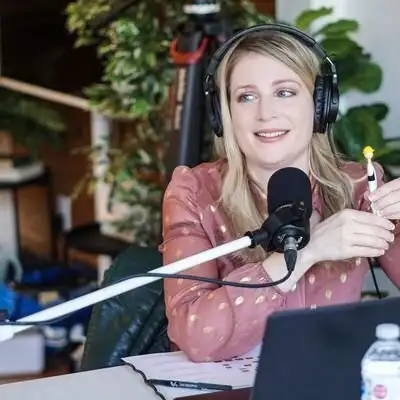
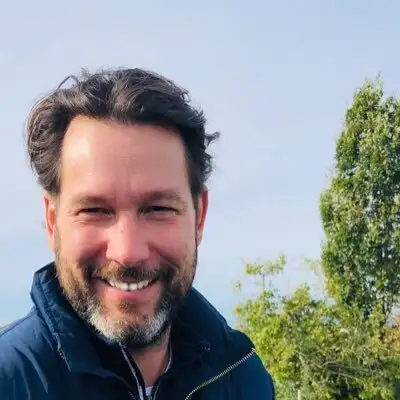
Neil McPhedran: Welcome to Continuing
Studies, a podcast for higher
education podcasters who want to
learn, connect, and get inspired.
I'm Neil McPhedran, founder
of HigherEdPods.com and
Podium Podcast Company.
Jennifer Lee: And I'm Jennifer-Lee,
founder of JPod Creations.
Podcasting is broadcasting.
If you're podcasting in
higher ed, you're not alone.
There is a fast-growing
community out there, and we're
here to help you tap into it.
Also, we'd love to hear from you, so
email us your ideas, or if you wanna
be on the show or know somebody we
should be interviewing, please email us.
All the details are in the show notes.
Neil McPhedran: We actually read our
emails, so you know, let's hear from you.
Comments, even if you have
a negative comment for me.
I know you won't have any
negative comments for Jen,
but even if you have- What?
… a negative comment for me,
I wanna hear about it, so.
There'd be no
Jennifer Lee: negative
comments for you either.
Neil McPhedran: No, no, there we go.
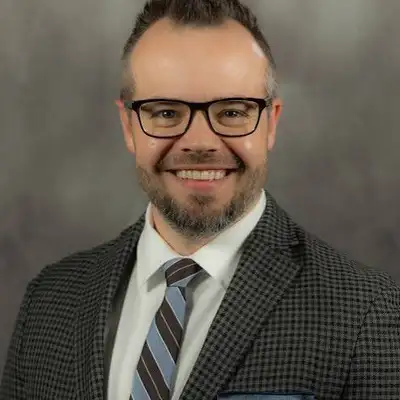
So today we are chatting with Garrett
Castleberry, who is associate professor
and serves as program director of
Media Production and Communications at
the Mid-America Christian University,
and he is also co-chair of the
School Humanities Social Sciences.
A few more things cool about Garrett,
he was one of our inaugural finalists,
for the PodCon Awards, which was
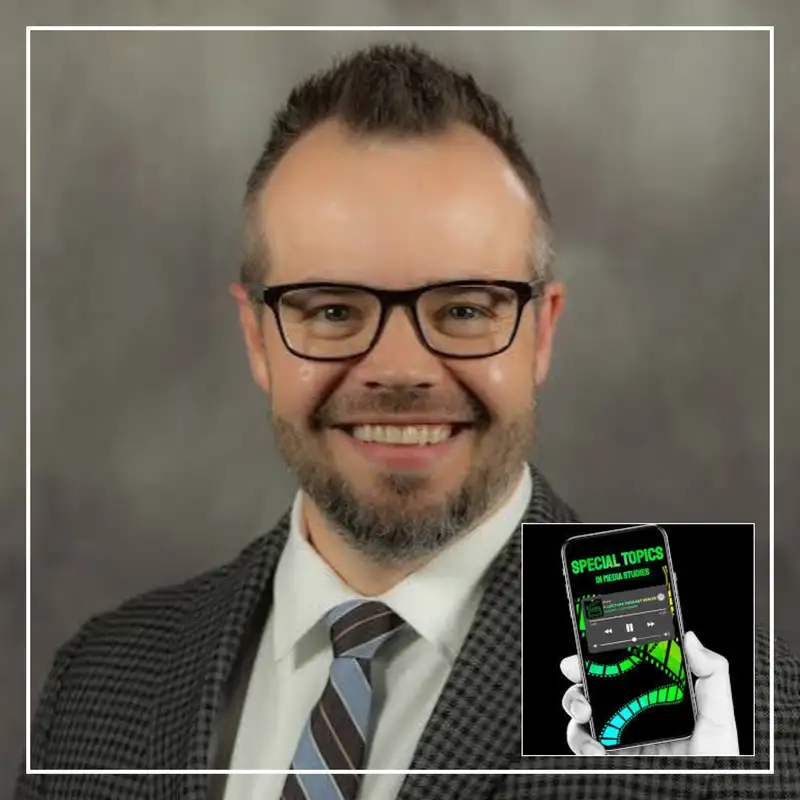
awesome, and he is creator and host
of the podcast, because, you know,
we interview podcasters here, of
the Special Topics in Media podcast.
He says, "Through innovative
teaching, multimedia storytelling, and
podcast-driven classroom engagement,"
Garrett has helped position podcasting as
both an educational tool and a platform
for student and faculty voices, which we
get into and we actually ask him about.
Jennifer Lee: Yeah.
Well, I was just excited to interview
him because he wrote us this really nice
note before Higher Ed PodCon because
he does listen to Continuing Studies,
which we love hearing that you do- Yes
listen.
So it was really cool.
And so it was great to finally,
meet him and then get him on here
onto the Continuing Studies podcast.
So let's, hear what Garrett has to say.
Neil McPhedran: Get into it.
Garrett, so great to have you
here on Continuing Studies.
Thanks for joining us.
Garret Castleberry, Ph.D.:
Thank you so much.
Thanks for having me on.
It's exciting to connect with
increasingly familiar faces and voices.
Neil McPhedran: We chatted a few days ago,
and but we met at, PodCon actually- Yeah
… which was, which was, which was fantastic.
And, and you've been doing this
podcasting thing on a number of fronts.
We're gonna obviously dig into that today.
But you said you had this idea and
this, all this work you've been doing
in podcasting for a while, and almost
in a bubble, I think is what you said.
And then you- That's right … got
to PodCon and you found this whole
group of people that were on a similar
mission What did that change for you?
Did you go back to campus and you were
just like reinvigorated that you were
on the right path here with podcasting?
Garret Castleberry, Ph.D.: Sometimes
you attend a conference and it's,
you're, you're fulfilling a duty, right?
And it's this combination of scholarly
investment and maybe there's a little
overlap with some service work, right?
You have, you have certain agendas
you go to present and so on, and
network and engage with people.
And that can be, it, it changes from
conference to conference what that
experience looks and feels like.
And I've, I feel like I've, I've
experienced the full gambit of not
connecting well with people or, simply
fulfilling my duty and moving on,
or having excellent, social time and
engagement with others, or having high
quality contributions in the form of
presentations and being able to be a part
of business meetings and things like that.
This was one of the peak experiences,
and what truly, blew me away was the
fact that I knew no one going in.
That it, it was an entirely
fresh and new experience.
But from the get-go, the arrangement,
all of the, the ordination, everything
was, was well put together, but
equipped because the people were
there with purpose and passion.
And it was, it was oozing
out of every panel and every
keynote and every experience.
I did return invigorated, and I've even
immediately gone back into the classroom.
Here we are, the start of a new semester,
and the ideas and conversations and
information I was getting fed, at
the, at the conference, it continues
to, it's pouring out onto my
whiteboards, live with the groups.
I'm, you know, I'm, I'm able to
kind of transfer and transmit, you
know, data and information and ideas
that I was hearing about there.
And I can't, that is, that doesn't
happen as often So it's a great movement
going on with the Higher Ed PodCon.
Jennifer Lee: Oh, it's like a good review.
We need to cut that up and post it-
Right … for the next Higher Ed PodCon.
Garret Castleberry, Ph.D.: Well, I
would add to that, I didn't know about
this conference until I was sampling
the Continuing Studies podcast.
Neil McPhedran: You've positioned
podcasting as two things at once,
both an educational tool as well as a
platform for student and faculty voices.
Which one of those has
been harder to build?
Garret Castleberry, Ph.D.: It is
definitely a marathon, not a sprint,
working to become more equipped
and competent in podcasting.
This was ki- somewhat born
out of a, a mixed origin.
I was trying to even recall before
our conversation, what was the,
what was the igniting point?
I was a graduate student, but I
was also serving as director of
forensics, so director of speech and
debate at a university I was, was
at, and I would have to commute in.
I didn't live in that college town.
And one of the things I enjoyed, that
kind of escapism, was what could, what
could close the minutes, what could
make time speed up or become more
enjoyable in that commuter lifestyle.
I got very hooked on, satellite
radio programming and, but then my
scholarly mind just wouldn't turn off.
Like, so I wasn't approaching the
media from a leisurely perspective.
And I ended up all of those distant
ethnographic observations, became, became
the groundwork for some scholarship,
and I got very invested in that.
And at the same time, like anything
that, that can be adapted and
adopted for societal use, the costs
were coming down on equipment.
And so I'd made some early
investments myself just dabbling
in using it as a teaching tool.
And every so often, a project that
we would throw in, or we would say,
"We want folks working on scripts,
and then we're gonna produce these
into some audio works at the end."
And I have this memory of a really … I,
I w- I won't list any names of brands
or anything like that, but one of the
lesser expensive, lesser quality mics that
would just sit in the middle of a table.
And I can recall students just
leaning in with a smile on their
face, really getting engaged with
the media and appreciating it.
And even the nature of how that, how that
room mic unfolded, it reminds me of the
campfire in the tribal village, right?
This idea that we've been
communicating for millennia.
So I come from the field of communication
studies, and one of our most famous
quotes or paraphrases that gets
repeated over and over again is
that y- you cannot not communicate.
And it is, it is a foundational
understanding that we can't escape that.
And so we're always gonna be drawn
to communication, and podcasting
is this, is this digital age
tool that is igniting interest.
And it's … I think one of the best
parts about it is it flows from high
economic usage to low economic usage.
It can be hobbyist, but it can also
be a dynamic professional tool, and
that's where we began to see the
changes happening in real time, and
we wanted to do more and more with it.
And in order to do more and more
with it, and in, in order to
introduce it into curriculum, I
needed to know a lot more about it.
I needed to be a better
practitioner with it.
And so that's where we birthed the
lecture podcast, or Lecturecast, as I
often call it, as a tool to teach with,
but then as a tool to train myself to
be better so that I could be a better
practitioner of it in the classroom.
I loved the classical setting of, of,
of like the distinguished professor
lecturing on end, like just dispensing
wisdom, the village sage, and we just
soak it up and they're entertaining.
All, I loved it.
I loved it.
I love that classroom model.
Students today do not have time for that.
They don't, they don't
have attention spans.
And, and I say that with, with
grace and, and understanding that
it's not just a student issue.
Like it's, you know, the diminishing
attention spans is related to the
nature of change in, in how we're
using media and how media is using us.
And as a result, this brings new problems.
And one of my solutions that I
felt like this is an answer to
a problem right in front of us.
This actually worked, first it worked as a
solution for online students, and then it
became a solution for on-ground students.
Online students, the, the problem
is we've, the classes are moving
too fast, and we don't have a
physical classroom we're meeting in.
How can they have some of that experience
of being able to engage with, hear
content being engaged in meaningful ways?
But then in the physical classroom, we
have the reverse problem of everyone's
impatiently ready to check out How do we
still be truthful to the mission and the
mindset and the values of traditional
education, but then meet them in the
middle and say, We're gonna give it to
you in a supplemental way, and we're
gonna give it to you in an asynchronous
way so that you-- You know what?
If you wanna go on a jog and listen
to it, if you wanna iron your
clothes, do your laundry, and just
have it on, take it in like that.
Use it as a commuter tool."
We have students that, that
drive in for evening classes.
Use the, use the Lecturecast
to fill the time, right?
There's a, there's a book by Ethan,
Ethan Tussy, The Procrastination
Economy, and it's the big business of
downtime, I think is the subtitle of it.
Something to that effect.
And we use it in one of our classes.
And this idea of learning how to
meaningfully fill the minutes in between
things, not to exhaust yourself, not
to exploit yourself and your time.
We all need decompression time.
But to, but to fulfill some
needs that we don't have enough
time in our day sometimes.
And that's what we want this tool to be.
We find that, that podcasting was a
solution to regaining or reclaiming
something lost in, in the decline of
the formal lecture in the classroom.
Jennifer Lee: It's so funny.
I'm gonna date myself right now, when
I went to university, obviously there
was no podcasting or anything like that.
Mm. And we would take recorders and,
like, take the-- Not on your phone, like
take an actual physical recorder- and sit
there and record the lectures and listen
back to them while I was doing laundry or
other things in the house, but now I was
like, oh, people have podcasts they can
listen back to while they're doing it.
And that's why I think too, other
students have probably way more
advantages than, than we did-
Garret Castleberry, Ph.D.: They do.
They do.
Jennifer Lee: to learn the material.
Garret Castleberry, Ph.D.: grad
school f- in some, in, in especially
in R1 universities can be that,
that gauntlet, that proving ground.
And I would record, I didn't record all
of the faculty, but I would just, I was
like, "I never wanna forget these things.
These are so great." But I was
also panic-stricken about oral
comprehensive exams to come someday.
I would kind of jog or run and, and
listen back to… I'm holding the recorder
like it's an MP3 player or, you know,
a smartphone with wired earphones in.
You know, that's, that's
what point in time it was.
Jennifer Lee: Lecturecast is such
a cool concept because I think when
people think about podcasting, a
lot of people just assume that it's
gonna be an entertainment show.
But people don't realize that podcasting,
it can be used as a tool in many
different things, either in businesses
internally to onboard new employees,
do their messages across a board in
a private format, or for education.
There is so much wealth
to it that you can use.
Like you're using it as a
Lecturecast, and I love that.
So when the students first, took
a listen to your lecturecast.
Did you get any great feedback from it?
I'm gonna assume yes,
because you kept it going.
Garret Castleberry, Ph.D.: So, one
of the things that happened, we became
committed to, to consistently find the
right kinds of classes and the right kinds
of endpoints to, to start this thing off.
And we have a course called
Special Topics in Media Studies.
And if you've ever spent much time in
higher ed and paid close attention, you
know that any given discipline, especially
in the humanities, but it could be in
other fields, the special topics course
is the one that can be reinvented without
sending through the very difficult
curriculum change mechanisms of, of
the institution of higher ed, right?
That sometimes there's a lot
of procedure that can get in
the way of, of new courses.
But special topics gives you broad range.
It can be reinvented every time.
And that's important to us because
part of our mission statement, which
we buy into heavily in our program, we
have a great alignment with our mission
to create, collaborate, and innovate
to solve local and global problems.
And we're able to use multimedia
production tools and assignments
and projects to do that.
If you're starting anything new and you
know there's some difficulty to overcome
Find the point of entry that excites you.
And I, while coming from communication
studies, most of my graduate
work was pointed toward mass
communication in different fields.
Wrote my master's thesis on graphic
novel narratives in post-9/11 age.
I wrote my PhD, dissertation on
television, on the changing nature
of content in the, cable TV drama.
And so I, I was fulfilling that
intersection of scholarly interest, of
teaching interest, and, and identity
calling, and we were able to, fuse it into
an introduction to film studies course.
And we would, at first, we would just drop
MP3s into, we would embed them into our
closed platform that the students would
be logged into where they get information.
We were slowed down by the onset of COVID
and the way it sort of froze budgets
and, and kind of made everyone take a
step back or at least, you know, pump
the brakes on different initiatives.
And then finally, once we were regaining
some strength and dexterity coming out of
that period, we didn't stop podcasting,
by the way, but we were archiving many
seasons along the way until we had a
healthy, you know, bushel ready to go.
So fall of 2022, we went live with it.
We had a distribution network
set up by that point, a plan in
which we would keep it going, and
we've sustained it ever since.
it w- it was running for the majority
of this time, as a weekly installment
and, and then we've, we've been able to
scale it back to about twice a month.
But that's simply because there's so,
so many exciting things going on, and
we're working on the launch of, of a
broader network of campus-related pods.
And so, you know, that labor gets
divided, but it gets divided in the,
along the lines of multiplicity, right?
We're, we're, we're kind of buying
into that concept of multipliers.
We're wanting to take an idea and spin
it into the next idea and, and keep
the, momentum going on this movement.
Neil McPhedran: When we chatted,
you also mentioned that you've got
a formula at univer- at university,
which is how do you do more with less?
Garret Castleberry, Ph.D.: Yes.
Neil McPhedran: And so as part of,
rebuilding your online work that you've
been doing, you had mentioned that you
put a lot of academic rigor back into it,
but you were finding there was a deficit
in the professional development side.
How did podcasting turn out to be
part of that answer of putting the
professional development back in?
I don't think we think about
podcasting that way sometimes.
Garret Castleberry, Ph.D.: Yeah.
When I was recruited to this university,
I was recruited to help, help infuse
a fresh vision into their program.
They were at a crossroads with it.
They were, they were, they were on the
verge of making some tough choices,
and, and I'm, I'm speaking a code,
a language that would be familiar
to some folks in higher ed, right?
We've gone through some ups and
downs in the last decade plus,
and they needed, they need the
kind of vision that could work.
And, and so I came in with a plan for
them to, to build out their degree.
They had a very narrow focus on
public relations, and I said,
"This has strengths, but it has a
lot of visible challenges to it."
And among those is that it's too
narrow, that you can do a lot more.
And we needed to find the ways to do more.
But at the same time, I'm on a campus
and I have a unique position where
I work both in the world of online
higher ed and, and in the physical
classroom, on a physical campus.
And so those are dueling identities.
Those are dueling student demographics,
and it takes different approaches.
And so, one of the first things we
had to do was rebuild and restructure
their online degree program.
And this is different because
it's an accelerated program.
You're taking classes that run
a lot quicker, and students are
taking one course at a time.
And what does it mean to both teach
media and then eventually media
production curriculum to students who
are in another state or in a rural
area, or have a lack of resources,
or don't have access to campus?
How do we, how do we treat them like
an equal in the, in the eyes of what it
means to be a student in the 21st century?
And tools like podcasting
were the difference maker.
Like they were the, they
were the solvency to this.
These were becoming tools that
they could, grab, and regardless
of quality, the experience matters.
So once again, I come from the
speech and debate background as
a practitioner, and I would coach
and mentor young communicators.
And there is, there is something to the
repetition of form that helps us improve.
We gain confidence and we gain competence.
And so regardless of whether they could
only afford a small mic, use the mic on
their laptop, be able to just draw from
their, you know, smartphone if they had
one, we could reach students in another
kind of way because we were ultimately
trying to craft a remarkable experience
for them, and that was a big point
of buy-in across our online college.
So it started with the online college,
but then we introduced it on ground.
And what we did a couple years later was
we took a group of se- mostly seniors,
but some were transferring too, and we
were in a spring semester, and we had
them put together a persuasive argument
for why the university should invest in
a multimedia studio for the students.
We had a brand new president incoming
at the time, and he was big on listening
to ideas, like wanting to prove that,
demonstrate his investment in others.
And as their ideas that was, they
were gonna culminate in their final
project for class came together, I felt
and saw the strength of the argument
because it was a persuasion class.
And I believed in it enough.
I invited the president in to sit in
on their final presentation for class.
And as we got closer and closer and
they, and, and, and they rehearsed
it and they were going over
things, I felt we needed witnesses.
So I invited some other admin,
some, some advocates of our
program, some other faculty.
We filled that room.
He sat the closest of anyone.
He was supposed to only have
30 minutes on his calendar.
He gave us an hour.
He, he was smiling ear to ear by the end
of this thing, and he had… He said,
"I have two comments." When it ended
and they were receiving their applause.
He had, "One, great job.
I, I, I would love to
hire every one of you.
This was-- You all pulled this
off so masterfully." And he
said, "Two, let's do this.
Let's do this." And they took a
construction crew that was working
across campus moved them to the basement
of the building I'm in, and that's
where we now have the McHugh Studio,
and we teach podcasting out of it.
We teach a multimedia
storytelling out of it.
But we have to fight to get that time
reserved for us because it's become one of
the most popular destinations on campus.
Our marketing team is in there.
we, we have visitors all the time.
It's a, it's a high point of campus tours.
So it's a transformational space that
is doing intentional work, that doesn't
just work with our program, but it's
doing missional work for the university.
Neil McPhedran: Now that you've been
doing it and you've been kind of leading
the charge for your school on, on your,
on your campus, but what has podcasting
opened up for your colleagues and faculty?
What have you kind of observed?
The, you know, the ones who weren't
podcasters and they weren't even
looking for it, and you've sort
of brought it to the forefront at
your, at your institution, sort of.
What, what have you seen
amongst your colleagues?
Garret Castleberry, Ph.D.: Sometimes
one of the hardest things is to get
someone else excited about something that
you have a passion for, and that's…
You can't win all of those battles.
And we, we experience that in the
classroom every single day, right?
I think one of the, one of the great
enigmas of the communication studies
discipline is that it is a difficult
sell sometimes in advising meetings.
Parents come in and they want security in
what a degree can mean for their students.
And we know within the field all the,
ways in which it diversifies skill sets,
that it can set you up for what I call
innumerable professional opportunities.
But the problem is that it
doesn't have that concrete title
that suggests nursing Education.
Right, and so on.
And, and pushing you in
a, in a exact direction.
And that's, that's frightful for some,
but that's empowering for others.
Well, podcasting can be a similar thing.
Podcasting is one of many arms in which
we're trying to unlock their potential.
I'm teaching an Introduction
to Podcast course right now.
It's a every other year rotation.
And then we've been working on
rewriting our Intro to Podcasting
accelerated course this summer.
And I would say the experiences
of attending Higher Ed PodCon and
getting to hear about accelerated
shifts in the medium have positively
impacted how we're taking curriculum.
Like, we have adjusted simply based on
what I was hearing in those sessions.
We're excited about using
it in, in a number of ways.
A takeaway that I give students in this
class, for example, is you don't have to
think of this as you're either going into
this or not going into this for a job.
But we want you to see it as a skill set
that helps level you up and get you ready
to help solve problems, whatever direction
you're taking your future career, right?
And it could be public sector,
private sector, nonprofit.
It could be missional.
It could be, it could be in higher ed.
It … We don't know, but these are tools,
and the c- communication's not gonna
change, and technology's not going away.
And these, and this is a, this is
a mass medium that, that exists
where these two lanes converge, and
that's something to be excited about
Jennifer Lee: Perfect way to wrap
up because communication skills are
something that you can use always.
They're probably the most valuable
skill you have in your toolkit when
you leave university, regardless if
you're gonna go on to do a podcast.
But we all need to communicate, so thank
you so much, Garrett, for coming on.
Neil McPhedran: Great
to have you, Garrett.
Okay, Jenn, that was great.
Garrett had so much to share there.
Like, and it's amazing how many different
ways he's using podcasting in his teaching
with students, teaching podcasting, but
also as a tool with the Lecturecast.
Super interesting, actually.
I appreciated that he talked about how
early days when he was thinking about
getting into podcasting, he started
podcasting, forcing himself to podcast
so he could learn it as he was trying to
work on teaching it at the same time, and
I think that's true for all of us, right?
Like, we started this podcast,
but I've gotten better at this and
I've learned along the way, but I,
I appreciated how Garrett sort of
opened up about that, about how he
had to start doing it himself before
he could actually start teaching it.
Jennifer Lee: Love the fact that he
listened to himself, and that's- Yeah
another thing that people don't realize.
You do get better.
I know a lot of people hate listening
to themselves, but it's something that
I did in radio as well, is like you
really have to listen back because it's
the only way you're gonna understand it.
It was interesting, too, that he
said not only to improve, but also
to understand the information.
So- Right … you know, all these tools
that people were doing back in the day
with recorders and things, we're still
doing it, but now we have easier forms,
easier ways of recording, like podcasting.
So a lot of great wisdom in that episode.
Neil McPhedran: Yeah, good stuff, Jenn.
Totally agree.
So with that, why don't you read us out?
Jennifer Lee: Thank you for tuning
into the Continuing Studies Podcast, a
podcast for higher education podcasters.
We hope you found this episode
informative and inspiring.
If you enjoyed the show, we encourage
you to follow and subscribe to our
podcast on your preferred platform
so you never miss an episode.
But if you found this episode particularly
valuable, please consider sharing
it with your friends and colleagues.
We also invite you to join your peers on
HigherEdPods.com, where you can connect
with other podcasters in higher education.
Thank you for being part of our community.
We look forward to continuing to bring
you valuable insights and conversations
around higher education podcasts.
See you in the next episode
Creators and Guests