Why Great Interviews Start with Not Knowing Everything
Russ Altman: But then sometimes we just
talk about things that have nothing to do
with science, and I actually love those.
And it's possible that I'm better
at those because I know less, and
so the chances, just as you were
saying, of me falling into jargon and
not even realizing that's much less
likely in an area where I'm clueless.
So I do feel comfortable
in those clueless areas.
Mm. And one of my nice, I think a
nice- personality feature is I'm
not too worried about my dignity.
So if I come across as clueless
in an area, I'm fine with that.
Like, I'm fine to look clueless.
Neil McPhedran: Welcome to Continuing
Studies, a podcast for higher
education podcasters who want to
learn, connect, and get inspired.
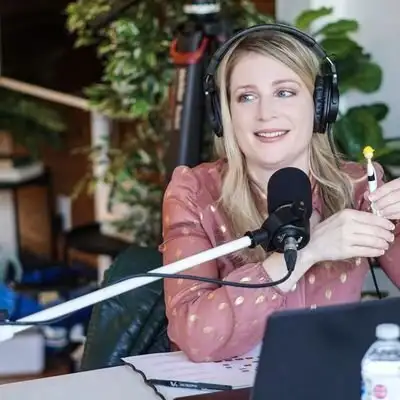
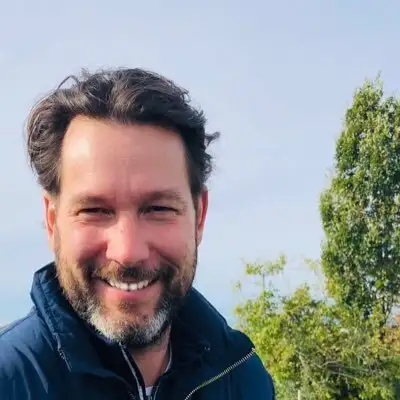
I am Neil McPhedran, founder
of HigherEdPods.com and
Podium Podcast Company.
Jennifer Lee: And I'm Jennifer
Lee, founder of JPod Creations.
Podcasting is broadcasting.
If you're podcasting in
higher ed, you're not alone.
There's a fast-growing
community out there, and we're
here to help you tap into it.
Neil McPhedran: We want to hear from you.
Later this week, I am going
to be in Leeds at EPOD.
Jennifer Lee: Yes.
Neil McPhedran: So if
you're there, let me know.
I'd love to chat with you in person.
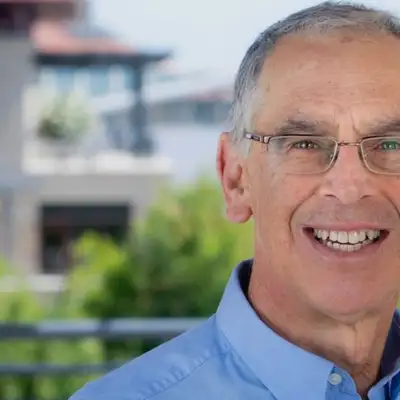
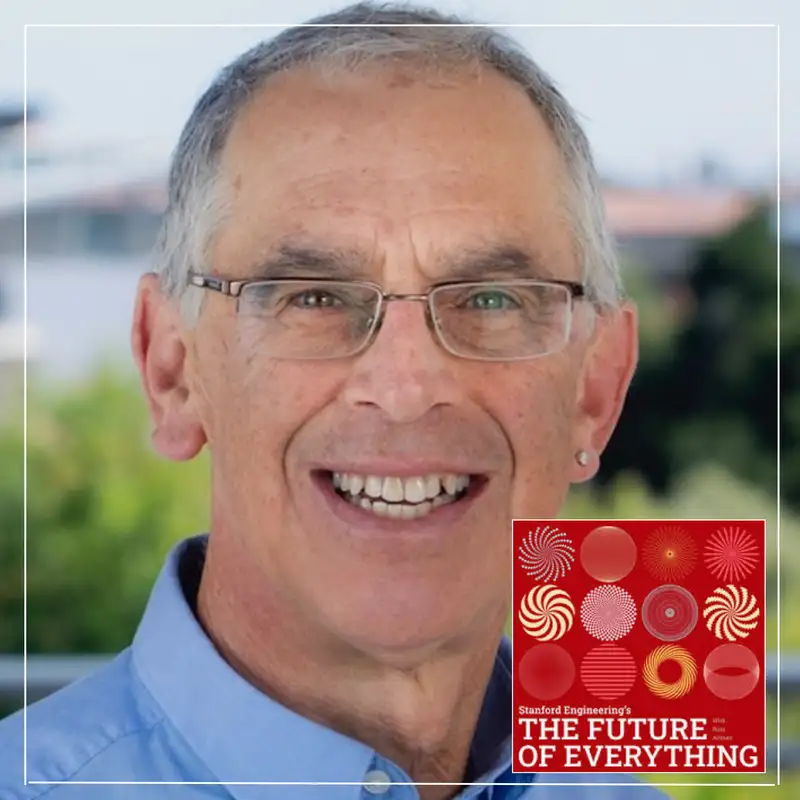
So Jen, this episode, we are chatting
with Russ Altman from Stanford.
I have been working with Russ for a
number of years with his podcast there,
so I'm super excited to have Russ on.
And Russ is the Kenneth Fong
Professor of Bioengineering, Genetics,
Medicine, Biomedical Data Science,
and by courtesy, Computer Science.
Yes, five different faculties.
And if that's not enough, he's also the
host of The Future of Everything podcast,
which has been running since 2017,
and they're at about 315 episodes now.
Quite amazing.
And so that's a weekly show, so that's
also a big chunk of Russ's time.
And I am super excited to jump into this
conversation and to get nitty-gritty
about his journey And we have some
really good inside baseball on this
one about podcasting and interviewing
other smart people from Stanford.
Let's jump into it.
Russ, so great to have you
here on the show today.
Russ Altman: Thanks for having me.
Super excited.
Neil McPhedran: So Russ, I'm quite
familiar with The Future of Everything,
but maybe for the listeners who may
not know about the show, can you
give us a quick little overview?
Russ Altman: So this is a podcast
that comes out of Stanford University.
I'm a faculty member
at Stanford University.
I'm in five departments, and they're
all kind of in medicine or engineering.
We started out as a SiriusXM
radio show for a couple years.
It was a very good relationship with
SiriusXM, but about five, six years ago
we realized this was really a podcast.
And that's when we met you, 'cause you
helped us with this transition Turns
out being a radio show and being a
podcast is not exactly the same, and
in fact, we needed to tighten things
up, and you were really helpful.
But what we do is I talk to
scholars at Stanford about how
their work is inventing the future.
The easy way to remember that is
to think about, like, scientists
who are discovering stuff or
engineers who are building stuff.
But it turns out we've branched out and
we talk to lawyers and business people.
And really, scholars are all
about discovering new knowledge.
And it turns out that most is useful
for the future, and that's where we
got the name The Future of Everything.
So far, it's been
entirely Stanford faculty.
I have a very deep bench of
highly vetted faculty colleagues.
We've thought every now and then
about going outside There's a lot
of interesting people out there.
But after 310 episodes, we're not
even close to getting through all of
the good people that I wanna talk to.
Jennifer Lee: And Russ, I'm really
glad to finally meet you and-
learn more about The Future
of Everything, because I hear
so much about it through Neil.
Besides being on radio, Has your
show switched the format, or have
you learnt a lot of different things
from when you first started to now?
Russ Altman: I had a really great kind of
Yoda-type producer at Sirius, David Hall.
He's a radio guy, and he would give me
sandwiches, little feedback sandwiches.
"You're doing great.
It's awesome." Then what he really wanted
to tell me, "You gotta stop doing this,"
do more of this." and I'm very grateful.
We came up with the idea of a 15-
minute segment and a 10-minute segment.
That was, like, 25, and when you
added the intros and the outros,
it just got to around 30 minutes,
which was a very radio-friendly time.
So our format really
hasn't changed very much.
What's changed the most is I used to give
pretty long-winded intros where I did a
lot of research, and I set up the guest,
and I gave a little tutorial about the
topic that we were gonna be discussing
so that the, uh, listeners would
understand any jargon that might come up.
And over time, he just said, "No, these
can be shorter and shorter." And now
I literally compose them with a couple
of quick jots before I do the intro,
and it's just five, six sentences.
And it used to be a page
and a half of typed text.
And so that's the big change
is that you don't really need
to do a big, long-winded intro.
You can actually do the intro by
the questions that you ask the guest
at the beginning of the interview.
So that's a much more interactive
way to get the basic information out.
Neil McPhedran: Speaking of intros,
we actually, at the beginning, we've
added a little 45-second segment from
you where you revisit the original
purpose of the show from 2017.
Russ Altman: Yeah.
Neil McPhedran: And recently there was
a feeling that you needed to go back
and address that original reasoning.
Russ Altman: Yeah.
Neil McPhedran: tell us a little bit
about that intention and why it still
exists, and it's still important today?
Russ Altman: Yeah.
So Sirius came to us around 2016,
2017, when I was extremely aware of,
like, public mistrust of science,
and that has only kind of continued
But I said, "Okay, this is not a bad time
to do something like this because if I can
get scientists just being real about what
they do, why they do it, it might take
away this kind of ivory tower, these are
just, like, elitists who are… Like, they
can't relate to people. They're working
on things that don't really matter."
And so my hypothesis was that we could
bring science to regular people and
make the case implicitly that these are
just talented people thinking hard about
hard problems that face the world and
trying to make a little bit of progress.
And so I was actually going for people who
weren't thinking about science very much.
you know that Sirius Radio
comes installed with new cars.
You get it for two or three
months, and some people renew it.
Well, one of the things I found
out is the number one car sold
that has Sirius installed is the
Ford F-150 truck, and I loved that.
And in fact, we even did some cross
promotions on Sirius with the trucking
shows, and the idea was to try to get the
guys who are driving F-150s, and some of
them I'm sure listen, but we were trying
to get more of them to listen because
we thought, "Okay, let's see if we can
hit that demographic and interest them."
And then what happened is we didn't
really have data about this, but it was
our sense from the statistics that we did
have that we weren't really hitting that
group very much, and it was the NPR crowd.
Uh, and we love the NPR crowd.
There's nothing bad to
say about the NPR crowd.
But the NPR crowd is already
interested in science and we're
grateful for their listening.
But part of putting this little header
at the top of each show is so that maybe
somebody will say, "Huh, maybe I should
give this a listen. This is not my normal
kind of thing, but maybe this guy can
make it interesting and accessible." So
I think that's still a work in progress,
but that's one of the founding goals is
to make it real and make it relatable.
Jennifer Lee: And that's the thing that
I like because I think after talking to
a lot of higher education podcasters out
there, sometimes it's really hard to make
your topic relatable to everybody because-
Russ Altman: Yeah
… Jennifer Lee: when we're experts,
we like to use a lot of high-
Russ Altman: Yeah
… Jennifer Lee: intellectual jargon, and
sometimes people don't necessarily know
what that is, or sometimes the topics,
I'm not being mean, can be very dry.
Russ Altman: You are right.
So I consider one of my main jobs as
a host is to be the jargon police.
somebody will say, "Oh, I get funding
from the NIH," I usually say, "That's
National Institutes of Health.
They fund biomedical research."
And I know that most people know
that, but not everybody knows that.
And so acronyms and jargon, and what my,
producer, David, who I talk about, he
said, "Russ, one of the things that I
like is sometimes people are talking about
their work and they're going off into
Never Never Land, and you're pretty good
on the fly at coming up with analogies."
In fact, we were just talking about this.
I was talking to a guy who did
ultra-fast electronics, and he was
talking about atoms and how they move in
materials, and it was pretty technical.
And I said, "Well, you're kind of
saying like these atoms are like
water in a river, and like there's
little eddies at the edge, but
there's the main line in the middle."
And he actually liked that analogy,
and he picked it up and worked with
it, and that was like a moment of like
nirvana, right, when I actually get the
guest to adopt my analogy of their work,
and then they start talking at this
level where everybody can understand it
'cause everybody knows what a river is.
Neil: That's great.
Jennifer Lee: Well hopefully.
russ: Yeah.
Otherwise, yeah
Neil McPhedran: You did kind of allude
to it off the top, but although a lot
of the episodes are science, and this
is from the School of Engineering-
Russ Altman: Yeah
… Neil McPhedran: and you're from a number
of other STEM faculties, but you do
open up that aperture wider, correct?
Russ Altman: Yeah, and I love that
We had a former president of Estonia
on, and that was a real kind of,
whoa, He was visiting Stanford as
a visiting faculty, and we were
actually talking about cybersecurity.
And I said to him, "Well, I know
you were the former president of
Estonia, but like why are you a
cybersecurity expert?" And he said,
"Russ, have you ever looked at a map?
Estonia shares hundreds of miles
of border with Russia." And he
said, "And they are constantly
trying to hack into our systems.
So if you're president, you're
an expert on cybersecurity."
And it was very relatable, and then
we just talked about cybersecurity.
But then sometimes we just talk about
things that have nothing to do with
science, and I actually love those.
And it's possible that I'm better at
those because I know less, and so the
chances, just as you were saying, of
me falling into jargon and not even
realizing that we're talking shop and
it's not really accessible, that's much
less likely in an area where I'm clueless.
So I do feel comfortable
in those clueless areas.
Mm. And one of my nice, I think a
nice- personality feature is I'm
not too worried about my dignity.
So if I come across as clueless
in an area, I'm fine with that.
Like, I'm fine to look clueless.
Jennifer Lee: I like that.
I also like the fact that, like you
were saying, you kind of do other
topics that are not necessarily
science related, like your latest
one, the future of influencers.
And I just find that topic fascinating
anyways because some of the things
you guys mentioned that people don't
want to be doctors or astronauts,
they want to be influencers.
And it brought me back to when I
was working, I worked in radio in a
helicopter, and we had a pilot and he
was from England, and he had already
had a career as a famous rock climber.
But he would go around the UK on career
day and talk to the students, and he
would say What do people want to do?
And he said every classroom, the whole
classroom wanted to be influencers.
And he's like, "It's kind of scary,"
because he said, "I don't think
they realize that they all can
be that." So I thought that this
topic was really relatable to me
and probably a lot of other people.
Russ Altman: Yeah, I loved that.
It was super interesting to hear, like,
what the dynamics are, where that comes
from, what the chances of success are
if you actually make a run at that.
The first time I ever had anybody tell
me they wanted to be an influencer
was, I was actually in Cuba.
It was during a short period of
time when Americans go to Cuba.
Jennifer Lee: Oh, that
was a very short time.
Russ Altman: And I'm hanging out with
a family that was kind of hosting us
for dinner, and I'm talking to their
11-year-old boy who can't get internet,
so he would get DVDs- … of the internet.
And he would load them up, and He would
listen to the podcasts late, 'cause he
would get just hundreds of, of megabytes
on DVDs that were, like, basically pirated
out of the US and pirated into Cuba,
uh, because Cuba had very strict rules.
Anyway, this 11-year-old in Cuba
says, "I wanna be an influencer."
I almost fell off my chair.
Yeah,
Neil McPhedran: You just said
that you find the topics where
it's not your field of expertise
actually an easier way to interview.
Russ Altman: Yeah.
Neil McPhedran: I bet you there's lots
of academics that are the opposite.
They would feel quite uncomfortable with
prepping for an interview where they're
not deeply knowledgeable about the topic.
Do you think that it's your general
curiosity that's given you that comfort?
Or is it just the fact that you've been
doing this for 300-plus episodes and
you've kind of got your head around it?
Russ Altman: Okay, so it's multifactorial.
Neil McPhedran: Hm.
Russ Altman: I have three kids, and I
have one of my kids who is a little bit
more like me, and she likes to make people
laugh, and when she was a little girl.
I said, "You know, you're like me. You
don't really worry about your dignity."
And she said, "What's dignity?" And I
said, "Well, let me give you an example.
If you're at school and you think
of something funny to say that would
make you look a little bit stupid, but
it would be really funny, would you
say it?" And she said, "Absolutely."
I said, "Me too." I said, "Your
sister and your brother wouldn't do
that, and your mom wouldn't do that.
And it's because you and I are
willing to trade off our dignity
for, like, entertainment value." And
so that's part of my personality.
The other thing is I've been on the
faculty at Stanford for, like, 34
years, so I have much less to lose.
And in a funny way, if people
wanna judge what I know and what
I don't know, I don't really care.
You can imagine that as a young person
you're a little bit less secure- for
understandable reasons, because your,
your peers are judging you, your
supervisors are… I mean, people
might be judging me, but I don't care.
It's fine.
And so there's a certain comfort in
your own shoes that, that I, that
I have just because of where I am.
The other thing is that I know I'm
a pretty good teacher, and I know
that struggling with material with
other people is a great way to learn.
So I know that if I'm not on top of
that topic, I'm probably gonna ask
more basic questions, which will
allow the guest to bring me along, and
that'll probably bring the guest along.
So it's almost like a superpower that this
kind of naive, I don't know a thing about
this, leads to asking basic questions.
And then the questions, of
course, get more complicated.
That's just what one of the
listeners might do if they were
in control of the interaction.
And so, I think it's all of these
things together combine to make it
hopefully pretty relatable and kind
of not losing too many people as
we go through the logic of what is
sometimes extremely technical stuff.
Jennifer Lee: Well, that's why I think
you're also very approachable as well,
and your guests like to talk to you
because sometimes I find in intellectuals
and professors we kind of hold them
up really high, and some people get
really nervous around those type- Yeah
of people being like, "He's got this
huge successful show, but I don't
know, like, why is he interviewing me?"
Russ Altman: Yeah.
Jennifer Lee: So I think that's
why a lot of people feel really
comfortable, and you're able to
lead them through that story.
Russ Altman: Yeah.
Thanks for saying that,
and I, I try to do that.
I have had people who come on, you can
tell from their emails before the show
that they're super nervous, right?
You can just tell.
And so I have this rule, and
it's mostly 'cause I'm lazy,
no contact with the guest.
partly 'cause I do not want them to
say awesome stuff to me that we're
not capturing on the camera, right?
Because that means we're already into
the relationship, and the, the guest
and the listeners are not hearing it.
So and that really bugs some of
them 'cause they'll say, "Russ,
I really wanna get together.
I wanna go over what we're gonna
talk about." And I say, "I love you.
We're not doing that.
We're gonna have a journey
of discovery together.
You can talk to my producer all you want.
Send me all the notes.
He'll tell me the things you wanna
be in bounds and out of bounds,
like, all that stuff is fine,
but I'm not gonna talk to you"
Jennifer Lee: I love that rule.
Can I just say that?
Because this is my biggest pet
peeve in podcasting, and I know
we do it as well, and Neil listens
to me harp on this all the time.
But I, in radio, you never got to do,
like, I used to interview rock stars
and people of note and stuff like that.
Russ Altman: Oh, oh.
Jennifer Lee: You don't do a
pre-interview, and then two, it's
live, so you don't even have a
chance- Right … of editing it.
Russ Altman: Right.
Jennifer Lee: And then three, I hate
this idea that everybody asks for
questions before they get on the podcast.
I'm like- Yeah … "I'm not
giving you my questions." That's
Russ Altman: a hard no.
Jennifer Lee: Hard no.
Russ Altman: That's a hard no.
Love that, and I didn't know that
about radio and that experience, but
that's exactly what my instinct is.
And it was because of what I just said.
I don't want them to say awesome
stuff that we miss, right?
And I definitely don't want to be,
like, on the air saying, "Hey, before
this, you told me this one thing. Could
you tell me again in the same way?"
Jennifer Lee: Ugh.
Russ Altman: "Because it was
really cool." Absolutely not.
And so I tell them, I don't even
tell them the first question.
I tell them for that first segment, right
,before I press record, I tell them,
"Here's how it's gonna go. I have my first
question figured out. I'm gonna ask you
that, and then we're gonna have 15 minutes
that are gonna be totally organic." I
have no idea what's gonna come next.
It depends on what you say, and then
what I'm thinking, and then what you're
thinking, and it goes really well.
But just because some people, you know,
they just have different expectations
and they wanna talk about what questions
are in bounds with me, or they wanna
say, "Here is a curated script for how it
could go," and I just will not do that,
especially for that first segment, what
I call the organic first 15 minutes.
Jennifer Lee: No, because sometimes
you can have duds too when you
give them the questions advance
and they get even more nervous.
And then I remember one time when I
was interviewing someone on a podcast,
because again, you can't do this in radio.
Right.
Someone was, like, following verbatim,
and they, no joke, they were like, "Well,
you didn't ask me the next question."
And that drives me psycho.
Russ Altman: Right.
Right.
Jennifer Lee: And it's, I didn't ask
you the, that question 'cause I'm
a good interviewer and I'm piecing-
Yeah … it together in my mind.
Neil McPhedran: This is, this is
why Jenn and I work well together.
We've, so we've been doing this for
three years, uh, and this is why we
work well together, 'cause I like to
sort of meet the person ahead of time.
Jenn refuses to, so I
do the reconnaissance.
Jennifer Lee: I still do.
Neil McPhedran: I do, I
do the reconnaissance.
Russ Altman: But Neil, but Neil, we, we
didn't, I literally looked at my calendar
this morning and said, "I have no effing
idea what Neil wants to talk to me
about." So I'm gonna give you full credit.
Maybe you withheld your, your urges,
but I loved the prep for this- You know-
because it was zero
…
Neil McPhedran: we've talked to our
audience about this before, Russ, but
we've got a Google Docs, and Jenn's
in it, and I'm in it, and Kylie is
in it right now, who's our producer.
Russ Altman: Yeah.
Neil McPhedran: And we write notes
and we talk to each other in it.
I've outlined all these questions
I wanna ask you, and Jenn
typically does not follow it.
Uh-
Russ Altman: Boom.
Boom
…
Neil McPhedran: but it's great because
I just sort of keep us moving into
the direction of covering the things
we wanna cover, and Jenn always comes
in with these great other things.
Russ Altman: Let me tell you one
little story, which you may know.
But so I do prep, obviously.
the day before, I Google
stalk, basically, my guest.
I do write down, like, a bunch
of questions that I could ask.
It's not scripted.
They're not even in order.
this is always done in
longhand on a piece of paper.
On the far left, I have what I call
my emergency topics, and this is for
you get a guest who actually answers
questions, like, with, like, three words
and then you actually go through all
your normal questions and you still
have 10 minutes left in the interview
and you've used all your questions up.
So I always have like 20 emergency topics.
These are usually papers they wrote
like 10 years ago on interesting topics,
but they let me go into the discussion
knowing that there's no way we're gonna
run out of stuff to talk about because
I could always say, "Hey, in 2015 you
wrote a paper about how like peanuts
can be used as projectiles or whatever."
And then I know that we can
have a conversation about that.
So it's my emergency topics so I don't
get nervous about running out of material.
Jennifer Lee: And that's great.
I always tell people too, like,
it's not that I'm not prepped.
You need questions and
you need to be prepped.
It's a fine balance.
And that's the thing is it's
like even when I worked in radio
before, everybody's prepped.
Even the top podcasters are
prepped, but it's how you're able
to take that information and make
it sound like you're not prepped.
Jen: sorry, Russ got me started
on all my big pet peeves, but my
Russ Altman: Go for it,
for for it, talk to me.
Jennifer Lee: Other big pet peeve
is when people are like, "I don't
need to prep for my podcast, I
just wanna feel cool and loose.
I want it sound like off the cuff."
And I said, "You're not gonna sound
off the cuff if you don't know what
the hell you're talking about."
Russ Altman: Yeah.
it's so true.
that one hour that I spent trying to get
into the brain of the guest, that pays off
with spontaneous questions the next day.
Neil McPhedran: That's great.
That's good.
Okay.
So we just did this technique, which
I've actually borrowed from you, Russ.
Jennifer Lee: Or stole.
Russ Altman: Oh, yeah.
Neil McPhedran: I sat, I sat… Our
regular producer was on spring break,
and so I sat in on the background to help
you with one of your interviews recently,
and you do this mid-interview break.
You actually are quite ardent about
your time and at the 20-minute mark
or as close to it, you basically duck
out, still rolling, but you duck out
of the conversation interview and talk
about the next 10 minutes essentially.
So maybe just tell us a little bit
about where that originated from.
You're still doing it
after all these years, so-
Russ Altman: Yeah
…
Neil McPhedran: it must
be a really useful tool.
Russ Altman: So I think the best way to
do this is to tell you, I give a speech
to the guest almost before we go on air.
Let me just give that speech.
Neil McPhedran: Oh, please.
Russ Altman: Thank you so
much for being on the call.
We're gonna do this in two segments.
The first segment is a 15-minute segment.
I have the first question picked out,
and then we are gonna be organic.
Wherever we go, we go.
It's all good.
Then we're gonna take a break.
It's gonna be two to three-minute break.
And what I'm gonna do is I'm gonna
ask you what you wanna talk about.
And because you might think back on
that 15 minutes and say, "You know what?
It was a great conversation, but I have
all this stuff that I wanna say about
my work or my life or the choices I've
made or whatever, and you didn't ask
me about any of that, you know?" and
so at this point during that break,
you can say, "Russ, please ask me
about this and this and this because
that's what I wanted to talk about."
So it gives me a little contract with
them at the very beginning that if there's
stuff that they wanna get to, they will
have a chance to tell me to… And it's
their first chance because I wouldn't
talk to them before the interview.
And then what I don't tell them is
the second reason to do this is that
in one of my very early episodes,
we had this woman who was great.
She was in cybersecurity, another
cybersecurity person, and it was about
North Korea and China and Iran and
Russia, but it was all doom and gloom.
And my producer took me aside and said,
"Russ, this is great, but like you
can't end on doom and gloom. If you do
that too often, people are gonna say,
'Whenever I listen to Altman's podcast,
I'm like depressed,' and they just won't
tune in because you're too depressing.
So I want you to end on a positive."
And so I said to her, I said, "Amy,
this is going great, but like, you
know, this is very much of a downer.
Do you have something positive?" And
she looks at me and she says, "Russ, I
got nothing but doom and gloom." And I
said, "Well, there must be something."
She said, "How about I give people
three things that they can do to protect
their own personal cybersecurity?"
I said, "That's perfect." And it
was, and she gave it to us and we
were laughing about it, and we ended
this cybersecurity on a positive.
But the point is, without being
Pollyanna-ish, you would like to
end on a positive if you can, right?
Sometimes it's just not gonna happen.
So I, I sometimes don't even say
this to the guest, but I try to
order those topics so that the last
topic is gonna give hope, right?
It's gonna be, what's
the future look like?
What are you really excited about?
And that is helpful 'cause it makes
sure to some extent that we're always
ending the podcast on a hopeful note,
and so people don't say, "I'm not tuning
into this. This guy just depresses me
all the time." So those are the two
reasons, to deliver on the contract,
to actually let the person talk about
what they wanted to talk about in the
first place, and to make sure that
I can engineer a positive ending.
Neil McPhedran: I also find
it it keeps your time tighter.
I think Jenn and I have had sometimes
we come out of, we'll get into these
conversations and why I thought it was
good is 'cause we sometimes get into
conversations and like we're 45 minutes
in, and we've just kind of, we didn't
spin our wheels when we were talking.
It was all good stuff.
But at the end of the day, we
really want this show to be 25
minutes to 30 minutes at the most.
Russ Altman: Right, and you've just
created yourself a big editing challenge.
Jennifer Lee: Yeah,
Neil McPhedran: that's right.
Jennifer Lee: It refocuses your intention
and that's why I like it because it
does go back to kind of a radio-esque
style because that's what we did in
radio is that you would need to know,
and now it's funny because podcasts are
a lot longer, but I remember thinking
like, "How do I put information in a
one-minute break, in a 30-second break?"
And you had to have that in.
So I like the way that helps
to- That's a great point to tell
us … yeah And it keeps you more
concise, but I want to know some dirt.
Have you ever had a guest where you do
the first part and they're like … And
you're like, "What did you want to
talk about?" And then you talk about
it and you're like, "Ugh, I didn't
like that," and you just edit it out?
Russ Altman: No.
I must say that we only do very
light ed- We have only taken out
sentences that somebody said, like
once or twice in 310 episodes.
There you go.
It's, I mean, I make a joke and it,
it, and you know, it probably limits
the quality of the podcast, but
we're pretty much one-take wonders.
Like, it's very … I, I don't want
to diminish what the editors do, but
they're not taking out bit segments.
make sure-
Jennifer Lee: They're doing
other things that are important
…
Russ Altman: I make sure that we're within
two, three minutes of our target on both
segments, and since the podcast, who
the hell cares if it's 25 or 31 minutes,
but we never have gone 35 or 40 minutes.
Neil McPhedran: I, I think that's
great, and I think actually it speaks
to one of the bigger origins of
it, which is a direct voice to the
researcher, to the academic, to the
scholar, and you're not censoring.
I think that's what I love about this,
and I think what's so great about The
Future of Everything is it's this direct
voice from Stanford, from the researchers,
from the people, there's no censoring,
there's no mincing or anything like that.
It, this is really what's happening.
If you want to hear really what's
happening with this certain field
and in this research, break through
the rhetoric, this is the show.
Russ Altman: Thank you for saying that,
and no one has precisely said it like that
to me before, but you're absolutely right.
Any kind of taking sentences out or
rearranging paragraphs, any scholar
paying careful attention to that
edit would be infuriated, would
probably call me up and say, "WTF?"
Or some version of that.
And it could wreck the show.
It could, it could get the word
out that Altman is going to
engineer what you say to his
sensibility, and that could be death.
Neil McPhedran: That's great.
Can we jump to, I just want to, I want
to jump to video a bit, because The
Future of Everything, It's been video
the whole time I've been working on it.
and in the last year we've really
started to lean into short form.
And we've gone from really this focus
of just the long form- video version,
Russ Altman: Yeah.
Neil McPhedran: And we talk about it
a lot in our monthly larger meeting.
Because you have some thoughts on
this, and you've come to the table-
Russ Altman: Yeah
Neil McPhedran: with a
lot of really cool ideas.
I'd love to hear your insight on how
shorts and the shorter form component-
Russ Altman: Right
…
Neil McPhedran: has really
started to add to the whole.
Russ Altman: Now I remember you had asked
us about YouTube, and for whatever reason,
somebody who wasn't me thought it was a
good idea to start recording these, and
I think it is a good idea, 'cause as you
know, YouTube has become a major thing.
And now I have, if not 300, probably more
than 50, taped interviews with video.
So the shorts, it was very organic.
I noticed in my own viewing of YouTube
that there were these shorts, and so
I came to you and the team and said,
"Should we be doing shorts?" I mean,
I do know that we have statistics
about listeners, and even though
they should listen to every single
fricking word I say, they don't.
They get off after, you know,
whatever, 63% I think it was last week.
Then I said, "You know, and I
know that whether I like it or
not, people's attention span is
getting shorter and shorter."
And so we started doing shorts
from the episodes where we just
trusted our producer to find some
spicy moments and throw them up.
Then we actually made it a little
bit more complicated and we
added a new thing, which I love.
It's called The Future in a Minute.
So remember, the name of the
podcast is The Future of Everything.
Now we have this segment where at
the end of the interview I ask rapid
fire five questions, and I ask the
guest to give me five short answers.
And to be honest, the reason we did
that was we thought this might give
us nice sound bites that would be
very compatible with the shorts.
And as you know, because you present
this data to us, uh, every month, these
are now getting, you know, 2X or 3X
the watches than the actual episode.
And like it's not my first choice.
I want everybody to sit down and
listen to the whole damn episode,
but I get it and I'll take it.
I'll take it as a way for people to get
a little spicy moment from the episode.
Maybe they'll follow it and
listen to the whole thing.
But even if they don't, maybe
it gives them an impression of
scholarship at Stanford that is
still positive and interesting.
So I'm fine with it, and
more than that, I love it.
Neil McPhedran: I guess we've talked
about this a bit, Jen, on the show,
but I've really come around in the
last year on that short form component.
Formerly, I thought a discovery
mechanism to drive to the long form.
But to your point, Russ, there's an
audience that is in the short form,
and if at the end of the day we can
double, triple the reach of the show-
Russ Altman: Right, right
…
Neil McPhedran: through the short form
piece of content, and we're still doing
what the higher intention of the show is,
and we're reaching those people through
that short form, then that's also a win.
And we're starting to look- Exactly
… at the combination of those two.
So for YouTube Analytics, we're actually
starting to look at the long form and
the short form together, and looking
at the totality of those two things
together, even though they're two
different algorithms and potentially
two different audiences, there's still
the holistic nature of the two together
that I think is super important.
Russ Altman: I agree.
And so there was a short period of
time where I was thinking of as purely
a leader into the longer episodes,
and now I realize it is a different
experience which also has value,
and I shouldn't deprecate it as a
second class product of this effort.
It's a first class product, it's
just the one that came second.
Neil McPhedran: Good way to put it.
Jennifer Lee: I just feel like we
could talk to Russ the whole time.
Like- I know.
Let's do it.
Let's do it … I just sort
of nerd out and chat with him.
Russ Altman: It can, it could
be like The Lord of the Rings.
We could have a troika.
Neil McPhedran: There you go.
I love it.
I just have one thing I'd love to ask
from you just before we, go, 'cause
there's been such good stuff here.
Jennifer Lee: You're
sticking to your notes
Neil McPhedran: That's right.
Maybe just sort of any pieces
of advice, like eight years now
russ: Yeah.
We're putting up some big numbers.
Neil McPhedran: we just crossed
a million plays actually on the
show, which is quite incredible
Russ Altman: I would say a couple things.
I would say it's a lot
like putting up a website.
Putting up the website is not hard.
Maintaining the website is hard.
So everybody has a few podcasts in them,
Anybody you meet on the street could
probably entertain us for a few podcasts.
But then doing the grind of having
a plan for how you're gonna do
this in the long term, that is
hard, and that leads to the second.
So the first thing is it's
a marathon, not a sprint.
Mm. That is the first piece of advice.
And the second one is, I know one
of my best friends has a solo.
He tapes it, he edits it, he puts it out.
It's pretty successful.
But guess what?
He's retired, so he has like
infinite time to do this.
In general, especially if you're
a professor type, you wanna have
some communications professionals.
I surround myself with people
like you, Neil, and the folks from
the School of Engineering Comms.
They know what they're talking about.
They can do communications in their sleep.
How many times they've prevented me from
stepping in- Bad stuff, can't even count.
And it makes it way more fun because
they come with a totally different
professional view of what we're
doing and how it can be done.
And so I would say be very careful about
trying to do this as a solo operation.
This really takes a village, and it's
more fun as a village, and you'll
be able to have that momentum to run
the marathon and not just do seven
great episodes and then say, "I can't
do this anymore. It's killing me."
Jennifer Lee: I always say too, be
passionate about what you're talking
about, which you are, and then
it's not gonna feel like a slog.
Russ Altman: Yeah.
Yeah.
And also know why you're doing it.
Jennifer Lee: Yep.
Russ Altman: One of the great gifts
that I have, is that I am at the same
university as Andrew Huberman , you
may have heard of him, right?
So right away from day one, there
was Andrew Huberman and that there
was me, and that I was never gonna
be Andrew for a million reasons.
I don't really wanna be Andrew Huberman.
It's really important to know why you're
doing this, to stick with your mission,
and to understand what success looks like.
So for example, we don't really
chase topics that are very sexy
that will get us more listeners.
But guess what?
There's Stanford faculty doing
excellent work in unsexy areas.
Neil McPhedran: Yeah.
Russ Altman: And I want
them to be on the show too.
And if I don't get a zillion hits from
that show, that's fine because the corpus
is a very good representation of what's
happening in academics in 2017 to 2026.
Neil McPhedran: I think that's a
really good way to put a cherry
on top of this conversation.
I really enjoyed it.
Thanks so much for joining us
here today on another episode.
Russ Altman: Thank you.
It was super fun.
You guys are great.
Thanks for having me.
Jennifer Lee: We'll have to have you back.
Russ Altman: You said it.
Neil McPhedran: Well, Jenn,
another awesome episode.
Obviously, I've had the fortune to work
with Russ for the last four years, maybe
a little bit more than that actually now.
And I get to work with him remotely
on an ongoing basis, and see him
a couple times a year in person
when I make trips down to Stanford.
And Russ is just an amazing
guy, and I really appreciate
everything that he shared with us.
He really does believe what he said,
shedding light on his colleagues across
Stanford, giving them a voice and an
opportunity to share their research
and sort of the meaning behind it.
Jennifer Lee: Yeah.
He's just such an accomplished guy,
which I feel like if you were to meet
him or think of him beforehand, you
might be intimidated, and I vibed with
him so well because obviously- … like
broadcaster, but he also agreed with
a lot of things that I had to say.
I felt heard.
I liked it.
Not
Neil McPhedran: that- You felt
heard, especially on the refusing
to meet with the guest beforehand.
He is quite ardent about
that, so I think that's good.
Jennifer Lee: If I wanna clarify
things, when we meet with guests
beforehand, I love doing it too.
Neil McPhedran: And, and, and in fairness,
he did talk about the larger team.
It's not like someone on the
team hasn't talked to the guest.
There is multiple outreaches from folks
on the team ahead of time to sort of help
line things up and to make sure that, you
know, they've thought through the pack
and, and answered questions ahead of time.
But I do think there's something really
special about that, but there's something
special about hopping on the interview
and just getting into those questions
that are in the moment, fresh and
new, without sort of all the prep and
everything sort of in the background.
So I do agree with you about that, Jenn.
I'm still going to do pre-interviews,
and I'm still gonna line up questions
for every one of our interviews.
Jennifer Lee: There you go.
I'm happy with that.
That's
Neil McPhedran: why we work
so well together, Jenn.
We're a good pair.
So what?
There you go.
Why don't you read us out, Jenn?
Jennifer Lee: Thank you.
For tuning in to the Continuing
Studies Podcast, a podcast for
higher education podcasters.
We hope you found this episode
informative and inspiring.
If you enjoyed the show, we encourage
you to follow and subscribe to our
podcast on your preferred platform,
so you'll never miss an episode.
But if you found this episode
particularly valuable, please consider
sharing it with your friends and
colleagues who also might be interested
in higher education podcasts.
We also invite you to join your
peers on HigherEdPods.com, where you
can connect with other podcasters
in the higher education space and
learn from others in the field.
Thank you for being part of our community.
We look forward to continuing to bring
you valuable insights and conversations
around higher education podcasts.
See you in the next episode.
Creators and Guests