Using Academic Research to Make Sense of the News Cycle
Gemma Ware: There's so much knowledge
locked up inside researchers' minds
and behind journal paywalls that
doesn't get out there into the world,
and we want to get it out there in
as an accessible way as possible.
Our tagline on The Conversation is
academic rigor, journalistic flair.
So it really does actually
marry those two things together.
We're trying to get that knowledge out
there to as many people as possible,
and we don't care what kind of knowledge
it is, we think academic research is
fascinating in all of its shapes and
sizes and disciplines and everything.
So yeah, we wanna get more
people understanding what
expertise says about the world.
Neil McPhedran: Welcome to Continuing
Studies, a podcast for higher
education podcasters who want to
learn, connect, and get inspired.
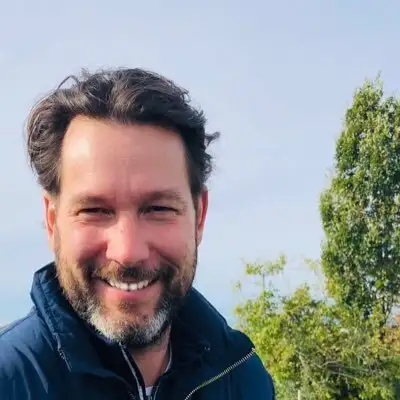
I'm Neil McPhedran, founder
of Higheredpods.com and
Podium Podcast Company.
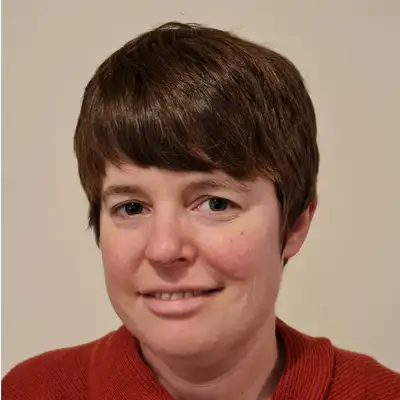
Jennifer-Lee: And I'm Jennifer Lee
Gunson, founder of JPod Creations.
Podcasting is broadcasting.
If you're podcasting in
higher ed, you're not alone.
There's a fast growing
community out there, and we're
here to help you tap into it.
Neil McPhedran: We are, Jen.
Speaking of community, we've talked
about this on the last couple of
episodes, but where's Jen and Neil?
We are going to be coming to you-
Jennifer-Lee: The UK!
Neil McPhedran: At some conferences.
Jennifer-Lee: Yes.
Neil McPhedran: Jen, you're gonna
be in London for the podcast show.
Do I have the name right?
Jennifer-Lee: Yeah.
Neil McPhedran: Or did I
just get the name wrong?
Jennifer-Lee: It's just called
the London Podcast Show, or,
as the cool kids call it, LPS.
And I'm going to hopefully find a lot
of our UK friends and meet up with them,
the people that we've been talking to in
the last few years on continuing studies.
Neil McPhedran: LPS, that's great.
And that's in May.
And then in June, I'm at EPOD,
That's in Leeds, in late June.
And then in July, we're together at
Higher Ed- Yeah ... PodCon in Cleveland,
and we are recording there, so reach
out to Jen and reach out to me.
Our contact details are in the show notes.
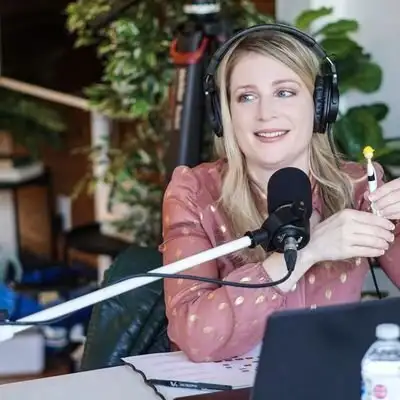
So Jen, today we are
chatting with Gemma Ware.
She is head of audio at The Conversation
UK, and host and co-producer of
The Conversation Weekly, which
is a show that brings academic
expertise into the news cycle through
narrative-produced audio stories.
Jennifer-Lee: And you know what?
I have to say, I'm really loving...
Like, when we first started, there was
a lot of people from North America,
which is great, but now we're starting
to see so many others around the
world, specifically coming from the UK.
We've been interviewing so many people
in the UK, so it's really neat to get
a taste of what's going on over there
and just seeing that higher education
podcasting is just, like, booming there.
Neil McPhedran: I totally agree, Jen,
and we even had the... with a listener
from Ireland who was on a big commute
and put a note on his LinkedIn about
a couple of episodes he'd listened to.
So we love to hear that.
It, it-
Jennifer-Lee: I didn't
even know about that.
Neil McPhedran: Yeah.
There you go.
Jennifer-Lee: We're famous in Ireland.
Neil McPhedran: Excellent.
So this is a great
conversation we had with Gemma.
Why don't we just get into this, Jen?
Welcome Gemma it's so great
to have you here on this
episode of Continuing Studies.
Gemma Ware: Thanks for having me.
It's great to be here.
Neil McPhedran: Well, The Conversation
sits in a very unique space
between academia and journalism.
So how would you describe
The Conversation?
Gemma Ware: I always like this phrase,
which I think we use in some of our
materials, which is democratizing
knowledge, which sounds a little
bit lofty, but I quite like that.
I feel like it's what I hope to do.
There's so much knowledge locked up inside
researchers' minds and behind journal
paywalls that doesn't get out there into
the world, and we want to get it out
there in as an accessible way as possible.
Our tagline on The Conversation is
academic rigor, journalistic flair.
So it really does actually
marry those two things together.
We work with academics, and I
say we, we are journalists, so
everyone who works as an editor at
The Conversation is a journalist.
We're trying to get that knowledge out
there to as many people as possible,
and we don't care what kind of knowledge
it is, we think academic research is
fascinating in all of its shapes and
sizes and disciplines and everything.
So yeah, we wanna get more
people understanding what
expertise says about the world.
Jennifer-Lee: I love that you said
journalistic, 'cause that's great that
so many people can jump on the mic, and
now anybody can do it, which is awesome.
But there's a lot of
misinformation out there as well.
When you come to higher education
podcasts, it's nice that people are
actually experts in their field or have
actual journalism backgrounds when it
comes to speaking information correctly.
Gemma Ware: And if you think about the
way The Conversation as a platform, as
a website works, if you go on the site
right now, everything you see will be
edited by an editor who's a journalist,
but it will be written by an academic.
So we put expertise,
like, front and center.
That's what we wanna do, and
we fight that misinformation.
We want to hear from the people who
know the most, who've spent their
whole life studying a subject.
So yeah, we really value that.
Neil McPhedran: What struck me when
you were giving us the explanation
of The Conversation was, how much
is locked away behind paywalls in
journals, Essentially, you guys
have been kind of, like, unlocking
that and giving the direct access.
But, how much shaping, editing happens
between that academic's expertise
and then what ultimately ends up
on the website or on your podcast?
Gemma Ware: Yeah, I will answer that,
but I just wanted to go back to that
point you made about the journals,
'cause obviously there is a big movement
for open access, and that's great.
Neil McPhedran: Yeah.
Gemma Ware: And even since I started
working at The Conversation more
than a decade ago, that's changed.
In terms of how it happens, there is
shaping, and that shaping is really
just done from a perspective of the
journalist saying, "I think if you
said this in this way, or you wrote
this in this way, it would just be
easier for somebody to understand it."
So, we commission articles, and
we ask academics to really think
about that audience as being just
a member of the general public.
And so then we help them structure what
they wanna say and what they wanna write
so that it is just a bit more accessible.
So there is quite a lot of editing
that goes on on the articles.
Really depends on what that article
is and who the writer is and if
they've written before or if English
perhaps isn't their first language.
But we do also have 10 editions
in 14 countries, so we have got
non-English language editions and
people writing from all over the world.
So it's happening all over the place.
And I just, I think it's fantastic
that it's growing as a platform.
Jennifer-Lee: Yeah,
it's just so important.
I really like the fact that
The Conversation is growing.
And you do a lot of work.
Can you explain to us a little
bit about your role and your team?
Gemma Ware: So I work in London.
I've been at The Conversation
for a decade, but we started
making podcasts in 2016, and my
role's really evolved since then.
It was kind of a side project that me
and a colleague called Annabel Bly,
who loved podcasts as much as me, we
were like, "We should make podcasts."
And we did that, and we launched a
podcast called The Anthill back in 2016.
It was trying to actually get at that
concept you were just talking about, this
idea that there's just, you know, you see
the surface of the knowledge of academics,
but underneath there's just so much hidden
in the ivory tower, as you might call it.
We changed the name eventually.
At the beginning it was a monthly show,
and we, we loved This American Life, so
we would take a theme and then we'd, like,
talk to academics in kind of three or
four stories each month around a theme.
And it was really fun, and we talked to
a whole bunch of different academics.
But it was a lot of work.
And monthly, I think it's quite
a difficult ... What's the word?
Periodicity for podcasts.
. It can be difficult to gain traction,
it's never your full-time job if
you're doing a monthly podcast,
but it takes loads of time.
But also you don't really get through,
You're not there on, on people's
feeds every week or every day.
. So we decided to shift to series here at
The Conversation at UK in around 2019.
And we decided, we thought that limited
series, you know, where you really focus
in on a topic and you can work with
a co-host, with different co-hosts.
So then we moved into that, and
we did that for a few years.
And then around during the pandemic,
2021, is when we decided to launch a
weekly podcast, which is what I now
host, called The Conversation Weekly.
Neil McPhedran: That's great.
I agree with you.
That monthly cadence is tough.
Two points.
One, it's not your full-time job, but it's
still a lot of work to produce something,
so you kind of end up off the side of
your desk when it's less of a focus.
But you're right about the audience.
You know, for three weeks there's
crickets in the platforms.
It's tougher to kind of get that audience.
But a weekly, where you got a regular
cadence, your show drops on the same
day every week, we talk to shows we
work with about the importance of
that, and obviously you saw that.
So, obviously our audience are other
podcasters, so we're gonna kind of get a
little nerdy here maybe about podcasting.
So it's not just you, you have
co-editors, you've got co-contributors,
and then obviously you're the host, so
you're not doing everything yourself.
Tell us a little bit about your team
and sort of how do you split it up?
Gemma Ware: For the weekly podcast,
which is kind of our main one right
now, it's gone through different
iterations since it started.
And I'd say that a lot
of podcasts do that.
They start in one way and then they move.
Neil McPhedran: Yeah.
Gemma Ware: And that's just because
I, I started off with a co-host called
Dan Marino, who lived in San Francisco.
Not the football guy.
He was one of the science editors at
The Conversation US at the time, and
the two of us started the show together.
We were co-hosts.
And it was tricky because eight
hours is a big time difference
Neil McPhedran: Yeah
Gemma Ware: to work through.
Jennifer-Lee: We're on
eight hours right now.
Gemma Ware: We are on
eight hours right now.
And so we would only be able
to talk at the end of my day
and very early in his day.
But we made it work, and it, it was great.
And then he left, actually.
He's gone to do a PhD in space policy.
But yeah, so we then decided, okay,
we're gonna change it up a bit.
But throughout that period, we've had kind
of a main producer who's worked with us.
He's lived in different
places since we started.
His name's Mend Mariwany.
He's currently living in Colombia.
So everyone is a freelancer who works
for us, and we have another freelancer
called Katie who lives in Florida.
We have a sound designer who works
for us from Australia as well.
So the team is very global.
So we talk a lot on Slack.
Neil McPhedran: Yeah.
Gemma Ware: If people who
are listening know Slack.
It really helps us with a big team.
Neil McPhedran: I love
that about podcasting.
Obviously, we're recording remotely, even
though Jen and I are in the same city.
We, we almost never record in the same
place, but that's just the nature of it.
And you're in the UK, and Kylé, our
producer, is here, but again, across town.
And that's the beauty of it.
You can pull together a team, and
they don't have to all be right there
Gemma Ware: I think
that's, that's true, yeah
Jennifer-Lee: Again, you can find
the expertise that is needed.
Like, I work with someone in
England a lot for my company,
and she is very knowledgeable.
And that's the nice thing about this.
You're not limited unto
who you can work with.
Gemma Ware: Yeah.
And it kind of parallels
what happens in academia.
People work across countries a lot- Yeah
Neil McPhedran: Yeah Very much so.
Jennifer-Lee: Your episodes,
they're really great and
they're produced really well.
Can you walk us through, like,
how you structure an episode?
Like, how do you start and
how do you get to the ending?
Gemma Ware: So our current format really
has this driving question that helps
us choose topics and also structure the
episode, which is, how did we get here?
So this is something that we developed
over the last year, and I've been
working with a colleague a lot in
Australia called Aisling Magee, who's
been helping us kind of hone that.
And it really helps us dictate
how we're gonna do things.
So our main source material is the
academics who write and talk to
colleagues at The Conversation.
So they may have written for the
site previously, or they may be
about to write something, or they've
just done it in the last few days.
And so we think, "Okay," we think an
element of what they've said could
work as a longer podcast episode.
And then we think, "Well, how can
we tell that through an angle?"
which is, like, how did we get here?
Where's the story in this?
It's kind of narrative
storytelling through-
Neil McPhedran: Yeah
...
Gemma Ware: through news,
but through the expertise.
So we need somebody who has that
background, has that deep knowledge
that comes from their academic
expertise, but is also kind of willing
to let us structure the conversation
in the way we need it to, to hit
the points in the right order.
Because that's something that we, we
work a lot out beforehand, so we really
plan the way we want the conversation
to go from A to B to C so that we cover
everything in a chronological order.
And then we, we usually have a
pre-interview with the academic beforehand
to see if there's anything we've missed
or things that they think's important
that we should talk to them about.
Also, any personal stories they're able
to bring in to cement their expertise,
like, really early on in the conversation.
And then we work to structure the
questions, and then we ... This
is getting quite technical.
Once we've done the recording, which
we do on the same platform that you
folks use, on, on SquadCast, we use
Descript, which is a really powerful
editor, which is linked to SquadCast.
Not- ... I'm not, like, I'm not paid
by Descript or SquadCast, but I do think
they're really, really useful tools.
And then we structure, we do an edit in
that, and then we export it into a kind
of an editing platform and go from there.
And it goes through a fair few
amounts of edits and iterations.
And the beginning of each episode
is a little intro from me that
kind of really sets the scene.
But you pretty quickly hear the academic.
We're trying to cement the academic
really at the top of the conversation.
Neil McPhedran: I love your North Star
question there of how did we get here.
Gemma Ware: Yeah.
And we've even got it written
on a Post-it Note next to me.
How did we get here?
Neil McPhedran: That is, that
is a really good way to do it.
Thank you for sharing those details.
Again, like, this is our
audience, so it's perfect.
So You're not necessarily coming at
this of, like, here is X academic.
They've just put out this paper.
Let's interview them about this paper.
You're coming at it from
a different perspective.
It's more what's in the news cycle, what
is topical, what's being talked about out
there, and then finding the academics to
sort of create those stories, if you will.
Gemma Ware: I think that's right.
I mean, in the past
we've done the other way.
We have done stories that are really just
driven by an academic piece of research.
. And I'm not saying that's the wrong way
of doing it, and you can get great stories
through that because- ... the kind of
process of understanding how a discovery
was made, I think is really valuable.
We still do that in other shows,
but we've just decided to make
this a little bit more tied to
current affairs, what's in the news.
But it doesn't have to
just be politics, right?
We can do quite science-y.
We can, we can apply this
question to any topic.
You know, it can be a health story.
We did one about flu vaccines,
like how did we get here?
How do we choose the
flu vaccine this year?
And the process that
helped that started out.
But then again, we've done some
quite political ones in the last
few weeks about the war in Iran.
But yeah, you're right, it doesn't
necessarily flow from an academic paper.
Neil McPhedran: And then coming at
it from the perspective you are lends
itself nicely to that storytelling,
if you will, that narrative style.
Gemma Ware: Yeah, exactly.
And it kind of mirrors what The
Conversation does on its site.
So if you look at The Conversation's
website, a lot of the stories are,
you know, an editor has had an idea
for a story, because they've had
a discussion in their morning news
meeting and they're like, "We think
we should cover this angle," you know?
. What would it take for Trump
to leave NATO, for example.
And then they've gone away and found
an academic to write about that.
And it's not just that.
We do also have academics
writing about their new research.
So it's not one or the other, it's both.
And that's the mix of the stuff
you get on The Conversation.
You get, all those angles.
Jennifer-Lee: And you guys do a weekly
podcast, and obviously these topics
take time to put together, and it's
very extensive research, and lengthy,
and even your production quality.
How do you guys keep it going once a week?
Gemma Ware: Yeah, you know, I've been
doing it once a week for five years.
I had a kid in the middle,
so I did take a break.
But yeah, it, it is a lot.
But I think we, we have such a wealth
of ideas and perspectives that we can
choose from, so it never feels like
we haven't got anything to talk about.
But yeah, I think that is the real
issue for podcasting, isn't it?
I, there's a word for it.
I forget the name, but, like, the-
Jennifer-Lee: Pod fade
Gemma Ware: That's it, pod fade.
Or you do, like, two or three episodes
and then you stop because it's, it's hard.
It's really hard.
And you don't know who's listening, and if
you haven't got, like, that direct kind of
relationship where your listeners contact
you all the time, which obviously some
shows do, it can be quite lonely, I think.
But you've had real support from the
people at The Conversation who want us
to keep telling these stories in audio.
And I think there are different
things happening in the world of audio
right now that I think are posing a
lot of questions for podcasting, how
it works with video, for example.
So yeah, we'll see where the future
takes us, but it is difficult.
I wouldn't advocate for
a weekly show either.
Like, my preferred way of doing things
is seasonal, doing, like, a season of
eight episodes and having a break, and
then a season of eight episodes again.
I think that's a nice cadence.
Neil McPhedran: But you're a news
organization, so that's tough.
Yes.
There's more of a keep going, moving- Yeah
moving forward, right?
Gemma Ware: We do have a break in the
summer, in my summer here in the UK.
Neil McPhedran: Okay.
Yeah.
That's good.
So working with academics, you're, you're
interviewing academics all the time.
What have you learned about how
they might communicate on a mic?
I'm sort of curious, like, what,
what have you, what have you
seen there that maybe from a tips
perspective as well too for the other
podcasters working with academics?
Gemma Ware: Yeah.
I mean, I actually think it's sometimes
easier for an academic to explain
something in words than it is to write.
Oh, interesting.
Because there are ways to write for
academic language, aren't there?
And sometimes it's actually easier to say,
"Well, look, you don't know me. I'm not
an expert in your subject. Just explain it
to me like you would." And you have to not
be scared of asking dumb questions, right?
And that's, like, a key
thing of journalism.
Jennifer-Lee: There are no dumb questions.
Gemma Ware: No, exactly.
You have to, you have to just
like, what does that mean?
Neil McPhedran: Yeah.
That's harder in academia to
get your head around that.
Gemma Ware: I think that's true,
particularly when you're talking to a
peer or someone in your own discipline.
Whereas, like, I'm, I'm an outsider
to these people's disciplines, right?
They don't expect me to know anything.
We have an interesting way of dealing
with this in the written word, where
we have this kind of metric that we
have built into our editing platform
on the site, on the Conversation's
back end, which essentially gives you
kind of a rating of how readable your
words are for, like, a 15-year-old.
Neil McPhedran: Oh, wow.
Gemma Ware: Yeah, so we're kind of looking
at, I think, a 15 or 16-year-old, and
it gives you kind of a little score.
But I think that's quite a
good person to be aiming at.
You know, like your teenage
neighbor or, like, your teenage
nephew or niece or something.
So they're, they're interested in you.
You've got their attention, but you really
need to help explain it in an easy way.
And I mean, obviously there are
academics we've spoken to who are really
difficult to understand in terms of
the technical, like, language that-
Neil McPhedran: Right
... Gemma Ware: they're talking about.
But, you know, most people, if you ask
them questions like, "How did you do this?
What were you doing when
you discovered this?
What was it like in the lab that day?
Tell me the story of how you did this.
Like, when did you have this thought
that you thought, 'Oh, I'm gonna
discover this?'" They will tell you
'cause they're all humans, right?
They've all got emotions about
the way they do it, and I
find that really interesting.
Obviously, some academics have had
really great media training, and-
Neil McPhedran: right
Gemma Ware: I think there's a growing
cohort of younger academics who
are just a bit more comfortable.
You know, they've finished their PhD, and
they're actually ready to talk about it.
There's obviously countries in the
world that have a bigger tradition
of public intellectuals, like
France, for example, than others.
But I think I'm all for younger
academics who've really done field
work very recently and are really
in tune with their area of expertise
getting out there and talking to
more people about their research.
I don't think it should just be
reserved for people who are higher
up the tenure track, for example.
Neil McPhedran: I like that 'cause I
think sometimes we get fixated on we're
talking to someone with, you know,
potentially multiple PhDs, and they're
an expert in this field, and kind of
nervous about asking a dumb question.
But I, I like how you put it, that
it's just like we're still people
at the end of the day, and you can
still sort of explain things in a more
understandable way for the general world.
Gemma Ware: If someone's agreed to be
interviewed by you, and you've explained
to them what you're doing, then they're
kind of ready to explain their work.
If you've kind of called them up out
of the blue and asked them to give
you a two-minute quote for a news
story you're doing, it's different.
But, like, the relationship we
have with them, we really set it
up, we explain what we're doing.
Neil McPhedran: Right.
Gemma Ware: And I think that, that helps.
Jennifer-Lee: Yeah.
And I just have no shame, because
I've been on radio, and I have failed
with some famous people in interviews.
So it's like nothing's gonna compare to
some of those bombs that I've done, so I
don't really care what questions I ask.
Neil McPhedran: And that's,
that's live too, right, Jen?
Like, those would've been like-
Jennifer-Lee: And that's live.
We can edit this.
And your show is global.
Can you tell us a little bit about that?
You're not just in the UK.
Gemma Ware: So the show is global.
It's actually one of the few global
products that The Conversation has.
So The Conversation has this model
where each edition is based in a certain
country, and we get our funding from
university members in those countries,
so we're a nonprofit organization.
And there are editors of
each of these editions.
So, you know, there's an
editor in Indonesia, there's an
editor in France, for example.
And so from the get-go of our
global podcast, The Conversation
Weekly, we've tried to work with
colleagues all over the world on that.
there are other bits of The Conversation
that have done podcasting and audio.
So for example, our Indonesian colleagues
have a podcast in Bahasa Indonesian.
We have a show from our
colleagues in Australia.
So they have quite a prominent
political journalist there
who has an academic position.
She's called Michelle Grattan.
That's called Politics- ... with
Michelle Grattan.
I think it's pretty much every
week, sometimes more if there's
a big news story in Australia,
and so that goes through- Yeah
their channels in Australia.
There've been different limited
series, like the US did one, TC Canada.
I say TC is our way of
calling The Conversation.
They had a long-running show called
Don't Call Me Resilient, which was
hosted by my wonderful colleague, Vinita
Srivastava, who did this great show
about conversations about race with
mainly Canadian academics, but also a
few American ones, and we actually ran a
few of those shows through our channel.
And so there's been different
experiments with audio at different
bits of The Conversation for years
really, and I love working with them.
Actually, our Brazilian colleagues
have just done one in Portuguese-
Right ... kind of around the COP that
just happened in the end of last year.
Neil McPhedran: That, that's interesting.
So if you go onto The Conversation
website, wherever you are,
it'll localize for you.
And I like that sort of regional
editorial team, but your podcast, The
Conversation, it reaches globally sort
of across all those different regions.
So you're able to kind of like pull then
from those regional editorial teams.
That gives you a real benefit,
I would imagine, to be able to
sort of pull from those different
regions and to pull your episodes
together a little bit more that way.
Yeah.
Gemma Ware: I mean, the way I see it,
there's no- if you go on a podcast
platform wherever you are in the
world, there's no regionalization- Yeah
if you search for The Conversation.
That's right.
You might see a different homepage on
your Apple Podcasts or your Spotify, but
you're still gonna get the same podcast.
Neil McPhedran: Yeah.
So you've been at The
Conversation for a while.
H- how do you see podcasting within
the larger mix strategically?
Is it growing in importance?
Is it still a, a little interesting corner
off to the side of the larger Conversation
entity and where you see inertia or not?
Gemma Ware: Yeah, I'd say that
it's definitely not the center
of what The Conversation does.
I can't really see a point
when it will be, if I'm honest.
Like, the bread and butter of
what The Conversation does is
short articles aimed at a general
audience for websites, you know?
And the reason that that is kind
of what we do is because we publish
everything under a Creative Commons
license, and it gets republished.
So if you publish on The Conversation,
your article is likely to be taken
up by many news organizations around
the world, and we can track that.
We have ways of kind of finding out
how many people read those websites
when they've taken our content.
And so we feed that back to universities,
and we say, "Well, this is how, how
many people were reached by your
academic writing this story." Oh.
And so it's a bit harder
in podcasting to do that.
Like, you just haven't got the data.
Right.
Unless you survey them, you don't
know who your li- listeners are.
You can obviously see where they are in
the world on certain platforms, and you've
got that demographic data that Spotify
gives you, but that's quite limited.
so I think in terms of where
it sits in the strategy, it's
never gonna be front and center.
But there is a real push to, to
really think about multimedia.
And when I say multimedia, I mean the move
to video in podcasting that's happening
across the world and, and also, you know,
we could clip up this conversation we're
having and put it on social media and
make a short vertical video for Instagram
or, you know, TikTok or YouTube Shorts.
You can have a, a specific idea that
travels quite far on those platforms, so
that's something we're experimenting with.
I'd say that where it plays a value
in our strategy is that we can
do really quite in-depth stuff in
audio that keeps people's attention.
I mean, one of the things I love,
I don't know if you folks like it
too, but, like, looking at how many
hours people listen to your show.
Yes.
I love that statistic that you get.
Yes.
I was looking at something the other day.
I was like, "Two... People have listened
to this for 2,000 hours or something."
I was like, "That's amazing." Yeah.
Like, I know I don't want to blow my
own trumpet, but I really like that,
that someone has just sat with you, and
they've listened to your- To, to what
your academics are telling them and they,
they've kind of been through it with you.
That kind of in-depth timelessness of some
of those stories that will keep going.
I mean, we did a series called The
Mysteries of Physics a couple years
ago hosted by a colleague of mine
here in the UK called Miriam Frankel,
who's a physics expert on our team.
And I mean, that show still
gets a lot of people listening
to it, and it's really- Yeah
deep, heady stuff about, you know,
these things about fundamental constants
in the multiverse and stuff, and
people are still coming back to that.
And I think that offers us, as well as
doing these more newsy reactive pieces to,
you know, this thing's happening in the
world, how do we get an expert to explain
it to us because they're the expert?
We can also tell longer stories and
a longer in-depth tale, I guess.
Neil McPhedran: I think that's
a really good lens to put on.
If podcasting affords you the ability to
have those more in-depth conversations,
but also what struck me in earlier
on in your last answer there was you
were commenting on then being able to
use that longer form piece of content
to grab shorts from or reels for
Instagram, and I've stopped thinking of
them just being a discovery mechanism
to drive you back to the long form.
But instead of thinking about those as
y- y- you may never get someone to come
to the long form piece, but if you get
them to consume a couple of the shorter
bit, they're still part of your audience.
But how do you take this long form
piece that you've put a lot of work
into, but also grab elements of it
that can work in these other formats
that are more short form, lend
themselves to be more short form?
Gemma Ware: We haven't, we haven't made
a video podcast of The Conversation
Weekly, but we did early this year
launch a video podcast for the first
time called Strange Health, which had
one of our health editors co-hosting
with an academic who's also a GP.
And then they're really funny, and we just
thought that their on-screen relationship
would be fun f- to work in video.
And we clipped it up, and we put it
on socials too, and it's doing well.
So it's an experiment for us.
But there's a whole other technical level
of stuff going on with a video podcast.
And I think you really need
to... It's not the same.
It's just not the same.
Jennifer-Lee: And I don't
think everyone needs to do it.
This is my personal opinion.
Yes, I think you have to be on
YouTube for searchability, 100%.
But, and I think you need video
clips now because those are,
like I said, generating buzz.
But do you have to put
the whole thing up there?
I don't know.
Gemma Ware: And one of the things for
us is, is then 'cause maybe similar
to what some of your listeners who
work in academic podcasting, we don't
carry advertising on our podcasting.
So we don't turn on dynamic advertising.
. Because our brand as The
Conversation, our whole USP is
that we don't carry advertising.
So we don't have it on our site.
We don't have it anywhere.
And so that really does actually... It
feeds into some of the decisions that
we make because we're not, we're not
driven by going on YouTube for money.
We're driven on going on there
for discoverability, you know?
Neil McPhedran: Yeah.
That is, yeah, very much the
academic world of, you know,
not putting ads in there.
Who we work with of... An in- interesting
example as we work with the Stanford
Graduate School of Business, and they've
got a wildly successful YouTube channel
with millions of followers, and they could
monetize it, but they don't obviously.
So it's a different world, a
different reason for being.
That's what I love about this sort
of corner of podcast land, which
is it's not about monetization.
So, but- I think it gives you
Gemma Ware: difficulty in getting
attention now on the platforms
Because you're not getting money.
You're not trying to raise money,
and therefore the platforms don't
have an incentive to push you.
Neil McPhedran: That's a really good
insight, and I think we are seeing that
very much with Spotify right now, where
w- we know because they admit it, their
algorithms are built to favor video over
audio because they can sell video ads for
more than they can sell audio ads, and
they're wanting to put those in there.
So the algorithm on Spotify is now
working against you if you are an
audio-only non-monetized podcast.
So then you have to build your audiences.
That's right.
It's thinking about it a little bit
differently, so maybe sort of end with one
question of what's the opportunity that
you're seeing for the academia university
world when it comes to podcasting?
Gemma Ware: I think the opportunity
is that- Being niche in podcasting
actually is rewarded because you
can climb up the p- charts in
the thing that you're in higher.
Yeah.
Right?
So y- you know, if you are, like, the
only podcast about, I'm just making
something up here, worms or something,
and people are interested in worms,
like, you know, you're gonna come up.
I think perhaps one of the things
that's quite seductive to universities
is, "Oh, yeah, we'll just launch
a podcast, and it will just be
f- across the whole university."
And it's kind of, who are you targeting?
Are you targeting your future
people who come, your alumni?
It doesn't really have a driving theme.
And I think this is something that
we're challenged with w- on The
Conversation Weekly 'cause we're so broad.
And when we've decided to do series where
we really dig down, do something deep,
like this physics series I mentioned, we
did a series about Jane Austen, we were
really able to actually bring that deep
knowledge to kind of a series model,
you know, get more traction for it.
So I'd say lean into the expertise.
I like that.
Because there are such amazing
stories and amazing- Yeah ... people
in academia, and they're not just
their journal publications either.
Like, that's just what they
put out into the world.
But, like, actually, there's loads
that they do that never makes it onto
a journal, things they failed at.
You know, that's interesting as well.
And I think we, at the moment, one
of the main ways of understanding
academic research is through this lens
of, you know, what was published in a
journal and how many citations you get.
But actually, there's so much more, and
there's so many more stories to research.
And I would say that's what I've really
valued working with academics, is finding
the, understanding how they did things.
It's educational content, and
we're crying out for that.
The world is crying
out- Yeah ... for that.
So I would lean into that.
I like that.
And I also would say that partnerships
can perhaps amplify things.
So if you're trying to do a series,
and you can see a media organization
or another outlet or a podcast,
independent podcast production
company who you can kind of build a
relationship with, that might just help
you as an academic or as a department.
So yeah, I, I say that, yeah.
Partnerships and lean into the niche.
Neil McPhedran: Those are
very good pieces of advice.
There's a handful of really
big shows that seem to suck up
all the oxygen and attention.
But really, at the end of the day,
podcasting is this massive landscape
of all these niche shows, and
that's the opportunity for academia.
And I like your idea about partnership.
I think that's another good way to
look at it a- as well, to help amplify
what you're trying to do, but also
help produce what you're trying to do.
So-
Gemma Ware: Also, someone told me
some Good advice, which was like
how long should this story be?
And I think any journalist
should think about this.
You know, is this a story that's worth,
like, 10 minutes on a magazine style
show, or is it a story that's worth
an hour, or is it a conversation that
you could tell over multiple parts?
Like, if this bit of research that
I'm trying to talk about, does it
really warrant something bigger?
Then try and find someone who can help you
make it bigger, tell it in a longer way.
Jennifer-Lee: I think it is so important,
and I think you hit it on the head.
An engaging story is a beginning,
middle, and end, and you need
to know how long that story is.
So on that note, I think it's time
for us to come to a close here.
I like what you did there.
Because I feel like we could
keep talking forever, but we
got a lot of good knowledge.
Yeah.
And we just appreciate you
coming on to Continuing Studies.
Neil McPhedran: Another great
conversation, Jen, pun intended
about the conversation.
Oh.
I really did enjoy that
chat we had with Gemma.
The one thing that really stuck out to me
was that lens, that positioning that they
put on each episode, or as they go in and
do research, which is this how did we get
here, which is the question that they ask
at the outset of each of their episodes.
I really like that way of framing things
up and looking at it, and then going out
there and finding the academics that are
gonna help them answer that question.
Jennifer-Lee: It's a great
structure to an episode.
I was just chatting with someone about
that the other day, is like sometimes
podcast episodes aren't structured well,
but 'how did we get here really gives
you a map into some rich conversation.
Neil McPhedran: Very much so.
Okay, well, why don't
we leave it there, Jen?
Why don't you read us out?
Jennifer-Lee: Thank you for tuning
into the Continuing Studies podcast, a
podcast for higher education podcasters.
We hope you found this episode
informative and inspiring.
If you enjoyed the show, we encourage
you to follow and subscribe to our
podcast on your preferred platform,
so you'll never miss an episode.
If you found this episode particularly
valuable, please consider sharing
it with your friends and colleagues
who also might be interested
in a higher education podcast.
We also invite you to join your peers on
higher ed pods.com, where you can connect
with other podcasters in higher education
and learn from others in the field.
Thank you for being part of our community.
We look forward to continuing to bring
you valuable insights and conversations
around higher education podcasts.
See you in the next episode.
Creators and Guests